.png)
.png)
.png)
When designing or operating a fire protection system, reliability is not optional—it is the foundation of life safety. One of the most effective ways to reduce operational risk in fire protection engineering is selecting UL Listed fire pumps. These pumps undergo the industry’s most demanding performance, safety, and endurance tests, guaranteeing that every component works exactly as expected when the system is under pressure during a fire. For facility owners, contractors, and fire system designers, choosing a UL Listed fire pump provides not only technical assurance but also long-term operational stability.
As a manufacturer of fire pumps serving global fire protection projects, we understand how catastrophic the consequences can be when a pump fails. This article explains in depth why UL Listed fire pumps reduce operational risk, how UL certification works, what it means for system designers, and why more projects today require UL certification as a mandatory specification.
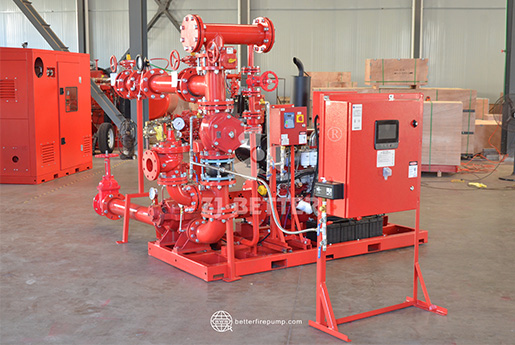
Understanding UL Listing and Its Importance
UL (Underwriters Laboratories) is one of the world’s most authoritative safety certification bodies. A UL Listed fire pump is not simply tested once; it must consistently meet strict engineering standards across design, material, performance, electrical safety, hydraulic capability, and long-term durability.
To earn UL Listing, a fire pump must pass extensive evaluation on:
-
Pump performance curves
-
Pressure and flow accuracy
-
Structural strength of casing and impeller
-
Electric motor or diesel engine compatibility
-
Endurance tests simulating real emergency conditions
-
Safety of auxiliary devices such as controllers and drivers
These requirements are based on decades of fire protection research and real-world failure analysis. As a result, UL Listed pumps have a proven, globally recognized track record for reliability.
Because UL standards align closely with NFPA 20, selecting a UL Listed fire pump also supports compliance with major international building and fire safety codes.
1. Proven Reliability in Emergency Conditions
The most important reason UL Listed fire pumps reduce operational risk is reliability. During a fire, a pump must start instantly, run continuously, and deliver the exact required pressure and flow. Any deviation—even minor—can result in insufficient suppression and uncontrolled fire spread.
UL’s testing process eliminates uncertainty by verifying:
-
The pump can operate for many hours under full load
-
Hydraulic performance matches the certified curve
-
Components maintain structural strength under high stress
-
The pump can withstand rapid temperature changes
-
All electrical and mechanical systems remain stable during emergency activation
In real life, fires create extreme conditions. Temperatures rapidly increase, electrical systems may fluctuate, and water supply may not be stable. UL Listed pumps are engineered to perform under these pressures.
For building owners and engineers, this means the fire protection system is far less vulnerable to unexpected failure.
2. Reduced Risk of Non-Compliance
Many operational risks in fire safety stem from regulatory non-compliance. Authorities, insurance companies, and international project owners increasingly require UL Listed fire pumps for large-scale facilities including:
-
Industrial plants
-
High-rise buildings
-
Airports and ports
-
Data centers
-
Shopping malls
-
Power stations
-
Oil and gas facilities
Non-compliance can result in:
-
Delayed project approvals
-
Higher insurance premiums
-
Failed inspections
-
Legal and financial liability
-
Mandatory system redesign or replacement
By choosing a UL Listed fire pump from the start, project teams avoid costly rework and ensure a smoother approval process. For multinational developments, UL Listing is often considered a universal benchmark that satisfies the expectations of consultants, contractors, and authorities across multiple regions.
3. Lower Maintenance and Operational Failures
Operational failures often originate from components that wear out too quickly, low-quality materials, or pumps that lose performance over time. UL’s endurance and material tests ensure that certified pumps deliver stable performance throughout their life cycle.
Key advantages include:
-
Longer pump service life
-
Lower risk of sudden mechanical failures
-
More accurate and predictable maintenance schedules
-
Reduced unscheduled downtime
-
Lower total cost of ownership
Because UL evaluates pump efficiency at different flow stages (100%, 150%, and churn), system designers know the pump will maintain stable performance for many years. Better performance stability directly reduces maintenance frequency and operational risk.
4. Improved Safety for High-Risk Environments
Certain facilities face higher consequences in case of fire. For example, industrial workplaces handling chemicals, oil, flammable liquids, or expensive equipment cannot afford pump failure. UL Listed fire pumps offer an additional safety margin because they are tested under more intense conditions than non-certified pumps.
For these facilities, a small improvement in pump performance reliability often results in:
-
Faster fire suppression
-
Reduced downtime after incidents
-
Smaller damage areas
-
Improved life safety for workers
High-risk environments require higher safety standards, and UL Listing provides exactly that.
5. Consistency Across Global Projects
One of the operational risks in multi-regional projects is inconsistency in equipment quality. UL Listing ensures uniform performance standards regardless of where the pump is installed.
Project teams benefit from:
-
Standardized documentation
-
Predictable installation requirements
-
Easier coordination with global engineering teams
-
Fewer unexpected changes during commissioning
-
Consistent hydraulic performance across facilities
This is especially valuable for international corporations managing multiple buildings in different countries. UL certification removes variations in pump reliability that can create operational gaps.
6. Assurance for Insurance Providers and Authorities
Insurance companies often assess the quality of fire protection equipment before determining risk and premiums. A UL Listed fire pump significantly improves the risk profile of a facility because it demonstrates:
-
Verified performance
-
Lower probability of pump failure
-
Compliance with recognized fire safety standards
This can lead to:
-
Lower insurance premiums
-
Faster claim approval after a fire
-
Reduced liability for building owners
Government authorities also view UL Listing as proof of system safety. This simplifies compliance audits and reduces operational risk related to inspection failures.
7. Better Integration With NFPA 20 Fire Systems
UL Listed fire pumps are designed to align with NFPA 20 standards, which define the minimum requirements for installation, operation, and maintenance. Pumps that follow NFPA 20 guidelines integrate more smoothly with:
-
Controllers
-
Drivers (electric or diesel)
-
Jockey pumps
-
Suction piping
-
Discharge piping
-
Flow test equipment
Proper integration reduces operational risks such as:
-
System pressure instability
-
Unreliable pump start signals
-
Water hammer effects
-
Incorrect pressure maintenance
-
Excessive electrical load
A fire pump that is UL Listed is already configured to work in harmony with other NFPA-compliant components, minimizing the risk of system mismatch.
8. Stronger Quality Control During Manufacturing
Manufacturers producing UL Listed pumps must maintain strict factory quality control procedures. UL regularly audits factories to verify:
-
Material sourcing
-
Production consistency
-
Component accuracy
-
Final performance testing
This ensures that every pump leaving the production line is identical to the certified model. For customers, this eliminates one of the biggest operational risks: variability.
Choosing a UL Listed pump means choosing a pump that has passed not only initial certification but continuous quality monitoring.
9. Long-Term Savings and Lower Total Cost of Ownership
Although UL Listed fire pumps often require a slightly higher initial investment, they reduce operational risk in ways that also decrease long-term expenses.
Cost reductions come from:
-
Fewer mechanical breakdowns
-
Lower repair frequency
-
Reduced downtime
-
More efficient system performance
-
Longer pump lifespan
-
Lower insurance risk rating
In high-value facilities, even a single avoided pump failure can save thousands—or millions—of dollars. The economic benefit of UL Listing becomes especially clear when evaluating the total cost of ownership over 10–20 years.
10. Enhanced Confidence for System Designers and End-Users
For fire system designers, contractors, and consultants, UL Listing removes guesswork and gives full confidence that the pump will perform as expected. For building owners, it provides peace of mind knowing that the fire protection system is equipped with the highest-quality, internationally approved components.
Greater confidence translates into:
-
Fewer redesign meetings
-
Faster approval cycles
-
Reduced handover issues
-
Higher long-term satisfaction for end-users
Fire protection is a critical life-safety field where confidence in system performance is not merely a preference but a requirement.
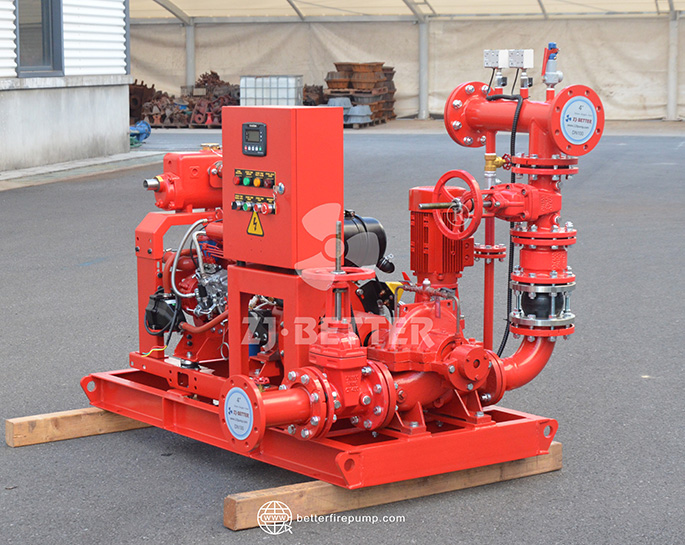
Conclusion: UL Listed Fire Pumps Are a Smart Investment in Safety
Operational risk in fire protection arises from uncertainty. UL Listing eliminates that uncertainty through verified performance, material strength, endurance testing, and strict manufacturing controls. For any facility that prioritizes safety, compliance, and long-term system stability, UL Listed fire pumps provide the most dependable foundation.
As a manufacturer committed to delivering reliable fire pump solutions, we have seen firsthand how UL certification transforms the performance and trustworthiness of fire protection systems. For engineers, contractors, and building owners, choosing a UL Listed fire pump is one of the most powerful decisions you can make to reduce operational risk—both today and for decades to come.
If you need support selecting the correct UL Listed fire pump for your project, I can help you create more content or technical materials anytime.