
.png)
.png)
.png)
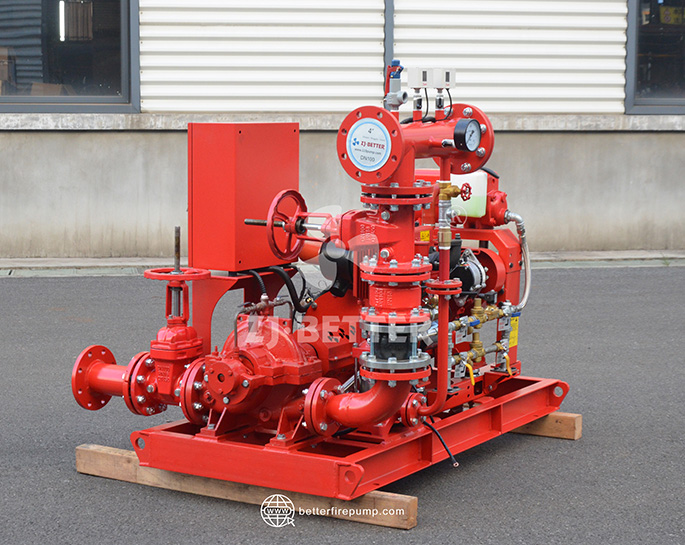
Fire pumps are the heart of any fire protection system. Whether installed in high-rise buildings, industrial plants, warehouses, data centers, or municipal projects, their performance must remain stable and dependable under all conditions. Despite having high-quality equipment, many fire protection failures originate from one preventable problem: poor suction design leading to cavitation.
Cavitation is one of the most destructive issues affecting centrifugal fire pumps. It quietly erodes the pump, reduces pressure, disrupts reliability, and ultimately causes the pump to fail when it is needed most. While cavitation is a mechanical problem inside the pump impeller, it is almost always triggered by improper suction conditions on the installation side.
This article explains why proper fire pump suction design is critical, how cavitation occurs, what NFPA 20 requires, and what best practices fire pump users should follow to ensure long-term system performance.
Understanding Cavitation in Fire Pumps
Cavitation occurs when the pressure at the pump suction drops below the vapor pressure of water. At this point, small vapor bubbles form inside the pump. As these vapor bubbles travel into the higher-pressure region of the impeller, they collapse violently, causing shockwaves and surface damage.
Signs of cavitation include:
-
A rattling or gravel-like noise
-
Reduced pump flow and discharge pressure
-
Excessive vibration
-
Impeller pitting or erosion
-
Overheating of the pump
For a fire pump—whose sole purpose is to deliver reliable and immediate water supply—cavitation is a major threat. Unlike HVAC or general industrial pumps, fire pumps operate in emergency conditions and cannot afford sudden performance loss. Preventing cavitation starts with designing a suction system that ensures stable, adequate pressure at all times.
How Improper Suction Design Creates Cavitation
A fire pump’s suction system determines the quality of the water entering the pump. If the suction pressure is too low, too turbulent, or restricted, the pump will struggle to maintain the required Net Positive Suction Head (NPSH). This increases the likelihood of vapor bubble formation inside the impeller.
Common suction design mistakes include:
1. Suction Pipe Too Small
A small suction pipe increases friction losses and velocity. High velocity means lower pressure, which increases the chance of cavitation.
NFPA 20 recommends maintaining velocity below 15 ft/s and increasing pipe size when necessary.
2. Excessive Friction Losses
Unnecessary elbows, sharp tee connections, long pipe runs, and undersized strainers all reduce pressure at the pump suction. Every added resistance increases cavitation risk.
3. Poor Suction Source Positioning
Fire pumps may draw water from underground tanks, above-ground tanks, lakes, or municipal mains. Suction problems arise when:
-
The water source is too shallow
-
The tank outlet is above the pump suction
-
There is insufficient submergence to prevent air entrainment
-
Suction pipes are not properly supported or aligned
4. Air Entrapment or Vortex Formation
If air enters the suction line, velocity and turbulence increase. Vortices form more easily in low-submergence tanks or poorly designed suction pits, accelerating cavitation.
5. High Lift on Horizontal Fire Pumps
Horizontal split-case fire pumps require a positive suction head (flooded suction). Installing them with a suction lift—where the pump must pull water upward—almost guarantees cavitation.
6. Incorrect Suction Diffuser or Strainer Placement
A strainer too close to the suction inlet can starve the pump. A suction diffuser installed incorrectly can force water into the impeller unevenly.
When these issues occur, NPSH drops, water vaporizes, and cavitation begins. The damage is progressive and irreversible.
NFPA 20 Requirements That Help Prevent Cavitation
NFPA 20, the standard for fire pump installation, includes several rules that directly relate to preventing cavitation. These guidelines exist because poor suction design is one of the most common causes of pump failure.
Key NFPA 20 requirements include:
1. Suction Pipe Must Be at Least as Large as the Pump Inlet
This ensures adequate flow and minimizes friction losses.
2. Minimum Straight Pipe Length Before Suction
NFPA 20 requires a straight run of pipe—typically 5 to 10 pipe diameters—to ensure smooth, stable flow entering the impeller.
3. No Unnecessary Valves or Restrictions
Only essential valves are permitted on the suction side. Any valve must be full-size and capable of remaining fully open without throttling.
4. Avoid High Velocities
Maintaining lower velocity reduces turbulence and prevents pressure drop.
5. Flooded Suction for Horizontal Pumps
Horizontal split-case fire pumps must have positive incoming pressure. Suction lift systems are prohibited.
6. Water Supply Must Meet Peak Flow Demand
If the water supply cannot provide the fire pump’s rated flow without significant pressure drop, cavitation will occur during actual emergencies.
NFPA 20’s suction design principles are grounded in real-world field experience. Following them prevents cavitation and extends pump life.
Why Proper Suction Design Is the Best Defense Against Cavitation
A fire pump’s performance depends more on the suction design than many system designers realize. Even a perfectly manufactured UL-listed fire pump can fail if its suction piping is poorly designed.
Here is why proper suction design is crucial:
1. Ensures Sufficient NPSH
The pump requires a certain amount of suction pressure to operate without cavitation. Suction design determines whether this NPSH is available in real operating conditions.
2. Prevents Mechanical Damage
Cavitation rapidly deteriorates impellers, casings, wear rings, bearings, and shaft seals. Good suction design eliminates the root cause.
3. Maintains Rated Flow and Pressure
Fire pumps are performance-rated. Cavitation reduces output pressure and flow, which may cause sprinkler or hydrant systems to fail.
4. Extends Pump Lifespan
Eliminating cavitation reduces vibration, noise, and mechanical stress, allowing the pump to operate reliably for many years.
5. Reduces Maintenance Costs
Replacing an impeller or an entire pump assembly is expensive. Proper suction design avoids these unnecessary expenses.
6. Improves Fire Protection Safety
Stable pump performance ensures that water reaches the fire scene with proper pressure and volume during an emergency.
Best Practices for Fire Pump Suction Design
To prevent cavitation, fire pump suction systems must be engineered with care. The following best practices help ensure stable operating conditions:
1. Use the Correct Pipe Size
The suction pipe must be equal to or larger than the pump suction flange. In many installations, increasing pipe size reduces friction losses significantly.
2. Maintain Adequate Submergence
When drawing water from a tank, ensure the outlet is sufficiently below the water surface to prevent air entrainment and vortex formation.
3. Avoid Suction Lifts
Horizontal split-case fire pumps must always have a flooded suction. If suction lift is unavoidable, a vertical turbine fire pump should be used instead.
4. Provide Straight Suction Pipe Length
Straight pipe stabilizes velocity and reduces turbulence before the water enters the pump.
5. Minimize Fittings and Elbows
Every elbow, reducer, or tee increases velocity and turbulence. When elbows are unavoidable, long-radius elbows are preferred.
6. Use Proper Reducers
When reducing pipe size, an eccentric reducer with a flat top is essential to avoid air pockets.
7. Ensure Reliable Water Supply
A stable, non-fluctuating water source maintains suction pressure and eliminates cavitation risk.
8. Install Pressure Gauges
Monitoring suction pressure enables early detection of cavitation before damage occurs.
These practices create a suction environment where cavitation cannot develop, ensuring the fire pump operates safely at all times.
Vertical Turbine Pumps and Cavitation Avoidance
Vertical turbine fire pumps are naturally resistant to cavitation problems because they operate submerged in the water source. They are ideal for:
-
Deep wells
-
Underground tanks
-
Lakes or reservoirs
-
Situations where suction lift is required
Because the impellers are below the water level, NPSH conditions are inherently favorable. For projects with challenging suction conditions, vertical turbine pumps are a preferred solution.
.jpg)
Conclusion: Proper Suction Design Protects Fire Pump Reliability
Cavitation is one of the leading causes of fire pump damage and failure, but it is completely preventable through proper suction design. A fire pump can only perform as well as its suction system allows. Good suction design ensures:
-
Stable pressure
-
Smooth, non-turbulent flow
-
Long pump lifespan
-
NFPA 20 compliance
-
Reliable fire protection during emergencies
For building owners, contractors, and fire protection engineers, prioritizing proper suction design is essential to protecting both property and life.
If your project requires guidance on suction design, selecting the right fire pump model, or ensuring NFPA 20 compliance, expert assistance from a fire pump manufacturer ensures your system performs at its best.
If you'd like, I can help you:
• Create more SEO articles
• Rewrite this in a more technical or more market