
.png)
.png)
.png)
Why Diesel Fire Pumps Need Independent Power Sources?
Dec 17, 2025
Share:
In modern fire protection systems, reliability is not optional—it is a matter of life safety. Among all fire pump types, diesel fire pumps are widely recognized for their ability to operate independently of the electrical grid. But why is this independence so critical, and why do standards insist that diesel fire pumps must have their own dedicated power source?
Understanding the reasoning behind this requirement is essential for fire protection engineers, contractors, facility owners, and authorities having jurisdiction. This article explores the technical, safety, and regulatory reasons why diesel fire pumps must rely on independent power sources and how this design principle ensures dependable fire protection when it matters most.
The Role of Fire Pumps in Fire Protection Systems
Fire pumps serve as the heart of a fire protection system. Their primary function is to supply sufficient water pressure and flow to sprinkler systems, hydrants, and standpipes when the available water supply cannot meet system demand on its own.
During a fire emergency, fire pumps are expected to operate under the most adverse conditions:
-
Electrical failures
-
Structural damage
-
Extreme heat
-
Prolonged operation
If a fire pump fails to start or stops running during an emergency, the entire fire protection system may become ineffective. This is why power source selection is one of the most critical decisions in fire pump system design.
Understanding Diesel Fire Pumps
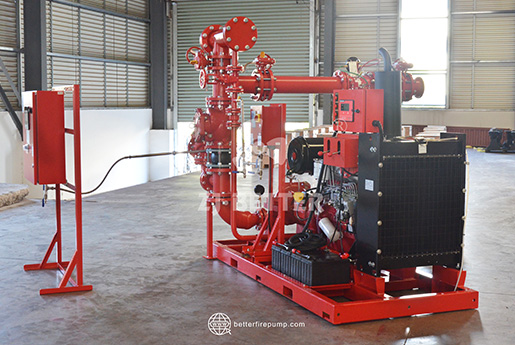
A diesel fire pump is driven by a diesel engine rather than an electric motor. Unlike electric fire pumps, which depend on utility power or emergency generators, diesel fire pumps use stored fuel as their primary energy source.
This fundamental difference gives diesel fire pumps a unique advantage: they can operate independently from the electrical infrastructure of a building or facility.
However, independence does not happen automatically. It must be carefully engineered, installed, and maintained according to strict standards.
What Does “Independent Power Source” Mean?
An independent power source means that the diesel fire pump can:
-
Start automatically during a fire event
-
Run continuously without relying on external utilities
-
Remain operational even if the building loses all electrical power
For diesel fire pumps, this independence is achieved through:
-
A dedicated diesel engine
-
On-site fuel storage
-
Separate starting systems
-
Independent control and cooling systems
This design ensures that the fire pump remains available when external systems fail.
Power Failure Is Common During Fires
One of the most important reasons diesel fire pumps need independent power sources is the high likelihood of power failure during a fire.
Fires frequently cause:
-
Electrical short circuits
-
Damage to transformers and switchgear
-
Automatic shutdowns of utility power
-
Failure of backup generators due to heat, smoke, or lack of maintenance
In many real fire incidents, electrical power is lost before suppression systems are activated. If a fire pump depends on the same power source that is compromised by the fire, it may never start.
Diesel fire pumps eliminate this risk by removing reliance on external electricity altogether.
Fire Protection Must Function Under Worst-Case Conditions
Fire protection systems are not designed for normal conditions. They are designed for worst-case scenarios.
During a severe fire:
-
The building’s electrical system may be unsafe to operate
-
Emergency generators may fail to start or run out of fuel
-
Control circuits may be damaged
Diesel fire pumps are specifically chosen for facilities where maximum reliability is required under extreme conditions. Their independent power source ensures that even if every electrical system in the facility is disabled, water can still be delivered to suppress the fire.
Regulatory and Standard Requirements
Fire protection standards around the world recognize the importance of independent power sources for diesel fire pumps.
Major fire safety standards require that:
-
Diesel fire pumps must not rely on external electrical power for operation
-
Fuel supply must be sufficient for extended operation
-
Starting systems must be independent and redundant
-
Control equipment must remain functional during fire conditions
These requirements are not theoretical. They are based on decades of fire incident investigations where power-dependent systems failed.
By mandating independent power sources, standards aim to ensure that diesel fire pumps are always available when lives and property are at risk.
Diesel Fire Pumps vs Electric Fire Pumps
Both diesel and electric fire pumps are widely used, but their power supply philosophies differ significantly.
Electric fire pumps rely on:
-
Utility power
-
Emergency generators
-
Automatic transfer switches
While electric fire pumps are efficient and easy to maintain, they are only as reliable as the electrical infrastructure supporting them.
Diesel fire pumps, on the other hand:
-
Do not require utility power to run
-
Do not depend on generators
-
Are unaffected by electrical grid failures
This makes diesel fire pumps particularly suitable for:
-
High-risk facilities
-
Remote locations
-
Critical infrastructure
-
Industrial plants
-
Data centers
-
Oil and gas facilities
The Importance of On-Site Fuel Storage
An independent power source is meaningless without reliable fuel availability.
Diesel fire pumps are designed with:
-
Dedicated fuel tanks
-
Minimum run-time requirements
-
Fuel quality management
On-site fuel storage ensures that the pump can operate continuously for the duration required to control or extinguish a fire. This is especially critical in large facilities where fire suppression may take several hours.
Fuel systems are isolated from other diesel equipment to prevent fuel depletion during emergencies.
Independent Starting Systems Ensure Reliability
Diesel fire pumps are equipped with independent starting systems, typically including:
-
Dual battery systems
-
Redundant starters
-
Automatic starting logic
These systems are designed to function even if one component fails. Unlike electric pumps that depend on control power from the building, diesel fire pumps can start using their own batteries.
This redundancy further strengthens their independence and reliability during emergencies.
Reduced Single-Point-of-Failure Risk
One of the core principles of fire protection engineering is eliminating single points of failure.
If a fire pump depends on:
-
One utility feed
-
One generator
-
One control circuit
Then the failure of that component can disable the entire system.
Diesel fire pumps with independent power sources significantly reduce this risk. By separating the fire pump’s energy supply from the building’s electrical system, designers ensure that a fire cannot easily disable both the hazard and the protection system at the same time.
Performance During Extended Emergencies
Some fire events last far longer than anticipated. Large industrial fires, warehouse fires, or fires involving hazardous materials can require prolonged suppression efforts.
Diesel fire pumps are well-suited for extended operation because:
-
Fuel can be replenished during operation if permitted
-
Engines are designed for continuous duty
-
Cooling systems are independent of building utilities
This long-duration capability is a key reason diesel fire pumps are specified in high-value and high-risk applications.
Confidence for Authorities and Insurers
Authorities having jurisdiction and insurance companies place high importance on fire pump reliability.
Facilities equipped with diesel fire pumps and independent power sources often benefit from:
-
Easier approval processes
-
Increased compliance confidence
-
Reduced insurance risk exposure
An independently powered fire pump demonstrates that the facility owner has prioritized life safety and system resilience.
Maintenance and Operational Responsibility
While diesel fire pumps offer exceptional reliability, their independence also places responsibility on owners and operators.
To maintain true independence:
-
Fuel must be kept clean and fresh
-
Batteries must be tested regularly
-
Engines must be exercised under load
-
Control systems must be inspected
Proper maintenance ensures that the independent power source remains dependable over the life of the system.
Why Independent Power Is Non-Negotiable
Diesel fire pumps are not selected for convenience. They are selected for certainty.
When a fire occurs, there is no second chance for the fire pump to start. Independent power sources ensure that diesel fire pumps can perform their single most important function: delivering water when everything else has failed.
This independence is not an optional feature—it is the foundation of diesel fire pump reliability.
.jpg)
Conclusion
Diesel fire pumps need independent power sources because fire emergencies are unpredictable, destructive, and often accompanied by total power failure. By relying on on-site fuel, dedicated engines, and independent starting systems, diesel fire pumps provide unmatched reliability in the most critical moments.