
.png)
.png)
.png)
How to Commission a UL Fire Pump Set Step by Step?
Dec 15, 2025
Share:
Commissioning a UL fire pump set is one of the most critical stages in ensuring the reliability of a fire protection system. A properly commissioned fire pump is not only a regulatory requirement but also a life-safety responsibility. Incorrect installation, incomplete testing, or skipped commissioning steps can lead to system failure during an emergency, resulting in severe consequences.
As a fire pump manufacturer with extensive experience in UL listed fire pump systems, we have seen firsthand how structured commissioning improves system performance, reduces future failures, and ensures long-term compliance with UL and NFPA 20 standards. This article provides a clear, step-by-step guide to commissioning a UL fire pump set, designed for contractors, consultants, inspectors, and end users in the fire safety industry.
What Is UL Fire Pump Commissioning?
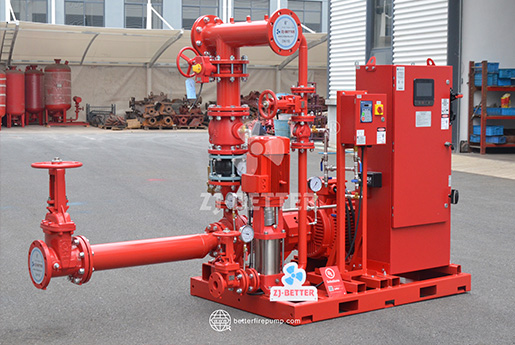
UL fire pump commissioning is the systematic process of inspecting, testing, and verifying that a UL listed fire pump set has been installed correctly and operates exactly as designed. This process confirms that all components function together as a complete fire protection system under real operating conditions.
Commissioning typically occurs after installation and before final acceptance by authorities having jurisdiction. It includes mechanical inspection, electrical checks, controller verification, performance testing, and documentation review, all aligned with UL standards and NFPA 20 requirements.
Step 1: Verify Documentation and System Design
Before any physical inspection or testing begins, all documentation must be reviewed carefully. This step ensures that the installed fire pump system matches the approved design.
Confirm that the fire pump, driver, controller, and accessories are all UL listed and suitable for the project specifications. Review approved drawings, hydraulic calculations, pump curves, and equipment nameplates. The rated flow, pressure, speed, and driver power must align with the system design and fire protection demand.
Any deviation between design documents and installed equipment should be resolved before proceeding. Commissioning should never be used to correct design errors.
Step 2: Visual Inspection of Fire Pump Installation
A thorough visual inspection is essential to identify installation issues that could affect performance or reliability.
Check the fire pump foundation to ensure it is level, rigid, and properly grouted. Misalignment or vibration often originates from poor foundations. Inspect pump and driver alignment, confirming that coupling alignment meets manufacturer tolerances.
Verify that suction and discharge piping is correctly installed, independently supported, and free from stress on the pump casing. The suction pipe should be as short and straight as possible, with no air pockets, and should meet the minimum diameter and straight length requirements.
Confirm that all valves are installed in the correct orientation and are fully operational. Suction valves should be supervised in the open position, and discharge check valves should be properly installed and accessible for inspection.
Step 3: Inspect the Water Supply and Suction Conditions
The water supply is the heart of any fire pump system. Even a perfectly commissioned pump will fail if the water source is inadequate.
Verify that the water supply meets the required flow and pressure conditions defined in the design. Inspect the suction source, whether it is a municipal connection, storage tank, or reservoir.
For tank-fed systems, check water levels, anti-vortex plates, and suction strainers if applicable. For city water supplies, confirm the static and residual pressure data matches system requirements.
Ensure that suction piping is free from leaks, obstructions, and unnecessary fittings. Any air leaks on the suction side can cause cavitation and reduce pump performance.
Step 4: Electrical and Power Supply Verification
Electrical integrity is critical for electric motor-driven fire pumps and for the controllers of diesel engine fire pumps.
Confirm that the power supply matches the voltage, phase, and frequency requirements shown on the fire pump motor and controller nameplates. Inspect incoming feeders, disconnects, grounding, and bonding.
Verify that all wiring is installed according to applicable electrical codes and NFPA 20 requirements. Check that control wiring is protected and properly terminated.
Test controller functions such as phase reversal protection, voltage monitoring, alarm signals, and manual start features. Any abnormal indication should be corrected before proceeding.
Step 5: Controller and Instrumentation Checks
The fire pump controller acts as the command center of the system and must be fully operational.
Inspect the controller enclosure, ensuring it is clean, undamaged, and accessible. Confirm that pressure switches are set correctly for automatic start and that gauges are calibrated and readable.
Test manual start, automatic start, and emergency start functions. Verify that alarm signals such as pump running, power failure, and trouble conditions activate correctly.
For diesel engine fire pump sets, confirm the controller interfaces properly with the engine control panel and that all signals are correctly transmitted.
Step 6: Diesel Engine Fire Pump Pre-Commissioning Checks
If the UL fire pump set is diesel engine driven, additional steps are required before starting the engine.
Inspect fuel tanks, piping, and filters to ensure proper installation and cleanliness. Verify fuel levels and confirm that the fuel type meets engine manufacturer requirements.
Check engine oil levels, coolant levels, battery condition, and battery charger operation. Confirm that exhaust piping is properly installed and safely routed.
Manually rotate the engine if required to ensure free movement before initial start. Any abnormal resistance should be investigated immediately.
Step 7: Initial Start-Up and No-Flow Testing
The initial start-up verifies that the pump and driver operate safely under no-flow conditions.
Start the fire pump manually and observe for abnormal noise, vibration, or overheating. Confirm that rotation direction is correct, especially for electric motor-driven pumps.
Monitor pressure gauges to ensure pressure rises smoothly to churn pressure. Verify that relief valves, if installed, operate correctly to prevent over-pressurization.
Allow the pump to run long enough to confirm stable operation without leaks or excessive vibration. Any issue identified during this stage must be resolved before performance testing.
Step 8: Fire Pump Performance Testing
Performance testing is the core of UL fire pump commissioning and must be conducted in accordance with NFPA 20.
Test the pump at multiple flow points, including churn, 100 percent rated flow, and 150 percent rated flow. Record suction pressure, discharge pressure, flow rate, voltage, current, speed, and engine parameters as applicable.
Compare test results against the certified pump curve. The pump must meet or exceed rated performance without exceeding maximum allowable power or current limits.
Ensure that test equipment is properly calibrated and that test results are accurately documented. Any deviation from acceptable limits must be addressed before system acceptance.
Step 9: Automatic Operation and System Integration Testing
After performance testing, verify that the fire pump operates correctly as part of the complete fire protection system.
Simulate pressure drops to confirm automatic start. Verify that the pump continues running until manually stopped, as required by NFPA 20.
Test integration with jockey pumps, pressure maintenance systems, and alarms. Confirm that signals are transmitted to fire alarm systems or building management systems as specified.
Ensure that all system components work together seamlessly under both normal and emergency conditions.
Step 10: Final Inspection, Documentation, and Acceptance
The final step in commissioning is documentation and formal acceptance.
Compile all inspection records, test results, and commissioning reports. Ensure that as-built drawings accurately reflect the installed system.
Provide operation and maintenance instructions to the owner, including recommended inspection and testing schedules. Training operators on basic fire pump operation is strongly recommended.
Once all requirements are satisfied, the system can be presented for final acceptance by the authority having jurisdiction.
Common Commissioning Mistakes to Avoid
Many fire pump failures can be traced back to commissioning shortcuts. Common mistakes include skipping suction inspections, ignoring alignment tolerances, improper controller settings, and incomplete performance testing.
Rushing the commissioning process often leads to costly corrections later and increases the risk of system failure during a real fire event.
.jpg)
Conclusion
Commissioning a UL fire pump set is not just a procedural requirement; it is a critical safeguard for life and property. A structured, step-by-step commissioning process ensures that the fire pump system performs exactly as designed when it is needed most.