
.png)
.png)
.png)
What Is Fire Pump Deadhead Pressure?
Nov 10, 2025
Share:
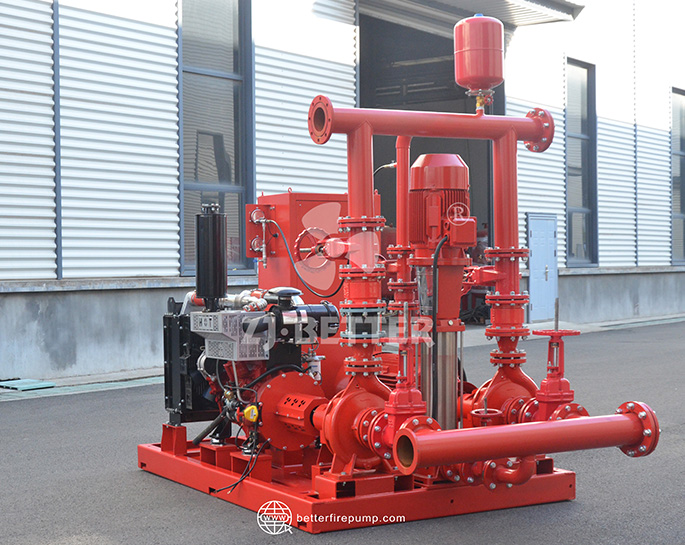
Fire pumps are critical components of any fire protection system, ensuring a reliable water supply in emergencies. Among the many performance metrics used to evaluate fire pumps, deadhead pressure is one that often confuses engineers, designers, and building managers alike. Understanding deadhead pressure is essential for designing effective fire protection systems, maintaining compliance with NFPA standards, and ensuring reliable operation during emergencies.
 Understanding Deadhead Pressure
Deadhead pressure refers to the maximum pressure a fire pump can generate when it is running against a completely closed discharge. In simpler terms, this is the pressure measured when the pump is operating at full speed but no water is flowing because the discharge valve is closed.
Deadhead pressure is an important parameter because it indicates the pump's ability to overcome system resistance and provides a baseline for maximum operating pressure. It essentially represents the extreme condition where the pump is doing work but the system is temporarily “blocked,” which helps engineers understand the pump’s capabilities and limitations.
Why Deadhead Pressure Matters
-
System Safety and Design:
Deadhead pressure helps fire protection engineers design piping and system components to withstand the maximum forces a pump can produce. Incorrect assumptions about pressure can lead to pipe bursts, valve failures, or damage to other components during operation. -
Pump Performance Testing:
Deadhead pressure is a standard metric used during fire pump acceptance testing. NFPA 20, the standard for the installation of stationary fire pumps, recommends measuring deadhead pressure to verify that the pump can reach its designed performance specifications. -
Flow and Pressure Relationship:
Fire pumps must deliver sufficient flow at the required pressure to meet fire protection demands. Deadhead pressure is the upper limit, and as flow increases, the pressure decreases according to the pump’s characteristic curve. Knowing the deadhead pressure allows engineers to understand the full range of pump performance and ensure system reliability under varying conditions.
How Deadhead Pressure Is Measured
Measuring deadhead pressure requires careful attention because the pump is operating at its maximum energy without water flow. The standard procedure includes:
-
Closing the Discharge Valve:
The pump’s main discharge valve is closed to stop water flow while the pump is running. -
Monitoring Pressure Gauges:
A pressure gauge installed at the pump discharge measures the pressure the pump produces against the closed system. -
Comparing with Manufacturer Specifications:
The recorded deadhead pressure is compared against the pump’s rated deadhead pressure provided by the manufacturer to confirm proper operation.
Safety precautions are critical during this process. Operating a fire pump against a closed discharge generates significant heat and mechanical stress, which can damage the pump if not properly controlled.
Deadhead Pressure vs. Operating Pressure
It is important to distinguish between deadhead pressure and operating pressure. Operating pressure is the pressure delivered by the pump under normal flow conditions when the system is supplying water to sprinklers, hoses, or hydrants. Deadhead pressure, on the other hand, represents the maximum potential pressure without flow.
Understanding both metrics helps engineers select appropriate pump sizes, control devices, and system components to meet fire protection requirements safely.
Factors Affecting Deadhead Pressure
Several factors influence a fire pump’s deadhead pressure, including:
-
Pump Type: Centrifugal fire pumps, vertical turbine pumps, and diesel engine pumps may have different deadhead pressure characteristics.
-
Impeller Design: The diameter and design of the impeller directly impact the maximum pressure achievable.
-
Pump Speed: Deadhead pressure is affected by the rotational speed of the pump, with higher speeds generating higher pressures.
-
System Backpressure: While deadhead pressure is measured against a closed discharge, downstream system characteristics can influence pressure readings during testing or operation.
Understanding these factors ensures that deadhead pressure readings are interpreted correctly, leading to better system performance evaluation and maintenance planning.
Deadhead Pressure in Fire Pump Curves
Fire pump manufacturers provide pump performance curves showing the relationship between flow rate and pressure. Deadhead pressure is located at the point where flow is zero on the curve. As flow increases, the curve descends, indicating a decrease in pressure.
Analyzing the pump curve allows fire safety engineers to:
-
Predict system performance under different demand scenarios
-
Ensure compliance with NFPA 20 and other fire safety standards
-
Verify that the pump can handle high-resistance systems or multiple sprinkler zones
Importance for NFPA Compliance
The National Fire Protection Association (NFPA) requires that fire pumps meet specific performance criteria to ensure adequate water supply during a fire. NFPA 20 specifically calls for measuring deadhead pressure during pump acceptance testing to:
-
Confirm the pump can develop the required shutoff pressure
-
Ensure that the pump’s operational range meets system demands
-
Detect potential issues like worn impellers, cavitation, or incorrect motor speed
Meeting these standards is crucial for insurance approval, building safety compliance, and overall fire risk management.
Operational Considerations
While deadhead pressure is an important metric, running a pump against a closed discharge for extended periods is not recommended. Continuous deadhead operation can cause:
-
Overheating of the pump casing and mechanical seals
-
Excessive wear on bearings and impellers
-
Increased vibration and mechanical stress
Engineers often install relief valves or bypass systems to safely relieve deadhead pressure during testing or temporary operational scenarios. These devices protect the pump while still allowing accurate measurement of its capabilities.
Real-World Applications
Understanding deadhead pressure is not just theoretical. Fire protection engineers use this metric in several practical ways:
-
System Design: Ensuring that piping, valves, and sprinkler heads can withstand maximum pressures.
-
Troubleshooting: Identifying issues in pump performance by comparing measured deadhead pressure to manufacturer specifications.
-
Maintenance Planning: Scheduling inspections and replacements for pump components subjected to high-pressure conditions.
By incorporating deadhead pressure into design and maintenance protocols, fire safety professionals can ensure more reliable performance and safer fire protection systems.
Conclusion
Deadhead pressure is a critical yet often misunderstood concept in fire pump operation. It represents the maximum pressure a fire pump can achieve with no flow and serves as a key indicator of pump performance and system safety. By understanding, measuring, and applying deadhead pressure knowledge, engineers and fire safety professionals can design safer fire protection systems, ensure compliance with NFPA standards, and maintain reliable performance under emergency conditions.
For fire pump manufacturers, engineers, and building managers, mastering the concept of deadhead pressure is essential to safeguarding both property and lives during fire emergencies. A well-informed approach to deadhead pressure ensures that every fire pump operates efficiently, safely, and effectively when it matters most.