
.png)
.png)
.png)
How to Design a Reliable Fire Pump Suction Line
Nov 24, 2025
Share:
Designing a reliable fire pump suction line is a critical aspect of any fire protection system. The suction line directly affects the pump’s performance and efficiency, and improper design can lead to cavitation, reduced flow, or complete pump failure. For engineers, designers, and facility managers, understanding the key principles of suction line design ensures that fire pumps operate safely and reliably when they are needed the most.
Understanding the Importance of the Suction Line
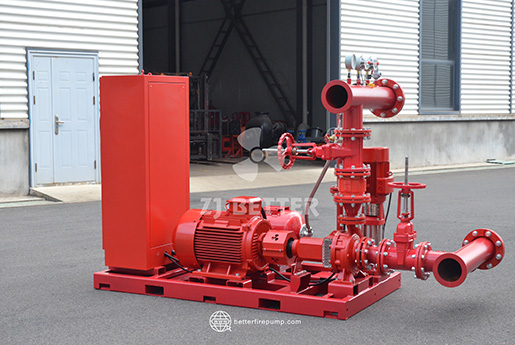
The suction line is the pipe that connects the water source—whether it is a municipal water supply, a tank, or a reservoir—to the fire pump. It plays a crucial role in ensuring a consistent and adequate supply of water to the pump. A well-designed suction line minimizes pressure losses, prevents air entrainment, and ensures the pump operates within its recommended parameters. Failure to properly design this component can compromise the entire fire protection system.
Common problems caused by poorly designed suction lines include:
-
Cavitation: Occurs when the pump inlet pressure falls below the vapor pressure of water, causing bubbles that can damage the pump impeller.
-
Flow Restriction: Inadequate pipe diameter or excessive bends increase friction losses, limiting the pump’s ability to deliver water at the required flow rate.
-
Air Entrapment: Leaks, improper pipe slope, or high points can introduce air into the pump, reducing efficiency and increasing maintenance needs.
By following proper suction line design practices, these risks can be minimized, ensuring the fire pump delivers reliable performance.
Key Design Principles for a Fire Pump Suction Line
Designing a fire pump suction line involves considering multiple factors, including pipe diameter, layout, fittings, and water source characteristics. The following principles are essential:
1. Maintain Adequate NPSH (Net Positive Suction Head)
Net Positive Suction Head (NPSH) is a critical concept in pump design. It represents the absolute pressure at the pump suction, above the vapor pressure of water, necessary to avoid cavitation. The suction line must be designed to provide sufficient NPSH for the pump.
Design tips:
-
Ensure the suction source (tank or reservoir) has enough water above the pump suction inlet to meet NPSH requirements.
-
Minimize suction pipe friction by using the correct pipe diameter and avoiding unnecessary bends.
-
Keep suction piping as short and straight as possible to reduce pressure losses.
2. Correct Pipe Sizing
Pipe diameter is one of the most important aspects of suction line design. An undersized suction pipe increases friction losses, which can reduce pump flow and cause cavitation. Conversely, an excessively large pipe may increase costs without providing meaningful performance improvements.
Design tips:
-
Follow NFPA 20 or relevant local standards for minimum pipe diameter based on the pump’s flow rate.
-
Consider both velocity and friction losses. Typical suction velocities range from 3 to 8 feet per second to minimize turbulence.
-
Avoid sharp reductions in diameter, which can create turbulence and air entrainment.
3. Proper Layout and Fittings
The layout of the suction line affects the smooth flow of water into the pump. Improper arrangements can cause air pockets, turbulence, and pressure drops.
Design tips:
-
Minimize the number of elbows, valves, and other fittings. When unavoidable, use long-radius elbows instead of sharp 90-degree bends.
-
Install check valves and gate valves according to NFPA recommendations, ensuring they do not create excessive suction losses.
-
Ensure the suction pipe slope directs air toward vents or high points to prevent air accumulation.
4. Suction Strainers and Screens
If the water source may contain debris, a strainer is necessary to prevent damage to the pump. Strainers must be correctly sized and maintained to avoid restricting flow.
Design tips:
-
The strainer area should be at least 3-5 times the suction pipe area.
-
Use a fine mesh to prevent debris but avoid clogging that may reduce pump performance.
-
Include provisions for cleaning and inspection without interrupting the pump operation.
5. Water Source Considerations
The characteristics of the water source directly impact suction line design. Municipal water, gravity tanks, and reservoirs all present unique challenges.
Design tips:
-
Ensure that the suction source is reliable and has sufficient capacity for the required fire flow duration.
-
The suction point should be deep enough to prevent vortexing and air entrainment.
-
For tanks, the water level should always remain above the pump suction inlet, with adequate allowance for drawdown during pump operation.
6. Thermal and Environmental Factors
Temperature and environmental conditions can affect water density and pipe material performance. Suction lines exposed to freezing conditions must be insulated or heated to prevent blockage.
Design tips:
-
For cold climates, insulate suction lines or provide heat tracing.
-
Use corrosion-resistant materials compatible with the water source.
-
Avoid flexible hoses or joints that could collapse under negative suction pressure.
7. Compliance with NFPA and Local Codes
Adherence to NFPA 20 and other relevant local codes is critical for safety and compliance. NFPA provides detailed guidance on pipe sizing, NPSH requirements, valves, and fittings.
Design tips:
-
Review NFPA 20’s chapters on suction piping, valves, and water supply requirements.
-
Ensure all components meet UL listing or equivalent standards for fire protection equipment.
-
Engage with qualified engineers or consultants during design and installation to verify compliance.
Step-by-Step Approach to Designing a Reliable Suction Line
To ensure a reliable design, follow a systematic process:
-
Determine Pump Requirements: Identify the fire pump type, required flow, and total dynamic head. Calculate the required NPSH.
-
Assess Water Source: Confirm capacity, static pressure, water quality, and drawdown limits.
-
Select Pipe Diameter: Calculate based on flow, velocity, and friction loss limits per NFPA 20.
-
Plan Layout: Minimize bends, avoid high points, and design for smooth flow.
-
Include Valves and Strainers: Position valves, check valves, and strainers to optimize flow while allowing maintenance.
-
Evaluate NPSH: Ensure the suction line delivers the required NPSH at all operating conditions.
-
Verify Compliance: Check design against NFPA standards, UL listings, and local codes.
-
Document and Review: Prepare drawings, calculations, and maintenance procedures for review by stakeholders.
Common Mistakes to Avoid
Even experienced designers can make errors that compromise suction line reliability. Key mistakes include:
-
Undersized piping: Leading to excessive friction loss and cavitation.
-
Excessive bends and fittings: Creating turbulence and pressure drops.
-
Insufficient NPSH allowance: Ignoring potential low-water conditions.
-
Poor strainer design: Restricting flow or causing maintenance challenges.
-
Ignoring environmental conditions: Freezing, corrosion, or sediment issues.
Avoiding these mistakes ensures that the fire pump operates reliably under emergency conditions, reducing risk to life and property.
Maintenance Considerations
A well-designed suction line also requires routine maintenance to remain reliable. Maintenance includes:
-
Inspecting for leaks, corrosion, and damage.
-
Cleaning strainers and checking valves for proper operation.
-
Verifying water levels and quality in tanks or reservoirs.
-
Periodically testing pump performance to ensure NPSH requirements are met.
Regular maintenance prolongs pump life and ensures the system is ready when needed.
.jpg)
Conclusion
Designing a reliable fire pump suction line is a critical task in any fire protection system. By focusing on adequate NPSH, proper pipe sizing, strategic layout, quality strainers, and compliance with NFPA 20, engineers and facility managers can ensure consistent pump performance. Avoiding common mistakes and maintaining the system through regular inspections further guarantees reliability during emergencies.
Investing time and resources into a properly designed suction line not only protects valuable assets but also ensures safety for occupants and property. Fire safety systems are only as strong as their weakest link, and the suction line is a vital component that must never be overlooked.