
.png)
.png)
.png)
Number of Starting Attempts for Electric Fire Pumps
Feb 24, 2026
Share:
In fire protection systems, reliability is everything. When a fire occurs, the fire pump must start immediately and deliver rated pressure without hesitation. One common question raised by engineers, contractors, and facility managers is: How many starting attempts are allowed for electric fire pumps?
Understanding the answer requires reviewing the requirements of NFPA 20, the design of electric fire pump controllers, and the operational philosophy behind fire pump reliability.
This article explains the number of permitted starting attempts, how electric fire pump controllers are designed to respond to pressure drops, and why proper configuration and testing are critical for life safety compliance.
What Does NFPA 20 Say About Electric Fire Pump Starting Attempts?
The governing standard for fire pump installation is NFPA 20 (Standard for the Installation of Stationary Pumps for Fire Protection), published by the National Fire Protection Association.
Unlike diesel fire pumps, which use multiple crank cycles due to engine starting limitations, electric fire pumps are powered by electric motors. Electric motors do not require repeated cranking attempts in the same way diesel engines do.
Under NFPA 20 requirements:
-
Electric fire pumps must start automatically upon a drop in system pressure.
-
The controller must energize the motor immediately once the start signal is received.
-
The motor continues running until manually stopped (unless special automatic shutdown provisions apply in specific systems).
There is no concept of “crank attempts” like diesel engines. Instead, the electric motor start is typically a single, direct energization of the motor.
Why Electric Fire Pumps Do Not Require Multiple Crank Attempts
To understand the difference, it helps to compare electric and diesel systems.
Diesel fire pumps depend on battery-powered cranking systems. If the engine fails to start, the controller initiates multiple crank cycles. Therefore, NFPA 20 specifies multiple cranking attempts for diesel-driven pumps.
Electric fire pumps, however:
-
Receive power from a dedicated electrical source.
-
Start instantly once voltage is applied.
-
Do not rely on mechanical combustion to achieve operation.
Because of this, there are no “multiple starting attempts” programmed as standard behavior. If proper voltage is available and the system is correctly installed, the motor starts immediately.
If it does not start, the issue is typically electrical supply failure, controller malfunction, or motor damage — not a failed “attempt” that can be retried in cycles like diesel engines.
How Electric Fire Pump Controllers Handle Starting
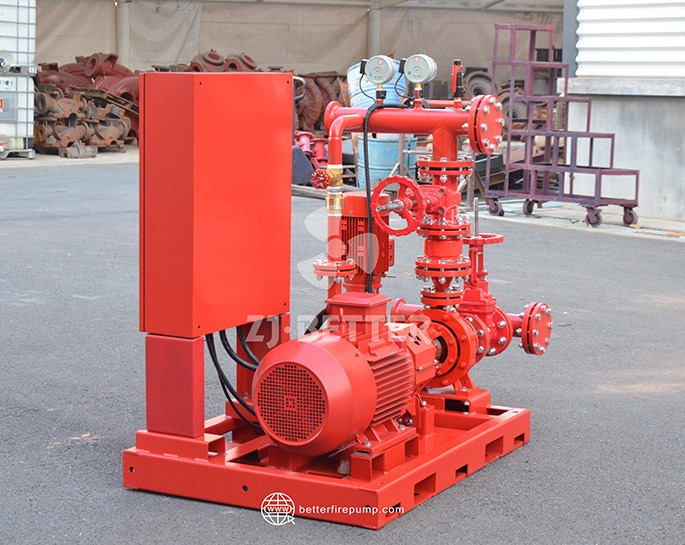
Electric fire pump controllers, especially UL listed models, are designed for reliability and simplicity. Many are certified by Underwriters Laboratories.
When system pressure drops below the preset start point:
-
The pressure switch signals the controller.
-
The controller energizes the motor starter.
-
The motor accelerates to rated speed.
-
The pump delivers full flow and pressure.
There is no programmed limit such as “six attempts” or “three attempts.” The system either starts successfully or signals a fault.
In some advanced systems, undervoltage, phase reversal, or phase loss conditions may prevent startup. In these cases, the controller will alarm rather than attempt repeated automatic restarts.
What Happens If an Electric Fire Pump Fails to Start?
If an electric fire pump fails to start on demand, this is considered a serious impairment condition.
Possible causes include:
-
Loss of incoming power
-
Tripped breaker
-
Faulty motor starter
-
Wiring issues
-
Control circuit failure
-
Mechanical seizure of pump
Unlike diesel engines, the controller will not attempt multiple re-energizations automatically because repeated energization under fault conditions can cause severe electrical damage.
Instead, the controller typically:
-
Provides visual and audible alarms.
-
Records the fault.
-
Requires manual investigation.
This design philosophy prioritizes equipment protection and fault clarity rather than repeated automatic attempts.
Weekly and Monthly Testing: Does That Count as Multiple Attempts?
Electric fire pumps are required to be tested regularly according to NFPA 25, the inspection and testing standard.
During weekly no-flow (churn) tests:
-
The pump is started manually or automatically.
-
The motor runs for a prescribed duration.
-
The operator verifies pressure, voltage, and current readings.
Each test cycle represents a single controlled start. These are separate operational events, not “attempts” in a single incident.
Proper maintenance ensures that when the actual emergency occurs, the motor will start immediately on the first energization.
Special Considerations for Reduced Voltage Starters and VFD Systems
Modern electric fire pumps may use:
-
Reduced voltage starters
-
Soft starters
-
Wye-delta configurations
-
Solid-state controllers
-
Variable frequency drives (VFDs)
Even in these systems, the concept remains the same: one commanded start event.
For example, a VFD-based system gradually ramps up motor speed. However, this ramp is still considered one start cycle. If the system faults during ramp-up, it will typically shut down and alarm rather than attempt repeated automatic restarts.
NFPA 20 strictly limits automatic shutdown in fire scenarios to ensure the pump continues operating once started.
Why Reliability Is More Important Than Multiple Attempts
The philosophy behind electric fire pump design is simple:
If power is available, the motor must start immediately and run continuously.
Multiple attempts are unnecessary because:
-
Electric motors start instantly when properly energized.
-
Repeated energization under fault conditions increases fire risk and equipment damage.
-
Fire protection systems must be predictable and fail-safe.
In contrast to general industrial motors, fire pump motors are not allowed to have overload trip devices that could automatically stop the pump during fire conditions.
Reliability and continuous operation are prioritized over equipment protection.
Comparing Electric and Diesel Fire Pump Starting Attempts
For clarity:
Diesel Fire Pumps:
-
Require multiple crank attempts.
-
NFPA 20 specifies cyclic cranking sequences.
-
Typically six or more crank attempts divided between two battery banks.
Electric Fire Pumps:
-
Single start energization.
-
No cyclic reattempt sequence.
-
Dependent on stable power supply.
This distinction is critical for engineers specifying fire pump packages. Misunderstanding this difference can lead to incorrect assumptions about controller programming.
What Engineers Should Verify During Commissioning
When commissioning an electric fire pump system, engineers should confirm:
-
Start pressure setpoint matches hydraulic calculations.
-
Power supply meets NFPA 20 requirements.
-
Voltage drop is within acceptable limits during startup.
-
Controller alarms function properly.
-
Manual and automatic start modes operate correctly.
The key question is not “How many attempts are allowed?” but rather:
Will the system start immediately under worst-case conditions?
This includes verifying generator-backed systems where transfer switches must operate correctly.
Impact of Power Supply on Starting Reliability
Since electric fire pumps rely entirely on electrical power, supply design is critical.
NFPA 20 requires:
-
Reliable power source
-
Dedicated feeders
-
Protection from ground faults
-
Properly rated disconnecting means
If the primary utility fails, an emergency generator must start quickly and transfer load. In such systems, the generator start sequence becomes the limiting factor, not the pump controller.
Therefore, reliability of the electrical infrastructure often matters more than the controller itself.
Common Misunderstandings About Starting Attempts
Some common misconceptions include:
-
Electric fire pumps attempt multiple restarts automatically.
-
Controllers are programmed with a fixed number of retry cycles.
-
Electric systems are less reliable than diesel due to lack of multiple attempts.
In reality:
-
Electric systems are highly reliable when properly designed.
-
Instant torque delivery makes startup immediate.
-
Simpler mechanical design reduces failure points.
Most startup failures trace back to power quality issues rather than motor design.
Best Practices for Ensuring Successful First Start
Because electric fire pumps rely on a single energization event, preventive measures are essential:
-
Perform weekly churn tests consistently.
-
Inspect control panels for loose connections.
-
Verify breaker integrity.
-
Test generator auto-start monthly.
-
Monitor voltage imbalance.
-
Maintain clean, dry pump rooms.
As a manufacturer of fire pumps, we emphasize proper system integration as much as pump selection. A high-quality pump paired with a poorly designed electrical supply compromises the entire system.
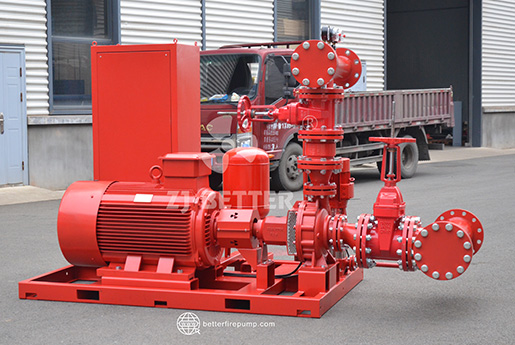
Final Answer: How Many Starting Attempts Are Allowed?
In summary:
Electric fire pumps do not have multiple crank attempts like diesel engines.
They are designed to start immediately upon receiving a signal, with a single energization event. If the pump fails to start, the controller alarms and requires investigation rather than attempting repeated automatic restarts.
The real focus should not be on the number of attempts, but on ensuring that the system starts successfully on the first demand — every time.
Fire protection systems are life safety systems. Simplicity, reliability, and compliance with NFPA 20 are the foundation of dependable electric fire pump operation.
For engineers, contractors, and facility managers, understanding this distinction helps ensure correct specification, installation, and long-term reliability of electric fire pump systems.