
.png)
.png)
.png)
Electric fire pumps are typically powered by large induction motors that require stable voltage during both starting and running conditions. Voltage fluctuation can occur in two main forms:
-
Undervoltage (voltage drop)
-
Overvoltage (voltage surge or spike)
Both conditions create serious risks.
.jpg)
1. Undervoltage Problems
Undervoltage increases motor current draw. When voltage drops:
-
Motor current increases to maintain torque
-
Windings overheat
-
Insulation degrades faster
-
Motor life shortens
If voltage drops significantly during startup, the motor may fail to reach full speed. In fire pump systems, this can lead to:
-
Delayed water delivery
-
Insufficient pressure
-
Nuisance tripping
-
Failure to meet hydraulic demand
According to the requirements of NFPA 20 from the National Fire Protection Association, fire pump motors must be able to start under locked rotor conditions without causing unacceptable voltage drop to other equipment. However, that does not mean the pump is immune to poor incoming power.
2. Overvoltage Problems
Overvoltage can cause:
-
Insulation breakdown
-
Controller damage
-
Premature motor failure
-
Electronic component burnout
Modern fire pump controllers contain sensitive electronics, even in across-the-line starting designs. Voltage spikes from lightning or switching events can damage control boards, relays, and monitoring systems.
NFPA 20 Voltage Requirements You Must Understand
NFPA 20 establishes minimum voltage performance requirements for electric fire pumps:
-
Motors must start at 85% of rated voltage.
-
Motors must operate continuously at 90% to 110% of rated voltage.
This means your fire pump system must be designed so voltage drop under starting conditions does not fall below 85%.
If your facility power supply already fluctuates near lower limits, starting a large fire pump motor can cause additional drop, pushing voltage outside acceptable ranges.
Compliance is not only about the pump itself. It includes:
-
Utility service capacity
-
Transformer sizing
-
Cable sizing
-
Proper controller selection
-
Short circuit coordination
Common Causes of Voltage Fluctuation in Fire Pump Systems
Understanding the source of voltage instability helps determine the right protection strategy.
1. Utility Grid Instability
In some industrial or developing regions, utility voltage can fluctuate frequently due to:
-
High demand
-
Long distribution lines
-
Weak infrastructure
-
Shared heavy loads
Facilities with inconsistent grid power should consider additional stabilization measures.
2. Undersized Transformers
Transformer sizing is critical. An undersized transformer can cause:
-
Excessive voltage drop during motor start
-
Overheating
-
Reduced starting torque
Fire pumps are high inrush current devices. Transformer capacity must accommodate locked rotor current without excessive drop.
3. Long Cable Runs
Long distance between transformer and fire pump room increases impedance. This leads to:
-
Voltage drop during startup
-
Reduced motor torque
-
Heat buildup in cables
Proper conductor sizing is essential.
4. Simultaneous Large Equipment Startup
If other heavy motors start at the same time as the fire pump, cumulative voltage drop may occur. Fire pump circuits must be prioritized and isolated.
Proven Methods to Protect Electric Fire Pumps from Voltage Fluctuation
Now let’s look at practical protection solutions.
1. Proper Power Supply Design from the Beginning
The most effective protection starts at the design stage.
Key design considerations:
-
Dedicated power feeder for fire pump
-
Independent transformer where possible
-
Short cable length
-
Oversized conductors to reduce voltage drop
-
Proper grounding system
Voltage drop calculation should be done during system design, especially for locked rotor current.
If voltage drop exceeds acceptable limits during startup, redesign is necessary before installation.
2. Install a Listed Fire Pump Controller with Voltage Monitoring
A UL listed fire pump controller plays a major role in voltage protection.
Modern controllers provide:
-
Under-voltage sensing
-
Phase loss detection
-
Phase reversal protection
-
Over-voltage alarm
-
Voltage imbalance detection
These features prevent catastrophic damage while ensuring the pump still starts during emergency conditions as required by code.
However, it is important that protective functions comply with NFPA 20 requirements. Fire pumps cannot be easily shut down due to minor electrical issues during a fire. Protection settings must balance reliability and compliance.
3. Use Surge Protection Devices (SPD)
Surge protection devices are essential in regions with lightning exposure or unstable power grids.
SPDs protect:
-
Controller electronics
-
Pressure sensors
-
Monitoring modules
-
Communication systems
Surge protection should be installed at:
-
Main distribution board
-
Fire pump controller panel
-
Sensitive auxiliary circuits
Choose devices rated for industrial applications with adequate kA surge capacity.
4. Voltage Stabilizers (When Appropriate)
In areas with chronic voltage instability, automatic voltage regulators (AVR) or voltage stabilizers may be considered.
However, this solution requires careful evaluation because:
-
Fire pump motors draw high inrush current
-
Stabilizers must handle full locked rotor current
-
Incorrect sizing can cause more problems
Voltage stabilizers must be industrial-grade and specifically engineered for large motor loads.
5. Proper Transformer Selection
Transformer sizing should consider:
-
Fire pump horsepower
-
Locked rotor current
-
Distance to pump room
-
Future expansion
A transformer with sufficient kVA rating reduces voltage drop and ensures proper starting torque.
In some cases, a dedicated transformer for the fire pump is the most reliable solution.
6. Separate Fire Pump Circuit from Other Loads
Fire pump feeders should not share circuits with:
-
HVAC systems
-
Elevators
-
Production equipment
-
Compressors
Isolation prevents other equipment from affecting fire pump voltage stability.
7. Regular Power Quality Monitoring
Facilities with sensitive infrastructure should periodically monitor:
-
Voltage variation
-
Harmonics
-
Phase imbalance
-
Frequency stability
Power analyzers can detect early warning signs before equipment damage occurs.
Preventive diagnostics are far less expensive than emergency repairs.
Special Considerations for High-Rise and Industrial Projects
Large commercial and industrial facilities present additional risks.
High-Rise Buildings
-
Long vertical cable runs increase voltage drop.
-
Generator synchronization must be stable.
-
Automatic transfer switches must operate smoothly.
Emergency generator capacity must be verified to handle fire pump starting current without unacceptable voltage dip.
Industrial Plants
-
Heavy machinery can cause power fluctuation.
-
Harmonics from variable frequency drives may affect system stability.
-
Backup power systems must be tested under full load.
Testing under real starting conditions is strongly recommended.
Generator Backup and Voltage Stability
Many electric fire pumps rely on emergency generators.
Generator sizing is critical:
-
Must handle locked rotor current
-
Must maintain acceptable voltage during startup
-
Must not stall or trip
Undersized generators are a common cause of voltage drop issues.
Load bank testing should simulate actual fire pump startup conditions to verify performance.
Maintenance Practices That Improve Electrical Reliability
Electrical protection is not only about installation. Maintenance plays a major role.
Recommended practices include:
-
Annual insulation resistance testing
-
Torque check on power terminals
-
Inspection of contactors and relays
-
Thermal scanning of electrical panels
-
Verification of voltage readings under test start
Loose connections alone can cause localized voltage drop and overheating.
Warning Signs of Voltage-Related Fire Pump Problems
Facilities should watch for:
-
Frequent nuisance alarms
-
Motor overheating
-
Controller fault codes
-
Slow acceleration during test runs
-
Unusual noise during startup
-
Burnt smell from control panel
Early intervention prevents catastrophic failure.
The Manufacturer’s Perspective: Design for Reliability
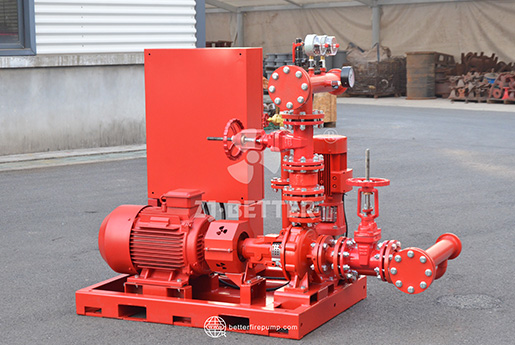
As a professional fire pump manufacturer, we strongly recommend addressing voltage fluctuation at the system level, not only at the pump level.
Reliable electric fire pump operation depends on:
-
Proper electrical engineering
-
Compliance with NFPA 20
-
High-quality controller design
-
Correct transformer and generator sizing
-
Ongoing maintenance and inspection
When all components work together, electric fire pumps deliver stable pressure, reliable performance, and full code compliance.
Voltage fluctuation is a preventable risk. With correct planning, protective devices, and professional installation, electric fire pumps can operate safely even in demanding power environments.
In fire protection, reliability is not optional. Electrical stability is part of that reliability. By understanding voltage risks and applying proper protection strategies, you ensure that when a fire emergency occurs, your electric fire pump performs exactly as intended.