
.png)
.png)
.png)
How to Commission a Fire Pump
Sep 01, 2026
Share:
Commissioning a fire pump is a critical step in ensuring that a fire protection system can deliver the required water flow and pressure when an emergency occurs. A properly commissioned fire pump should start reliably, operate correctly, and meet the performance requirements established during system design.
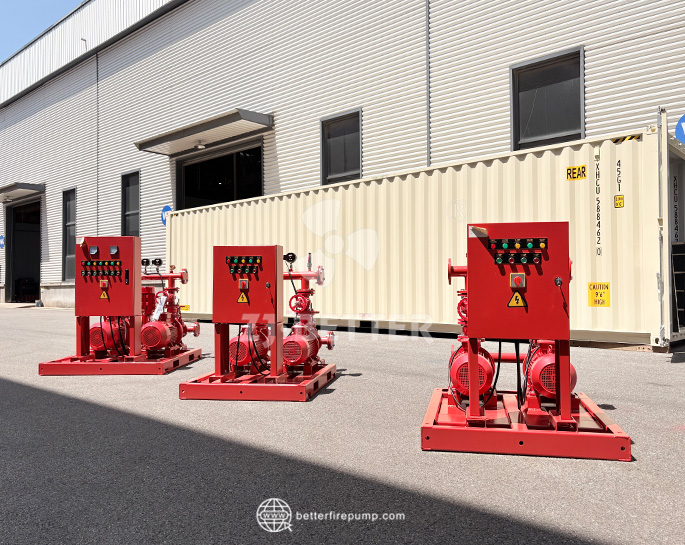
Whether the system uses an electric fire pump, diesel fire pump, jockey pump, or a complete electric-diesel-jockey pump package, commissioning requires more than simply starting the pump. The process involves inspecting the installation, checking the water supply, verifying electrical or diesel systems, testing automatic starting, conducting performance tests, and documenting the results.
This guide explains the main steps involved in fire pump commissioning and highlights common issues that fire safety professionals should check before placing a system into service.
.jpg)
What Is Fire Pump Commissioning?
Fire pump commissioning is the process of verifying that a newly installed fire pump system has been correctly installed, properly configured, and tested according to the approved design and applicable fire protection requirements.
The purpose is to confirm that the complete system can provide the required water flow and pressure under different operating conditions.
Commissioning normally involves several components, including:
- Fire pump
- Electric motor or diesel engine
- Jockey pump
- Fire pump controller
- Suction and discharge piping
- Valves
- Pressure-sensing equipment
- Water storage tank or other water supply
- Fuel system for diesel pumps
- Electrical power supply for electric pumps
- Test header or flow meter
- Pressure gauges and monitoring equipment
The pump itself may be manufactured and tested before delivery, but the complete fire pump system still needs to be commissioned after installation because site conditions can affect actual performance.
Step 1: Review the Approved Design
Before starting the physical commissioning process, review the approved fire protection system design and equipment documentation.
The commissioning team should verify the required pump flow, rated pressure, suction conditions, motor or engine rating, controller specifications, and water supply characteristics.
The pump nameplate should be compared with the approved project specifications.
Important information includes:
- Rated flow
- Rated pressure
- Rated speed
- Motor or engine power
- Voltage and frequency
- Pump rotation
- Maximum operating pressure
- Controller configuration
- Jockey pump settings
This step helps identify discrepancies before testing begins.
For projects designed according to NFPA 20, the commissioning procedure should be coordinated with the applicable requirements of the project and the authority having jurisdiction.
Step 2: Inspect the Fire Pump Installation
A physical inspection should be completed before energizing or starting the equipment.
Check that the fire pump is correctly installed and securely mounted. The pump should be properly aligned with the driver where applicable, and the foundation should be stable.
The suction and discharge piping should also be inspected.
Check for:
- Correct pipe sizes
- Proper pipe supports
- Correct valve installation
- Accessible valves
- Correct valve positions
- Properly installed pressure gauges
- No visible leakage
- Correct connection to the water supply
- Proper discharge connection to the fire protection system
Suction piping deserves particular attention. Poor suction conditions can significantly affect pump performance and may lead to cavitation or inadequate water delivery.
Before commissioning, the suction supply should be fully available and the relevant valves should be in their required operating positions.
Step 3: Check the Water Supply
A fire pump cannot perform correctly if its water supply is inadequate.
The commissioning team should verify that the pump has access to the designed water source. Depending on the project, this may be a water storage tank, municipal water supply, reservoir, or another approved source.
Check the available water level, suction pressure, valves, strainers, and supply piping.
The water supply should be capable of supporting the required pump flow during the performance test.
If the pump is connected to a water storage tank, confirm that the tank contains sufficient water before beginning the test.
Step 4: Check the Electric Fire Pump
For an electric fire pump, electrical checks should be completed before startup.
Verify that the power supply matches the motor nameplate and approved project specifications. Voltage, frequency, phase configuration, wiring, grounding, and disconnecting arrangements should be checked by qualified personnel.
The fire pump controller should also be inspected.
Important controller checks include:
- Incoming power
- Motor connections
- Grounding
- Automatic and manual operating modes
- Pressure sensing
- Start and stop settings where applicable
- Alarm functions
- Phase monitoring
- Emergency or alternate starting arrangements where required
The motor should also be checked for correct rotation.
If rotation is incorrect, the pump may fail to achieve the expected performance.
Step 5: Check the Diesel Fire Pump
Diesel fire pumps require additional commissioning checks because the engine must remain ready to start during an emergency.
Check the fuel tank, fuel level, fuel piping, batteries, battery charger, cooling system, lubrication system, exhaust system, ventilation, and engine controls.
Before starting the engine, verify:
- Adequate fuel
- Correct engine oil level
- Correct coolant level
- Fully charged starting batteries
- Proper battery connections
- Battery charger operation
- Correct exhaust installation
- Adequate ventilation
- No visible fuel or oil leakage
The diesel engine should be capable of starting automatically when the fire pump controller receives the required start signal.
Battery condition is particularly important because a diesel fire pump may need to start after a long period of standby operation.
Step 6: Check the Jockey Pump
The jockey pump maintains pressure in the fire protection system when there is no significant water demand.
Before commissioning, verify that the jockey pump is correctly installed and that its pressure settings are coordinated with the main fire pump.
The jockey pump should maintain normal system pressure without causing unnecessary starts of the main fire pump.
The pressure settings should be reviewed to ensure the correct sequence of operation.
A typical system is configured so that a small pressure drop starts the jockey pump, while a larger pressure drop causes the main fire pump to start.
The exact settings depend on the approved system design and applicable requirements.
Step 7: Prime and Prepare the Pump
Before starting the main fire pump, confirm that the pump casing and suction line are properly filled with water when required by the pump configuration.
A centrifugal fire pump should not be operated without the conditions required for proper operation.
Check all relevant valves and confirm that the suction supply is available.
The discharge side should also be prepared for the planned test.
The pump should never be started without considering where the test water will flow. The discharge arrangement must be capable of safely handling the expected flow and pressure.
Step 8: Start the Fire Pump
The initial startup should be performed under controlled conditions.
For an automatic fire pump system, verify that the pump starts automatically when the system pressure reaches the appropriate start condition.
For an electric fire pump, monitor motor starting behavior, voltage, current, pressure, and pump operation.
For a diesel fire pump, monitor engine startup, oil pressure, coolant temperature, speed, and other available engine parameters.
The commissioning team should listen for unusual vibration, noise, or mechanical problems.
If abnormal conditions are detected, stop the test and investigate before continuing.
Step 9: Verify Automatic Operation
Automatic starting is one of the most important parts of fire pump commissioning.
The system should demonstrate that the main fire pump can start automatically when required.
The commissioning team should verify the relationship between the jockey pump and main fire pump.
The general sequence should be consistent with the approved system configuration:
- System pressure decreases.
- Jockey pump responds to a smaller pressure drop.
- Continued pressure reduction reaches the main fire pump start condition.
- Main fire pump starts automatically.
- Fire pump delivers water to the system.
For a system using both electric and diesel fire pumps, the starting sequence should be tested according to the approved design.
Step 10: Conduct the Fire Pump Performance Test
The performance test determines whether the installed fire pump can provide the required flow and pressure.
Testing is normally conducted at several operating points rather than at only one flow rate.
Common test points include:
- Churn or no-flow condition
- Rated flow
- A higher flow condition required by the applicable test procedure
At each test point, record the relevant pressure and flow measurements.
For an electric pump, electrical parameters may also be recorded.
For a diesel pump, engine speed and other operating parameters should be monitored.
The measured results should be compared with the manufacturer's certified pump performance curve and the project's acceptance criteria.
The purpose is to confirm that the installed system performs as expected rather than simply confirming that the pump can run.
Step 11: Check Pump Pressure and Flow
Pressure readings should be taken using properly installed and calibrated instruments.
The suction pressure and discharge pressure are important because the difference between them contributes to understanding actual pump performance.
Flow should be measured using the approved test arrangement, such as a calibrated flow meter or test header configuration.
The test results should be recorded systematically.
If the measured performance is significantly below expectations, possible causes may include:
- Insufficient water supply
- Incorrect valve position
- Blocked suction piping
- Incorrect pump rotation
- Excessive suction losses
- Incorrect pump selection
- Incorrect system configuration
- Measurement errors
These issues should be investigated before the system is accepted.
Step 12: Test Alarms and Monitoring Functions
Modern fire pump systems often include multiple alarm and monitoring functions.
Commissioning should verify that these functions operate correctly.
Depending on the system, this may include:
- Pump running signal
- Controller alarms
- Power failure indication
- Phase failure indication
- Low fuel alarm
- Battery or charger alarms
- Engine fault signals
- Pressure-related signals
- Remote monitoring signals
Each function should be tested according to the project requirements.
The objective is to make sure that a fault or abnormal condition can be identified by the responsible personnel.
Step 13: Inspect the Pump After Testing
After completing the performance test, inspect the equipment again.
Look for water leakage, oil leakage, fuel leakage, abnormal vibration, loose connections, overheating, unusual noise, or other signs of malfunction.
Check the pump, motor or engine, controller, valves, piping, and accessories.
For diesel systems, inspect the engine compartment, exhaust system, fuel system, batteries, and cooling system.
Any defects discovered during testing should be corrected and the relevant tests repeated when necessary.
Step 14: Document the Commissioning Results
Documentation is an essential part of fire pump commissioning.
The commissioning record should provide evidence that the system was inspected and tested successfully.
A commissioning report may include:
- Project information
- Pump model and serial number
- Pump rated flow and pressure
- Motor or engine information
- Controller information
- Water supply information
- Test equipment information
- Suction pressure
- Discharge pressure
- Flow measurements
- Electrical readings
- Engine operating data
- Automatic start results
- Alarm test results
- Observed defects
- Corrective actions
- Final test results
- Signatures and approval information
Good documentation also creates a useful baseline for future inspection, testing, and maintenance.
Common Fire Pump Commissioning Mistakes
Several problems can reduce the reliability of a newly installed fire pump system.
One common mistake is starting the pump without confirming the water supply. Another is failing to verify pump rotation before conducting a full performance test.
Incorrect pressure settings can also cause the jockey pump and main fire pump to start unnecessarily or operate in the wrong sequence.
For diesel fire pumps, insufficient fuel, weak batteries, poor ventilation, or inadequate maintenance can affect reliability.
Another common issue is relying only on a no-flow test. A pump may start correctly at churn but still fail to deliver the required flow and pressure. A complete performance test is therefore essential.
Finally, incomplete documentation can make future troubleshooting difficult. Commissioning records should be retained as part of the fire protection system documentation.
Final Checklist for Fire Pump Commissioning
Before declaring a fire pump system ready for service, confirm that:
- The installation matches the approved design.
- The pump and driver information has been verified.
- Suction and discharge piping are correctly installed.
- Valves are correctly positioned.
- The water supply is available and adequate.
- Electrical connections have been checked.
- Diesel fuel, batteries, cooling, and exhaust systems have been checked.
- The jockey pump operates correctly.
- The main fire pump starts automatically.
- Manual operation has been verified.
- Pump rotation is correct.
- Flow and pressure performance has been tested.
- Alarm and monitoring functions have been checked.
- No abnormal leakage, vibration, noise, or overheating is present.
- Test results have been recorded.
- Required commissioning documentation has been completed.
Conclusion
Fire pump commissioning is more than simply turning on a pump. It is a systematic process that verifies the entire fire pump system, from the water supply and piping to the pump, driver, controller, jockey pump, alarms, and performance characteristics.
A properly commissioned system gives building owners, fire protection professionals, inspectors, and facility operators greater confidence that the fire pump will perform when it is needed most.
For fire pump manufacturers, commissioning also provides valuable feedback about how equipment performs under actual site conditions. Careful installation verification, controlled startup, comprehensive performance testing, and accurate documentation are therefore essential parts of a reliable fire protection system.
For projects using electric, diesel, or complete electric-diesel-jockey fire pump systems, commissioning should always be performed by qualified personnel and coordinated with the approved design, manufacturer's instructions, applicable standards, and requirements of the authority having jurisdiction.