
.png)
.png)
.png)
How to Conduct Fire Pump Performance Testing
Aug 31, 2026
Share:
Fire pumps are among the most critical components of a fire protection system. When a fire occurs, the pump must deliver sufficient water flow and pressure to support sprinklers, standpipes, hydrants, or other fire suppression equipment. For this reason, fire pump performance testing is an essential part of manufacturing, commissioning, acceptance, inspection, and maintenance.
A properly conducted fire pump performance test helps verify that the pump operates as intended and that its actual performance corresponds with the required system demand and approved pump performance curve. Testing can also identify mechanical problems, installation issues, pressure losses, incorrect rotation, inadequate water supply, or performance deterioration before these issues affect fire protection capability.
This article explains how to conduct fire pump performance testing, including preparation, test equipment, testing procedures, data collection, performance curve evaluation, and common mistakes to avoid.
What Is Fire Pump Performance Testing?
Fire pump performance testing is the process of measuring and evaluating a fire pump's ability to deliver water at different flow rates and pressures.
Unlike a simple start-and-stop operational test, a performance test evaluates how the pump performs across a range of operating conditions. The test typically includes measurements at several flow points, such as:
- Churn or shutoff condition
- Rated flow condition
- High-flow or overload condition
During the test, technicians record important operating data, including suction pressure, discharge pressure, flow rate, pump speed, driver performance, and other relevant parameters.
The collected data can then be compared with the pump's rated performance requirements and performance curve.
The purpose is to confirm that the fire pump can provide the expected hydraulic performance when the fire protection system requires water.
Why Is Fire Pump Performance Testing Important?
A fire pump may start successfully but still fail to deliver the required flow or pressure. For example, a pump could experience internal wear, an obstruction in the suction line, incorrect rotation, mechanical damage, or insufficient driver performance.
Performance testing helps identify these issues.
The main objectives of fire pump performance testing include:
- Verifying the pump's flow and pressure capability
- Confirming that the pump meets its rated performance
- Comparing actual results with the approved pump curve
- Detecting hydraulic or mechanical problems
- Verifying correct installation and system configuration
- Establishing baseline performance data
- Supporting acceptance and commissioning activities
- Monitoring changes in pump performance over time
For manufacturers, performance testing is also an important part of quality control. Testing each product or representative production unit according to applicable requirements helps ensure that the delivered equipment meets the expected performance.
For building owners and fire protection professionals, periodic testing provides valuable information about the operational condition of the fire pump.
Understand the Required Fire Pump Performance
Before beginning a fire pump performance test, it is important to understand the pump's rated operating conditions.
A fire pump is typically specified according to its rated flow and rated pressure. For example, a pump may be designed to deliver a specific flow rate at a specified pressure.
However, a centrifugal fire pump does not operate at only one point. Its performance changes as the flow rate changes.
Generally:
- At zero flow or churn, the pump produces its highest pressure.
- As flow increases, the pump pressure decreases.
- At the rated flow point, the pump should achieve its specified rated pressure and flow.
- At higher flow conditions, the pump should continue to provide performance within the applicable requirements.
The pump manufacturer's performance curve provides the relationship between flow and pressure.
Before testing, technicians should review:
- Rated pump capacity
- Rated pressure
- Pump model
- Pump speed
- Impeller diameter
- Driver type
- Approved or specified performance curve
- Required test points
- Applicable project and regulatory requirements
Understanding the target performance is essential because the measured results must be evaluated against the correct pump data.
Prepare the Fire Pump Test Equipment
Accurate testing depends on reliable and properly installed measuring equipment.
Typical fire pump performance testing equipment may include:
- Pressure gauges
- Flow meters
- Test headers
- Hose outlets
- Measuring devices
- Tachometers
- Electrical measuring instruments
- Temperature monitoring equipment
- Data recording systems
Pressure measurement is particularly important because pump performance is commonly evaluated based on the relationship between flow and pressure.
The test setup should allow technicians to measure both suction and discharge pressure.
Flow can be measured using an installed flow meter, a test loop, hose streams, or another suitable testing arrangement.
Before testing begins, measuring instruments should be checked to ensure that they are suitable for the expected measurement range and capable of providing accurate readings.
Using inaccurate gauges or improperly configured flow measurement equipment can result in misleading performance data.
Step 1: Inspect the Fire Pump System
Before conducting the performance test, perform a visual and operational inspection of the fire pump system.
Check the pump, driver, controller, piping, valves, gauges, and water supply arrangement.
Important inspection points may include:
Pump and Driver
Check for:
- Loose bolts or connections
- Visible damage
- Unusual vibration
- Excessive noise
- Leakage
- Proper lubrication where applicable
- Correct coupling condition
- Proper alignment
Suction Supply
Verify that the suction arrangement is capable of supplying water for the test.
Check for:
- Closed or partially closed valves
- Obstructions
- Leakage
- Inadequate water supply
- Abnormal suction pressure
Poor suction conditions can significantly affect the test results.
Discharge System
Verify that the discharge valves and test connections are configured correctly for the planned test.
Ensure that water discharged during testing can be safely controlled and directed.
Controller and Driver
Confirm that the fire pump controller is operating correctly.
Depending on the system configuration, the driver may be:
- An electric motor
- A diesel engine
For electric-driven pumps, verify the electrical supply and motor operation.
For diesel-driven pumps, check fuel supply, cooling arrangements, engine condition, and operating parameters.
Step 2: Conduct the Churn Test
The churn test is performed with the pump operating while no water is flowing through the main discharge test path.
This condition is also commonly referred to as shutoff or no-flow operation.
During the churn test, record:
- Suction pressure
- Discharge pressure
- Pump speed
- Driver operating condition
- Voltage and current for electric-driven pumps when applicable
- Engine parameters for diesel-driven pumps when applicable
The pressure measured during the churn condition provides important information about the pump's maximum pressure characteristics.
However, the discharge pressure alone does not always represent the actual pump performance.
The suction pressure must also be considered.
A useful evaluation method is to determine the net pressure developed by the pump by accounting for both suction and discharge pressure.
Accurate pressure readings are especially important when the water supply pressure changes during the test.
Allow the pump to stabilize before recording final readings.
Step 3: Test the Pump at Rated Flow
The next important test point is the rated flow condition.
Open the appropriate test outlets or adjust the test system until the required rated flow is achieved.
Once the flow has stabilized, record the relevant test data.
Typical measurements include:
- Flow rate
- Suction pressure
- Discharge pressure
- Net pump pressure
- Pump speed
- Driver performance
- Electrical parameters for electric motors
- Engine operating parameters for diesel engines
The measured performance should then be compared with the pump's rated requirements and expected performance curve.
If the pump does not achieve the expected performance, further investigation is necessary.
Potential causes may include:
- Incorrect impeller diameter
- Incorrect pump speed
- Incorrect rotation
- Suction restrictions
- Air entering the suction line
- Mechanical damage
- Internal wear
- Valve restrictions
- Inadequate driver output
- Incorrect test setup
Step 4: Test the Pump at a High-Flow Condition
A fire pump performance test should also evaluate the pump at a higher flow condition.
This test demonstrates how the pump performs beyond its rated capacity and provides additional information about the shape of the actual performance curve.
Increase the flow gradually until the required high-flow test point is reached.
Allow the system to stabilize and record:
- Flow rate
- Suction pressure
- Discharge pressure
- Pump speed
- Driver operating condition
- Other required parameters
As flow increases, the discharge pressure is generally expected to decrease.
However, the actual results should be evaluated according to the specific pump design and applicable requirements.
The high-flow test is important because it can reveal performance problems that may not be visible at churn or rated flow conditions.
Step 5: Calculate Net Pump Pressure
When evaluating fire pump performance, both suction and discharge conditions should be considered.
The pressure developed by the pump is generally determined by comparing the discharge pressure with the suction pressure.
If the suction side has positive pressure, this pressure contributes to the discharge reading.
Therefore, simply reading the discharge gauge may not provide a complete picture of the pump's hydraulic performance.
For each test point, calculate or record the net pressure developed by the pump.
The test data can then be compared with the manufacturer's expected performance curve.
It is important to ensure that pressure measurements are recorded consistently throughout the test.
Changes in water supply conditions can influence the results, which is why suction pressure should be monitored at every major test point.
Step 6: Record All Test Data
A complete fire pump performance test should produce a clear and organized record.
A typical test record may include:
- Project or facility information
- Date of testing
- Pump manufacturer
- Pump model
- Pump serial number
- Rated capacity
- Rated pressure
- Driver information
- Pump speed
- Water source
- Suction pressure
- Discharge pressure
- Flow rate
- Net pressure
- Electrical data
- Diesel engine data
- Ambient conditions where relevant
- Observations during testing
The test data should be recorded at each operating point.
Digital data acquisition systems can improve consistency and simplify the analysis of multiple test points.
For manufacturers, automated test systems can also support product traceability and quality control.
Step 7: Compare the Results With the Fire Pump Performance Curve
After collecting the test data, compare the measured results with the pump's expected performance curve.
A typical fire pump performance curve shows how the pump head or pressure changes as the flow rate increases.
The comparison should include:
- Churn performance
- Rated flow performance
- High-flow performance
- Pump speed
- Driver performance
- Overall curve shape
If the actual test results differ significantly from the expected curve, investigate the cause before accepting the test.
A performance problem may originate from the pump itself, the driver, the test equipment, the water supply, or the piping arrangement.
For example, if the measured pressure is low at every test point, possible causes could include reduced pump speed, incorrect impeller dimensions, or internal hydraulic problems.
If performance decreases significantly only at high flow, the issue may involve suction restrictions, insufficient water supply, or excessive system losses.
Comparing multiple data points rather than relying on a single reading provides a more complete understanding of the pump's actual performance.
Step 8: Monitor Pump and Driver Condition During Testing
Performance data alone is not the only information that should be evaluated.
Technicians should also observe the mechanical and operational condition of the fire pump system.
During the test, watch for:
- Excessive vibration
- Unusual noise
- Bearing temperature increases
- Seal leakage
- Coupling problems
- Abnormal motor current
- Voltage issues
- Diesel engine overheating
- Unstable engine speed
- Exhaust abnormalities
These conditions may indicate developing problems even when the measured hydraulic performance appears acceptable.
For diesel engine-driven fire pumps, the engine should maintain the required operating speed throughout the test.
For electric motor-driven fire pumps, electrical conditions should be monitored to ensure that the motor is operating within the appropriate parameters.
Common Mistakes During Fire Pump Performance Testing
Several common mistakes can affect the accuracy and reliability of a fire pump performance test.
Using Only the Discharge Pressure
Discharge pressure alone may not accurately represent the pressure developed by the pump. Suction conditions must also be considered.
Failing to Stabilize the Test Conditions
Pressure and flow readings can fluctuate when the system is being adjusted. Record data after the operating conditions have stabilized.
Using Inaccurate Measuring Instruments
Incorrect gauge ranges, damaged instruments, or poorly calibrated equipment can produce unreliable results.
Ignoring Pump Speed
Pump performance is directly affected by speed. A pump operating below its required speed may produce reduced flow and pressure.
Overlooking Water Supply Conditions
An inadequate water supply can cause poor test results even when the pump itself is functioning correctly.
Testing at Too Few Points
A single test point does not provide a complete performance evaluation. Multiple flow points provide a better understanding of the pump curve.
Failing to Document the Results
Without accurate records, it becomes difficult to establish baseline performance or identify changes during future testing.
Establishing a Long-Term Testing Program
Fire pump performance testing should not be viewed as a one-time activity.
Initial testing can establish a baseline for future comparison.
By maintaining consistent testing procedures and accurate records, facility owners and fire protection professionals can identify gradual changes in pump performance.
A long-term testing program may include:
- Regular visual inspections
- Routine operational testing
- Periodic flow testing
- Performance curve comparison
- Driver maintenance
- Gauge verification
- Controller inspections
- Documentation and trend analysis
When changes in performance are identified early, maintenance or corrective action can be taken before the problem becomes more serious.
Testing intervals and procedures should be determined according to the applicable fire protection standards, local regulations, equipment requirements, and the specific conditions of the installation.
The Role of the Fire Pump Manufacturer in Performance Testing
For a fire pump manufacturer, performance testing is a critical part of product development and quality assurance.
A professional pump test facility should be capable of accurately measuring flow, pressure, speed, power, and other operating parameters.
Advanced testing systems can support the evaluation of pumps under different operating conditions and help manufacturers verify that products meet their design requirements.
Testing also supports product development.
By analyzing actual performance data, manufacturers can improve hydraulic designs, optimize impeller configurations, evaluate pump efficiency, and maintain consistent product quality.
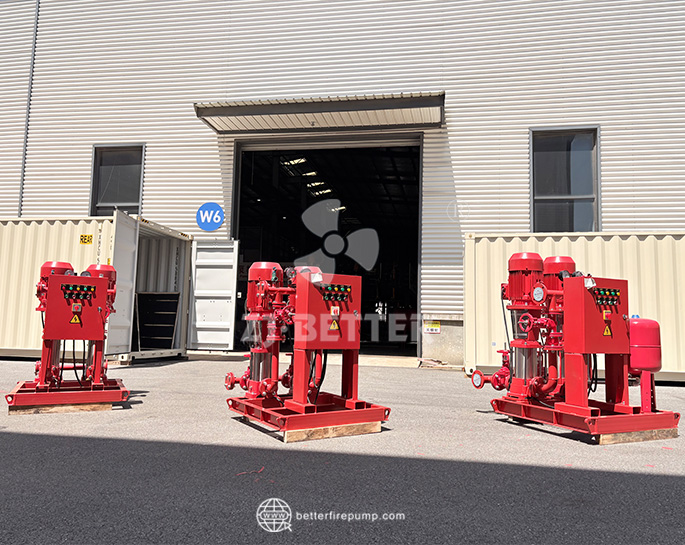
For fire protection projects, selecting a manufacturer with comprehensive testing capabilities can provide greater confidence in the consistency and reliability of the fire pump equipment.
Conclusion
Fire pump performance testing is essential for verifying that a fire pump can deliver the required flow and pressure when a fire protection system needs it.
A complete test should include careful preparation, system inspection, accurate measuring equipment, multiple operating points, detailed data recording, and comparison with the expected pump performance curve.
The key stages include testing the pump at churn, rated flow, and high-flow conditions while monitoring suction pressure, discharge pressure, flow rate, pump speed, and driver performance.
Accurate testing does more than confirm whether a pump starts successfully. It provides a detailed picture of how the fire pump performs across its operating range.
For fire pump manufacturers, contractors, fire protection engineers, and facility owners, a well-executed fire pump performance test is an important tool for quality control, commissioning, system reliability, and long-term fire safety.