
.png)
.png)
.png)
In fire protection projects, the fire pump room is one of the most critical yet often misunderstood spaces in a building. Designers, contractors, and owners frequently ask the same question: Is ventilation enough, or is a dedicated cooling system required?
Understanding the difference between fire pump room ventilation and a cooling system is essential for compliance, equipment reliability, and long-term operational safety. Improper environmental control can result in overheating, engine failure, electrical damage, or even non-compliance with NFPA standards.
As a fire pump manufacturer, we often see projects where environmental control is either overdesigned—adding unnecessary HVAC systems—or underdesigned, leading to serious operational risks. This article clarifies when ventilation is required, when cooling becomes necessary, and how to make the correct engineering decision.
Understanding Fire Pump Room Environmental Requirements
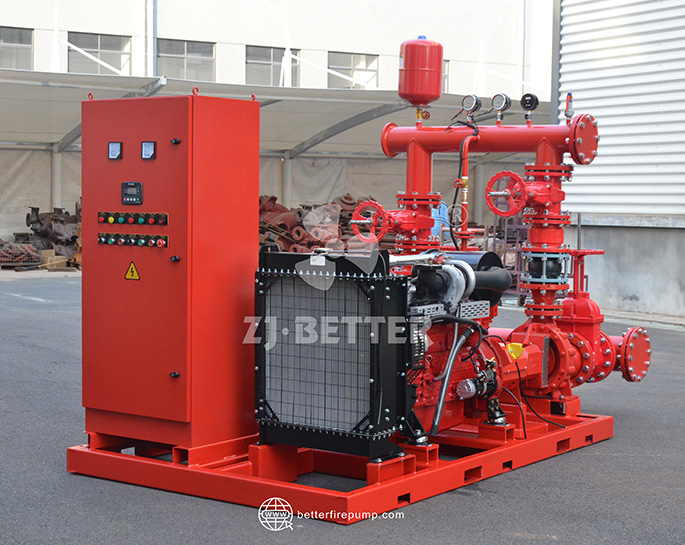
The fire pump room houses one or more of the following:
-
Electric motor-driven fire pumps
-
Diesel engine-driven fire pumps
-
Jockey pumps
-
Controllers and electrical panels
Each component has different environmental sensitivities. The key factors that must be controlled inside the pump room include:
-
Ambient temperature
-
Heat accumulation during operation
-
Air supply for combustion (diesel engines)
-
Humidity and condensation
The applicable standard governing fire pump installation is NFPA 20, issued by the National Fire Protection Association. NFPA 20 provides minimum requirements for fire pump room temperature and ventilation but does not always mandate air conditioning.
This distinction is critical.
What Is Fire Pump Room Ventilation?
Fire pump room ventilation refers to the controlled movement of air into and out of the pump room to:
-
Provide fresh air supply
-
Remove heat generated by equipment
-
Support diesel engine combustion
-
Prevent heat buildup
Ventilation can be natural or mechanical.
Natural ventilation uses louvers and wall openings to allow air exchange. Mechanical ventilation uses intake fans and exhaust fans to actively move air.
Ventilation is primarily about air exchange.
What Is a Fire Pump Room Cooling System?
A cooling system, typically air conditioning or dedicated HVAC equipment, actively lowers and regulates the room temperature.
Cooling systems:
-
Maintain a controlled temperature setpoint
-
Remove excess heat beyond natural dissipation
-
Provide stable operating conditions in hot climates
Cooling is about temperature control—not just air movement.
NFPA 20 Temperature Requirements
According to NFPA 20:
-
The pump room must be maintained at a minimum temperature of 40°F (4°C) for electric motor-driven pumps.
-
For diesel engine-driven fire pumps, the minimum room temperature must be 70°F (21°C).
The reason diesel engines require higher temperatures is to ensure reliable starting and proper engine operation.
NFPA 20 also requires adequate ventilation to:
-
Supply combustion air
-
Remove radiator discharge heat
-
Prevent excessive room temperature rise
However, NFPA 20 does not explicitly require air conditioning unless environmental conditions demand it.
This is where engineering judgment becomes critical.
Diesel Fire Pump Room: Ventilation Is Mandatory
If your project includes a diesel engine-driven fire pump, ventilation is not optional.
Diesel engines generate significant heat during operation. Additionally, they require:
-
Continuous combustion air
-
Radiator heat discharge removal
-
Exhaust gas management
Without proper ventilation:
-
Room temperature can rapidly exceed safe limits
-
Engine performance will drop
-
Overheating shutdown may occur
-
Controller components may fail
A properly designed ventilation system must consider:
-
Engine heat rejection (kW or BTU/hr)
-
Radiator airflow volume
-
Intake air requirements
-
External ambient temperature
In most cases, mechanical ventilation is required for diesel fire pump rooms.
Electric Fire Pump Room: Is Ventilation Enough?
Electric motor-driven fire pumps produce significantly less heat compared to diesel engines.
For many projects:
-
Basic ventilation is sufficient
-
Heat generation is minimal
-
No combustion air is required
However, problems arise in the following situations:
-
Small enclosed rooms with poor airflow
-
High ambient outdoor temperatures
-
Multiple pumps installed in one space
-
Controllers sensitive to heat
Electrical controllers typically have maximum operating temperature limits around 104°F (40°C). If room temperatures exceed this level during standby or operation, cooling may become necessary.
When Is Ventilation Alone Sufficient?
Ventilation alone is generally sufficient when:
-
The fire pump is electric motor-driven
-
Ambient climate is moderate
-
Room size allows natural heat dissipation
-
Temperature calculations confirm safe limits
-
Controller manufacturer limits are respected
In temperate climates, properly sized intake and exhaust louvers often meet code and operational needs.
However, calculations must be performed—not assumptions.
When Is a Cooling System Necessary?
A cooling system becomes necessary under the following conditions:
1. Hot Climate Zones
In regions where outdoor temperatures regularly exceed 95°F (35°C), ventilation may introduce hot air rather than cool air. This can cause indoor temperatures to rise beyond safe operating limits.
2. Enclosed Basement Pump Rooms
Underground rooms with limited airflow often trap heat. Without active cooling, temperatures can gradually increase.
3. High Heat Load from Diesel Engines
If radiator discharge air cannot be directly ducted outdoors, residual heat may accumulate inside the room.
4. Sensitive Electronic Controllers
Modern digital fire pump controllers are more temperature-sensitive than older models. Prolonged high temperatures reduce electronic lifespan.
5. Project Specification Requirements
Some consultants or local authorities require temperature-controlled rooms regardless of climate.
In these scenarios, a dedicated cooling system or HVAC solution is recommended.
Common Design Mistakes
Mistake 1: Ignoring Heat Rejection Calculations
Many projects fail to calculate total heat rejection from diesel engines. The result is undersized ventilation.
Mistake 2: Assuming Ventilation Equals Cooling
Ventilation only replaces air. It does not lower temperature below ambient outdoor conditions.
Mistake 3: Oversizing HVAC Without Combustion Air Planning
Installing air conditioning without ensuring proper combustion air can create negative pressure issues.
Mistake 4: Not Separating Radiator Airflow
Radiator discharge should ideally be ducted directly outside to prevent recirculation.
Practical Engineering Approach
To determine whether ventilation or cooling is required, follow this structured approach:
Step 1: Identify Pump Type
-
Electric motor
-
Diesel engine
Step 2: Determine Local Climate Data
-
Maximum summer temperature
-
Seasonal extremes
Step 3: Calculate Heat Load
-
Motor heat output
-
Engine heat rejection
-
Controller heat
Step 4: Review Equipment Temperature Limits
-
Engine manufacturer limits
-
Controller ratings
Step 5: Compare Indoor Predicted Temperature to Limits
If predicted indoor temperature exceeds allowable limits, cooling is required.
Special Considerations for Diesel Fire Pumps
Diesel fire pump rooms require special attention to:
-
Combustion air volume
-
Radiator airflow
-
Exhaust piping
-
Fresh air intake placement
-
Louvers with motorized dampers
If radiator discharge air is ducted directly outdoors, internal room heat load is significantly reduced.
If not, cooling requirements increase dramatically.
This is one of the most important decisions during pump room design.
Energy Efficiency and Reliability Balance
Some owners automatically install air conditioning to “be safe.” While this may increase comfort, it introduces new risks:
-
HVAC failure during emergency
-
Maintenance requirements
-
Additional energy cost
-
Potential system dependency
Fire pump rooms must remain functional even if building HVAC systems fail.
Therefore:
Ventilation should always be designed as the primary life-safety mechanism. Cooling should be supplemental when necessary—not a substitute for proper ventilation.
Cost Comparison
Ventilation System:
-
Lower initial cost
-
Minimal maintenance
-
Passive or fan-based operation
-
Code-required for diesel pumps
Cooling System:
-
Higher capital cost
-
Ongoing maintenance
-
Electrical dependency
-
Increased design complexity
From a lifecycle perspective, cooling should only be installed when justified by environmental conditions.
Final Recommendation: Which Is Necessary?
The correct answer is:
Ventilation is always necessary. Cooling is conditionally necessary.
Every fire pump room—especially diesel engine-driven systems—must have properly engineered ventilation.
Cooling systems become necessary when:
-
Climate conditions cause excessive indoor temperature
-
Heat load calculations exceed equipment limits
-
Project specifications demand temperature control
The decision must be based on engineering analysis, not guesswork.
.jpg)
Conclusion
Fire pump room environmental control directly impacts life safety system reliability. While ventilation ensures air exchange and combustion support, cooling systems regulate temperature when ambient conditions exceed safe thresholds.
For electric fire pumps in moderate climates, ventilation is often sufficient. For diesel fire pumps or projects in hot regions, detailed heat load calculations may justify supplemental cooling.
The key is understanding the difference between moving air and lowering temperature—and designing accordingly.
If you are planning a fire pump project, consult your pump manufacturer early in the design phase. Proper ventilation and temperature control are not optional details—they are critical components of a reliable fire protection system.