
.png)
.png)
.png)
Diesel Fire Pump Batteries: Complete Guide
Feb 09, 2026
Share:
In a diesel engine fire pump system, the battery is not a small accessory—it is a life-safety component. When a fire occurs and utility power is unavailable or compromised, the diesel fire pump must start immediately. Without a reliable battery system, even the most robust diesel engine will fail to deliver water when it matters most.
For fire protection contractors, consultants, facility managers, and project engineers, understanding diesel fire pump batteries is essential to ensuring compliance, reliability, and long-term system performance.
Why Diesel Fire Pump Batteries Are Critical
Unlike electric fire pumps that rely on a stable power supply, diesel fire pumps depend on battery power for engine starting. During a fire, electrical infrastructure may already be compromised. The diesel engine must start automatically, often after long standby periods, and operate at full load without hesitation.
A weak or poorly maintained battery can result in:
-
Failure to start
-
Delayed start attempts
-
Engine cranking at insufficient speed
-
Complete system failure
Because fire pumps are designed for emergency operation, reliability is non-negotiable.
NFPA 20 Requirements for Diesel Fire Pump Batteries
The primary standard governing diesel fire pump installations is National Fire Protection Association under its widely adopted standard NFPA 20.
According to NFPA 20 requirements for diesel-driven fire pumps:
-
Two storage battery units are required.
-
Each battery must be capable of independently starting the engine.
-
The batteries must be arranged so failure of one does not affect the other.
-
Each battery must have its own dedicated charger.
-
Automatic starting must be possible without manual intervention.
This redundancy ensures that if one battery fails due to age, corrosion, or charger malfunction, the second battery can still start the engine.
In most compliant installations, the system is configured for sequential cranking—if the first battery fails to start the engine, the second automatically attempts to crank.
Battery Configuration: Why Two Batteries?
The use of dual batteries is a safety requirement, not a design preference. Fire pumps must operate under worst-case conditions. A single battery system introduces an unacceptable single point of failure.
Each battery system includes:
-
Battery unit
-
Independent charging circuit
-
Separate cables and protection
-
Dedicated monitoring indicators
This separation ensures maximum reliability and code compliance.
Types of Batteries Used in Diesel Fire Pumps
The most common battery types used in diesel fire pump systems include:
1. Lead-Acid Batteries
These are the traditional and most widely used option. They are cost-effective and readily available. Within this category, there are:
-
Flooded (wet cell) batteries
-
Maintenance-free sealed batteries
Flooded batteries require regular electrolyte level inspection, while sealed batteries reduce maintenance needs.
2. AGM (Absorbent Glass Mat) Batteries
AGM batteries are sealed and vibration-resistant. They offer:
-
Lower self-discharge rate
-
Improved reliability
-
Reduced maintenance
These are increasingly preferred in modern fire pump packages due to their performance stability.
3. High Cold Cranking Amp (CCA) Batteries
Diesel engines require high starting torque. The battery must deliver sufficient Cold Cranking Amps (CCA) to rotate the engine at the required speed, especially in low-temperature environments.
Battery Sizing and Capacity
Proper battery sizing is critical. Undersized batteries may start the engine under ideal conditions but fail under real-world scenarios such as:
-
Cold weather
-
Extended standby periods
-
Repeated crank cycles
Battery sizing considerations include:
-
Engine displacement
-
Required cranking speed
-
Ambient temperature
-
Number of crank attempts required by code
NFPA 20 requires the batteries to be capable of at least six consecutive cranking cycles (typically 15 seconds each with rest intervals).
In cold climates, battery heaters may be required to maintain optimal temperature and ensure reliable starting.
Fire Pump Battery Chargers
Each battery must have its own charger. The charger must:
-
Automatically maintain full charge
-
Prevent overcharging
-
Include monitoring and fault indication
-
Be powered from a reliable source
A common failure point in diesel fire pump systems is not the battery itself but the charger. If the charger fails silently, the battery may discharge over time without detection.
Modern chargers often include:
-
Voltmeter and ammeter displays
-
AC power failure alarms
-
Charger failure alarms
-
Low battery voltage alarm
Regular inspection of charger indicators is essential.
Installation Best Practices
Improper installation can compromise battery performance even if the battery is correctly sized and compliant.
Key installation practices include:
-
Use properly rated cables
-
Minimize cable length to reduce voltage drop
-
Secure terminals to prevent vibration loosening
-
Apply anti-corrosion protection
-
Ensure adequate ventilation
Battery terminals should be clean and tightly connected. Loose connections increase resistance and reduce available cranking power.
Maintenance Requirements
Diesel fire pump batteries require routine inspection and testing. Maintenance tasks typically include:
Weekly Visual Inspection
-
Check charger status lights
-
Inspect for corrosion
-
Confirm no leakage
-
Verify cable integrity
Monthly Testing
-
Record battery voltage
-
Confirm charger operation
-
Inspect electrolyte levels (for flooded batteries)
Annual Testing
-
Conduct load testing
-
Verify cranking performance
-
Replace aging batteries if performance degrades
Even if a battery appears functional, internal sulfation may reduce capacity over time. Most fire pump batteries have a service life of 2 to 5 years, depending on environmental conditions and maintenance quality.
Proactive replacement is often safer than waiting for failure.
Common Causes of Battery Failure
Understanding why batteries fail helps prevent unexpected outages.
1. Sulfation
Occurs when batteries remain partially discharged for long periods. This reduces capacity and cranking power.
2. Charger Failure
A malfunctioning charger can overcharge or undercharge the battery, leading to premature failure.
3. Corrosion
Corroded terminals increase resistance and reduce starting power.
4. Temperature Extremes
High temperatures accelerate battery degradation. Low temperatures reduce available cranking amps.
5. Infrequent Testing
Batteries may degrade silently. Without regular testing, failures remain hidden until an emergency.
Environmental Considerations
Battery performance is highly temperature dependent.
-
At low temperatures, available CCA decreases significantly.
-
At high temperatures, internal chemical reactions accelerate, shortening battery life.
For installations in cold climates, battery heaters and insulated enclosures may be required. For hot climates, adequate ventilation and temperature control improve longevity.
Monitoring and Alarm Integration
Modern diesel fire pump controllers integrate battery monitoring functions. These may include:
-
Low voltage alarms
-
Charger failure alarms
-
AC power loss indication
-
Battery trouble signal
These alarms are typically connected to the fire alarm system or building management system for remote supervision.
Continuous monitoring enhances reliability and code compliance.
Replacement Strategy and Lifecycle Planning
A strategic battery replacement program reduces risk.
Recommended best practice:
-
Replace batteries every 3 years in critical facilities
-
Replace sooner in harsh environments
-
Replace both batteries simultaneously to maintain balanced performance
Mixing old and new batteries in a dual system may reduce reliability.
Documentation of installation dates and testing records is critical for audits and inspections.
UL and Compliance Considerations
Many diesel fire pump packages are required to be listed and compliant with recognized safety standards. In North America and many international markets, listing under Underwriters Laboratories is often required.
When selecting batteries and chargers, ensure compatibility with:
-
UL listed fire pump controllers
-
NFPA 20 requirements
-
Local authority having jurisdiction requirements
Compliance ensures both safety and project approval.
How to Improve Reliability in Diesel Fire Pump Battery Systems
For fire protection professionals and facility owners, the following actions significantly improve system reliability:
-
Choose high-quality batteries from reputable manufacturers
-
Verify proper CCA rating for engine size
-
Install dual independent charging circuits
-
Perform routine inspection and testing
-
Replace batteries proactively
-
Monitor alarm systems regularly
-
Keep detailed maintenance logs
Reliability is achieved through disciplined maintenance, not just correct installation.
The Role of the Manufacturer
As a fire pump manufacturer, system integration matters. The battery system is not a separate component—it must be engineered as part of the complete diesel fire pump package.
Proper design considerations include:
-
Engine starting torque requirements
-
Controller compatibility
-
Environmental operating conditions
-
Compliance with international codes
-
Ease of maintenance access
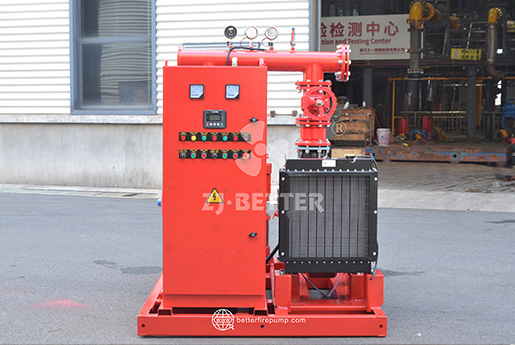
A well-designed fire pump system ensures that the battery, charger, controller, and engine function as a coordinated unit.
.jpg)
Final Thoughts
Diesel fire pump batteries are a small but mission-critical part of the fire protection system. Their purpose is simple: start the engine without fail when a fire emergency occurs.
However, ensuring that reliability requires:
-
Proper sizing
-
Dual redundancy
-
Code compliance
-
Correct installation
-
Routine inspection
-
Preventive replacement
For engineers, contractors, and facility managers, understanding diesel fire pump battery systems is not optional—it is essential to delivering dependable fire protection.