
.png)
.png)
.png)
Why Is Fire Pump Consuming Too Much Power?
Jul 08, 2026
Share:
Fire pumps are one of the most critical components of any fire protection system. Whether installed in commercial buildings, industrial facilities, warehouses, airports, hospitals, or manufacturing plants, they must deliver reliable performance whenever an emergency occurs. Although fire pumps do not operate continuously under normal conditions, excessive power consumption during testing, commissioning, or emergency operation often indicates that something within the system is not functioning correctly.
High power consumption does more than increase operating costs. It can accelerate equipment wear, shorten motor life, increase maintenance requirements, and even reduce the reliability of the entire fire protection system. Identifying the reasons behind abnormal energy usage allows facility managers, maintenance engineers, and fire protection professionals to correct problems before they become expensive failures.
This guide explains the most common reasons a fire pump consumes too much power, how to diagnose the issue, and the best practices for maintaining efficient operation.
.jpg)
Understanding Fire Pump Power Consumption
Before investigating excessive power consumption, it is important to understand how a fire pump normally uses energy.
The motor converts electrical or diesel engine power into mechanical energy that rotates the pump impeller. The impeller increases water pressure and flow to meet the fire protection system's required demand.
Power consumption depends on several factors, including:
- Pump flow rate
- Pump discharge pressure
- Motor efficiency
- Pump efficiency
- System resistance
- Water source conditions
- Mechanical condition of the equipment
When every component operates correctly, the pump consumes only the power necessary to deliver its designed performance. Increased resistance, mechanical defects, or incorrect operating conditions force the motor to work harder, increasing power consumption.
Common Causes of Excessive Fire Pump Power Consumption
1. Pump Operating Away from Its Best Efficiency Point
Every centrifugal fire pump is designed to operate most efficiently at a specific flow rate known as the Best Efficiency Point (BEP).
If the pump regularly operates significantly above or below this point, efficiency decreases while power requirements increase.
Common reasons include:
- Incorrect pump selection
- Changes in system demand
- Modified piping layouts
- Improper testing procedures
Operating away from the BEP also increases vibration, bearing loads, and seal wear.
2. Oversized Fire Pump
Selecting a pump larger than the actual system requirements is a surprisingly common issue.
An oversized pump may generate:
- Higher flow than required
- Higher pressure than necessary
- Increased motor load
- Greater hydraulic losses
Although larger pumps appear to provide additional safety margins, they often consume considerably more energy while reducing overall efficiency.
Proper hydraulic calculations during system design are essential.
3. Excessive System Pressure Loss
As piping systems age, pressure losses gradually increase.
Causes include:
- Corroded pipes
- Mineral deposits
- Obstructed valves
- Dirty strainers
- Undersized piping
- Excessive fittings
- Partially closed valves
The pump must overcome this additional resistance, increasing both motor current and power consumption.
Routine inspection of the piping network helps minimize unnecessary hydraulic losses.
4. Worn Pump Impeller
The impeller is responsible for transferring energy to the water.
Over time, erosion, corrosion, cavitation, or debris damage can reduce its efficiency.
Signs of impeller wear include:
- Reduced pressure
- Lower flow
- Increased vibration
- Higher power consumption
- Noise during operation
Damaged impellers force the motor to work harder while delivering reduced hydraulic performance.
5. Bearing Problems
Bearings allow smooth rotation of the pump shaft.
When bearings become worn or improperly lubricated, friction increases significantly.
Common symptoms include:
- Elevated motor temperature
- Increased vibration
- Unusual noise
- Higher electrical current
- Shaft instability
Regular lubrication and scheduled bearing replacement significantly improve pump efficiency.
6. Misalignment Between Pump and Motor
Even slight shaft misalignment creates additional mechanical resistance.
Misalignment may occur because of:
- Poor installation
- Foundation settlement
- Pipe strain
- Thermal expansion
- Maintenance errors
The additional friction increases power demand while accelerating bearing and coupling wear.
Laser alignment tools have become the preferred method for maintaining precise alignment.
7. Pump Cavitation
Cavitation occurs when pressure at the pump inlet falls below the vapor pressure of water.
Tiny vapor bubbles form and collapse violently inside the pump.
Cavitation causes:
- Loud knocking sounds
- Reduced flow
- Vibration
- Impeller damage
- Reduced efficiency
- Increased energy consumption
Common causes include:
- Insufficient suction pressure
- Blocked suction piping
- Low water level
- Excessive suction lift
- Air leaks
Maintaining adequate Net Positive Suction Head (NPSH) is essential for efficient operation.
8. Electrical Motor Problems
Sometimes the problem is not the pump itself but the motor driving it.
Electrical issues may include:
- Low voltage
- Voltage imbalance
- Phase loss
- Poor power factor
- Overloaded motor
- Damaged windings
These conditions increase current draw while reducing motor efficiency.
Routine electrical inspections should include:
- Voltage measurements
- Current measurements
- Insulation resistance testing
- Thermal imaging
- Power quality analysis
9. Improper Motor Sizing
A motor that is too small continuously operates near overload conditions.
Conversely, an oversized motor may operate inefficiently under light loads.
Proper motor selection should consider:
- Pump curve
- Maximum flow
- Starting current
- Service factor
- Ambient temperature
- Safety margins
Matching the motor to the pump's actual operating requirements improves both efficiency and reliability.
10. Excessive Mechanical Friction
Mechanical friction can originate from numerous sources.
Examples include:
- Damaged mechanical seals
- Bent shafts
- Tight packing
- Foreign objects
- Coupling problems
- Improper lubrication
Every additional source of friction requires more motor torque, increasing energy consumption.
Routine inspections help identify these issues before major failures occur.
11. Incorrect Pump Speed
Fire pumps are designed to operate at specific rotational speeds.
Operating at incorrect speed may result from:
- Incorrect motor frequency
- Improper controller settings
- Engine governor problems
- Variable speed control issues
Even small speed increases dramatically affect power consumption.
Because centrifugal pump power increases approximately with the cube of speed, a modest speed increase can produce a substantial rise in energy demand.
12. Poor Maintenance Practices
Neglected maintenance remains one of the leading causes of inefficient fire pump operation.
Common maintenance deficiencies include:
- Dirty filters
- Lack of lubrication
- Loose fasteners
- Corroded components
- Worn seals
- Undetected leaks
Preventive maintenance keeps every component operating at peak efficiency while reducing long-term operating costs.
How to Diagnose High Fire Pump Power Consumption
A systematic approach produces the most accurate diagnosis.
Step 1: Compare Current Operating Data
Record:
- Voltage
- Current
- Pressure
- Flow rate
- Pump speed
- Water level
- Motor temperature
Compare these values with factory acceptance test results and design specifications.
Step 2: Inspect Mechanical Components
Check:
- Bearings
- Couplings
- Alignment
- Shaft condition
- Seals
- Impeller
Mechanical defects often reveal themselves through vibration or abnormal noise.
Step 3: Evaluate Hydraulic Performance
Measure actual system pressure and flow.
If the pump is operating outside its design curve, investigate piping restrictions, valve positions, or changes in system demand.
Step 4: Review Electrical Performance
Measure:
- Line voltage
- Phase balance
- Motor current
- Power factor
- Motor temperature
Electrical abnormalities frequently contribute to increased power consumption.
Step 5: Perform Vibration Analysis
Modern vibration monitoring equipment can identify:
- Bearing wear
- Misalignment
- Shaft imbalance
- Mechanical looseness
- Cavitation
Early detection prevents major failures while maintaining efficient operation.
Preventive Measures to Reduce Fire Pump Power Consumption
Reducing energy consumption begins with good engineering and continues through the entire service life of the equipment.
Recommended practices include:
Select the Correct Pump
Choose a fire pump based on accurate hydraulic calculations rather than excessive safety margins.
Proper sizing improves efficiency and extends equipment life.
Follow Manufacturer Installation Guidelines
Correct installation minimizes:
- Pipe strain
- Misalignment
- Suction problems
- Vibration
Professional installation significantly reduces future maintenance issues.
Conduct Regular Testing
Routine performance testing helps identify gradual efficiency losses before they become serious.
Testing should include:
- Flow tests
- Pressure measurements
- Current monitoring
- Vibration analysis
- Visual inspections
Trend analysis over time provides valuable insight into equipment health.
Maintain Clean Suction Conditions
Keep suction piping free of:
- Debris
- Scale
- Sediment
- Air pockets
Proper suction conditions improve hydraulic efficiency and reduce cavitation risk.
Lubricate Moving Parts
Proper lubrication reduces friction while extending the life of:
- Bearings
- Couplings
- Mechanical seals
Always use the lubricant recommended by the equipment manufacturer.
Monitor Motor Performance
Install monitoring equipment to continuously observe:
- Voltage
- Current
- Temperature
- Running hours
Predictive maintenance allows developing problems to be corrected before efficiency declines significantly.
Replace Worn Components Promptly
Delaying replacement of worn impellers, bearings, seals, or couplings often leads to increased energy consumption and more expensive repairs later.
Timely maintenance is usually far less costly than emergency repairs.
The Importance of Choosing a High-Efficiency Fire Pump
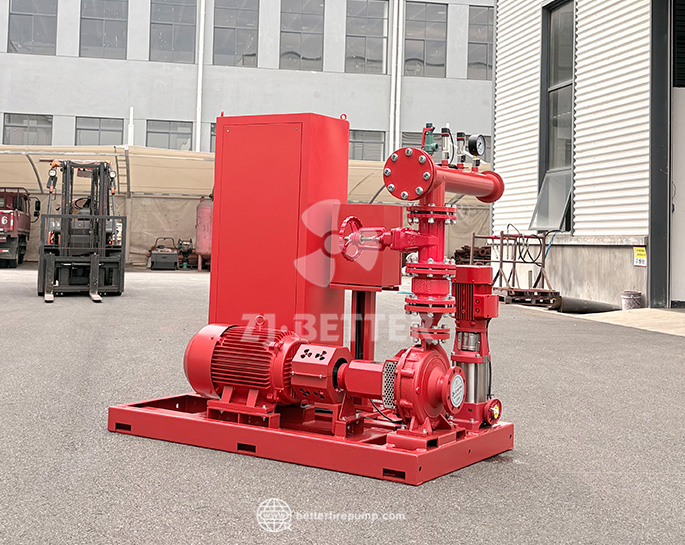
Not all fire pumps offer the same hydraulic efficiency. High-quality manufacturers invest heavily in hydraulic design, precision machining, quality control, and comprehensive performance testing to ensure every pump delivers reliable operation at its intended duty point.
Features commonly found in high-efficiency fire pumps include optimized impeller geometry, accurately machined pump casings, balanced rotating assemblies, premium bearings, and high-efficiency motors. These design elements help minimize energy losses, reduce vibration, and extend service life.
Equally important is rigorous factory testing. Performance verification before shipment confirms that each fire pump meets its specified flow, pressure, and efficiency targets. For facilities where reliability is essential, selecting equipment from a manufacturer with advanced testing capabilities and strict quality standards can reduce lifecycle costs while improving long-term system performance.
Conclusion
Excessive fire pump power consumption is rarely caused by a single factor. Instead, it is usually the result of hydraulic inefficiencies, mechanical wear, electrical issues, improper installation, or inadequate maintenance. Ignoring these warning signs can lead to higher operating costs, premature equipment failure, and reduced system reliability when fire protection is needed most.
By understanding how fire pumps consume energy, conducting routine inspections, monitoring performance data, and addressing problems promptly, facility owners can significantly improve efficiency and extend equipment life. Selecting a properly sized, high-quality fire pump and maintaining it according to manufacturer recommendations are equally important steps in ensuring dependable performance.
Next: