
.png)
.png)
.png)
Why Fire Pump Efficiency Matters?
May 21, 2026
Share:
Fire pumps play a critical role in fire protection systems. During a fire emergency, the fire pump is responsible for delivering adequate water pressure and flow to sprinkler systems, hydrants, and standpipes. Without a reliable and efficient fire pump, even the most advanced fire protection system may fail to perform when it is needed most.
In modern commercial, industrial, and municipal facilities, fire pump efficiency is no longer just a technical concern. It directly affects system reliability, operational costs, maintenance requirements, and long-term safety performance. Whether the system uses an electric fire pump, diesel engine fire pump, or vertical turbine fire pump, efficiency has a major impact on overall fire protection effectiveness.
Understanding why fire pump efficiency matters helps facility owners, contractors, engineers, and fire protection professionals make better decisions when selecting, operating, and maintaining fire pump systems.
.jpg)
What Is Fire Pump Efficiency?
Fire pump efficiency refers to how effectively the pump converts input power into useful hydraulic energy. In simple terms, an efficient fire pump delivers the required water flow and pressure while minimizing energy loss.
Every fire pump experiences some degree of energy loss due to friction, heat, vibration, turbulence, and mechanical resistance. A highly efficient fire pump reduces these losses and operates closer to its optimal performance point.
Efficiency is commonly measured by comparing the hydraulic output power with the mechanical or electrical input power. The closer the ratio is to 100%, the more efficient the pump becomes.
Although no pump can achieve perfect efficiency, high-quality fire pumps are designed to maximize performance while reducing unnecessary energy consumption and wear.
Why Efficiency Matters in Fire Protection Systems
Reliable Emergency Performance
The primary purpose of a fire pump is to operate effectively during emergencies. An inefficient fire pump may struggle to maintain required pressure and flow rates, especially under demanding fire conditions.
When a fire protection system cannot deliver sufficient water supply, the consequences can be severe. Delayed suppression increases the risk of property damage, operational downtime, injuries, and loss of life.
Efficient fire pumps help ensure:
- Stable water pressure
- Consistent flow performance
- Faster sprinkler activation
- Reliable hydrant operation
- Better system responsiveness
In critical applications such as factories, warehouses, hospitals, airports, data centers, and high-rise buildings, reliability is essential. A properly designed and efficient fire pump system provides confidence that the fire protection system will function as intended.
Reduced Energy Consumption
Energy efficiency has become increasingly important in industrial and commercial operations. Although fire pumps do not run continuously under emergency conditions, they are regularly tested and maintained according to fire safety regulations.
Frequent testing and routine operation consume electricity or fuel. Inefficient pumps require more power to achieve the same performance level, leading to higher operational expenses over time.
Efficient electric fire pumps reduce electricity usage during testing and operation. Efficient diesel fire pumps consume less fuel and place less stress on the engine.
For facilities operating multiple pumps or large-capacity systems, the long-term energy savings can be significant.
Lower Maintenance Costs
Inefficient fire pumps often experience greater mechanical stress. Excessive vibration, overheating, cavitation, and pressure instability can accelerate wear on internal components.
Common maintenance issues caused by poor efficiency include:
- Bearing damage
- Seal leakage
- Impeller wear
- Shaft misalignment
- Excessive noise
- Motor overload
- Engine strain
Over time, these issues increase maintenance frequency and replacement costs.
Efficient fire pumps operate more smoothly and maintain better hydraulic balance. This helps extend the lifespan of components and reduces unexpected failures.
Lower maintenance requirements also improve system availability and reduce downtime during inspections or repairs.
The Relationship Between Pump Sizing and Efficiency
One of the most common causes of poor fire pump efficiency is incorrect pump sizing.
An oversized fire pump may generate excessive pressure, resulting in energy waste, vibration, and system instability. An undersized pump may fail to meet required flow demands during emergencies.
Proper pump selection requires careful analysis of:
- System flow requirements
- Pressure demands
- Building height
- Water supply conditions
- Pipe friction losses
- Hazard classification
Selecting the correct pump size ensures the system operates near its best efficiency point (BEP). The best efficiency point represents the condition where the pump performs most effectively with minimal energy loss and mechanical stress.
Professional fire pump manufacturers and fire protection engineers typically use hydraulic calculations and performance curves to identify the most suitable pump configuration.
How Efficient Fire Pumps Improve System Longevity
Fire protection systems are long-term investments. Many fire pump systems remain in service for decades when properly maintained.
Efficient pumps contribute to longer equipment life because they:
- Operate with lower vibration levels
- Generate less heat
- Experience reduced mechanical strain
- Maintain stable hydraulic performance
- Reduce internal component wear
When pumps consistently operate away from their optimal efficiency range, premature failure becomes more likely.
Longer service life provides several advantages:
- Reduced capital replacement costs
- Improved return on investment
- Greater operational reliability
- Lower lifecycle expenses
For industrial facilities and commercial buildings, extending the lifespan of fire protection equipment is an important financial and operational benefit.
Efficiency and Compliance with Fire Safety Standards
Fire pump systems must comply with various international and local fire protection standards. These may include NFPA 20 requirements, insurance regulations, and municipal fire safety codes.
Efficient fire pump systems help maintain compliance because they are more capable of delivering required hydraulic performance during acceptance testing and inspections.
Poorly performing pumps may fail to achieve:
- Required pressure ratings
- Minimum flow capacity
- Stable operational performance
- Reliable automatic startup
Compliance failures can result in costly corrective actions, project delays, or increased insurance concerns.
Manufacturers that provide UL listed and NFPA 20 compliant fire pumps often focus heavily on hydraulic efficiency and performance reliability to meet strict industry standards.
The Impact of Pump Design on Efficiency
Fire pump efficiency depends heavily on engineering and manufacturing quality.
Several design factors influence performance, including:
- Impeller design
- Pump casing geometry
- Material selection
- Shaft alignment
- Bearing quality
- Hydraulic balancing
- Motor or engine matching
Advanced manufacturing technologies help improve hydraulic performance while reducing energy losses.
High-quality materials also play a role. Corrosion-resistant materials and precision-machined components help maintain long-term efficiency, especially in demanding environments.
Modern fire pump manufacturers continuously improve pump design to achieve better efficiency, reliability, and durability.
Efficiency in Electric vs. Diesel Fire Pumps
Both electric and diesel fire pumps can achieve high efficiency levels when properly designed and maintained, but each system has unique considerations.
Electric Fire Pumps
Electric fire pumps are known for:
- Stable performance
- Lower operational noise
- Reduced maintenance requirements
- High energy efficiency
They are commonly used in facilities with reliable electrical infrastructure.
Efficient electric pumps help reduce electricity costs and simplify routine testing procedures.
Diesel Engine Fire Pumps
Diesel fire pumps are widely used where backup power reliability is essential.
Advantages include:
- Independent operation during power failures
- Strong performance in remote locations
- High reliability for critical facilities
However, diesel engines require fuel management, cooling systems, and periodic engine maintenance.
Efficient diesel fire pumps help reduce fuel consumption, engine wear, and operating costs while maintaining reliable emergency readiness.
Common Causes of Fire Pump Inefficiency
Several operational and mechanical issues can reduce fire pump efficiency over time.
Common causes include:
- Worn impellers
- Improper alignment
- Pipe restrictions
- Cavitation
- Corrosion buildup
- Air leaks
- Incorrect operating conditions
- Lack of maintenance
Even a well-designed fire pump can lose efficiency if maintenance is neglected.
Routine inspections and performance testing help identify problems before they become serious.
Monitoring pressure, flow, vibration, temperature, and power consumption can provide valuable insight into pump condition and efficiency trends.
How to Improve Fire Pump Efficiency
Improving fire pump efficiency requires a combination of proper design, quality equipment, and preventive maintenance.
Important strategies include:
Choose the Correct Pump
Selecting the right pump for the application is the foundation of efficient operation. Work with experienced fire pump manufacturers and engineers to ensure proper sizing and configuration.
Perform Regular Maintenance
Routine maintenance helps maintain optimal performance. Important maintenance tasks include:
- Bearing inspection
- Seal replacement
- Alignment checks
- Lubrication
- Engine servicing
- Performance testing
Monitor System Performance
Tracking system performance helps detect efficiency losses early. Modern monitoring systems can identify pressure fluctuations, abnormal vibration, or declining performance trends.
Use High-Quality Components
Reliable motors, engines, controllers, valves, and pump components contribute to better efficiency and longer service life.
Follow Industry Standards
Proper installation and operation according to NFPA 20 and manufacturer recommendations help maintain system reliability and efficiency.
The Financial Value of Efficient Fire Pumps
Some buyers focus primarily on initial equipment cost, but long-term operational value is equally important.
An efficient fire pump system can provide:
- Lower energy costs
- Reduced maintenance expenses
- Fewer repairs
- Longer equipment lifespan
- Improved operational reliability
Over the lifetime of the system, these benefits can significantly outweigh the initial investment difference between low-quality and high-quality equipment.
For large industrial facilities, the financial impact of efficiency improvements can be substantial.
Conclusion
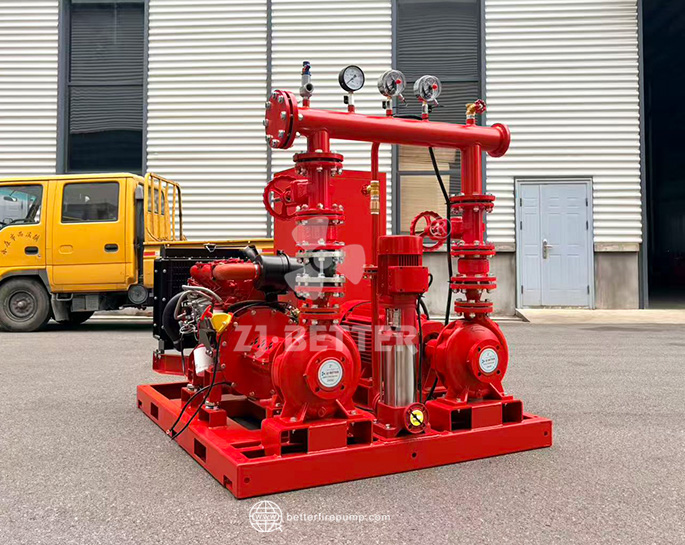
Fire pump efficiency is a critical factor in modern fire protection systems. It affects emergency performance, energy consumption, maintenance costs, equipment lifespan, and overall system reliability.
An efficient fire pump delivers the required water pressure and flow while minimizing energy loss and mechanical stress. This ensures better protection for buildings, assets, and occupants during fire emergencies.
Whether using electric fire pumps, diesel fire pumps, or vertical turbine fire pumps, investing in efficiency provides long-term operational and financial benefits.