
.png)
.png)
.png)
What Is NPSH in Fire Pumps and Why Does It Matter?
Nov 27, 2026
Share:
NPSH stands for Net Positive Suction Head, a critical hydraulic parameter used to evaluate the suction conditions of a pump. It represents the pressure energy available at the pump inlet above the vapor pressure of the liquid being pumped.
In fire protection systems, fire pumps must deliver the required water flow and pressure when emergency conditions occur. However, even a properly selected fire pump may experience performance problems if the suction side of the system cannot supply sufficient water pressure.
NPSH helps engineers determine whether water can enter the pump smoothly without vaporizing inside the impeller. When the suction pressure becomes too low, water may form vapor bubbles that collapse as pressure increases inside the pump. This phenomenon, known as cavitation, can cause vibration, noise, reduced performance, and mechanical damage.
Understanding NPSH is therefore essential for fire pump selection, suction piping design, installation, commissioning, and long-term reliability.
1. Understanding NPSH: The Basic Principle
A centrifugal fire pump works by converting mechanical energy into hydraulic energy. Water enters through the suction inlet, reaches the impeller eye, and is accelerated outward by the rotating impeller. The pump then converts velocity energy into pressure energy to deliver water into the fire protection system.
For this process to operate correctly, the pressure at the pump inlet must remain sufficiently high.
Water has a vapor pressure that changes with temperature. When local pressure drops to or below the water's vapor pressure, the liquid begins to vaporize and small vapor bubbles form. These bubbles may travel into higher-pressure areas inside the pump, where they collapse rapidly.
NPSH is used to evaluate how much pressure head is available above the vapor pressure of the liquid at the pump inlet.
It is usually expressed in feet or meters of liquid column, rather than directly in PSI or bar.
Two important NPSH values must be considered:
-
NPSHa – Net Positive Suction Head Available: The suction conditions provided by the installation and water supply.
-
NPSHr – Net Positive Suction Head Required: The minimum NPSH required by the pump under a particular operating condition.
The relationship between these two values determines whether the pump has adequate suction conditions to operate reliably.
2. NPSHa vs. NPSHr: What Is the Difference?
Although NPSHa and NPSHr are related, they represent different aspects of the pump system.
NPSHa – Net Positive Suction Head Available
NPSHa is determined by the water source and the entire suction system. It represents the amount of pressure head available at the pump inlet after accounting for atmospheric pressure, elevation, water temperature, and suction piping losses.
NPSHa is influenced by factors such as:
-
Water level in the storage tank or reservoir
-
Atmospheric pressure and installation altitude
-
Water temperature
-
Suction pipe diameter and length
-
Friction losses in the suction piping
-
Valves, elbows, strainers, and other fittings
-
Pump installation elevation relative to the water source
Because NPSHa depends on the system design, engineers and installation contractors can improve it by optimizing the suction arrangement.
NPSHr – Net Positive Suction Head Required
NPSHr is a characteristic of the pump itself. It is determined through testing and depends on the pump design, impeller geometry, rotational speed, and operating flow rate.
The pump manufacturer normally provides NPSHr data as part of the hydraulic performance information.
NPSHr is not a fixed value for every operating condition. As flow rate increases, suction losses and internal hydraulic requirements may increase, causing the pump's NPSH requirement to rise.
For this reason, engineers should evaluate NPSHr at the actual operating flow rather than relying on a single value from the pump's rated point.
The Fundamental NPSH Requirement
The basic relationship is:
NPSHa ≥ NPSHr
In practical engineering, however, designing with only a small difference between the two values may not provide sufficient protection against changes in operating conditions, measurement uncertainty, or variations in the water supply.
A suitable safety margin should therefore be considered according to the applicable standards, pump manufacturer's recommendations, and project requirements.
3. How to Calculate NPSH Available
NPSHa can be calculated by evaluating the pressure conditions at the pump suction.
For a pump drawing water from an open tank or reservoir, a simplified formula is:
NPSHa = Ha + Hs − Hv − Hf
Where:
-
Ha = Atmospheric pressure head
-
Hs = Static head, positive when the water level is above the pump centerline and negative when the pump is above the water level
-
Hv = Vapor pressure head of the water at its operating temperature
-
Hf = Friction and other hydraulic losses in the suction piping
All values should be expressed in consistent units of head.
Atmospheric Pressure Head
Atmospheric pressure helps push water into the pump when the water source is below the pump elevation.
At sea level, atmospheric pressure is approximately equivalent to 10.3 meters of water head under standard conditions. However, atmospheric pressure decreases as elevation increases.
This means that a fire pump installed at a high-altitude location may have less NPSHa than an identical pump installed at sea level, even if the suction piping and water tank arrangement are the same.
Static Head
Static head refers to the elevation difference between the water surface and the pump inlet reference point.
When the pump is installed below the water level, it benefits from positive suction head. This arrangement is commonly referred to as flooded suction.
When the pump is installed above the water level, the elevation difference reduces the available suction head and makes the suction conditions more demanding.
Vapor Pressure Head
Vapor pressure depends on the temperature of the water.
As water temperature increases, its vapor pressure increases. This reduces the pressure margin available before vapor formation begins.
Fire pump installations drawing water from heated storage tanks, industrial water supplies, or environments with elevated water temperatures should therefore pay particular attention to this factor.
Suction Pipe Losses
Friction losses occur as water flows through the suction pipe and associated components.
These losses increase with flow rate and can be affected by pipe diameter, pipe length, internal surface condition, fittings, valves, and flow disturbances.
A poorly designed suction pipeline can significantly reduce NPSHa, even when the water source itself provides sufficient pressure.
4. Why NPSH Matters in Fire Pump Systems
NPSH is particularly important in fire protection because the fire pump is expected to provide reliable performance during emergency operation. Suction problems may prevent the pump from delivering the required flow and pressure, even when the driver and pump are functioning correctly.
Preventing Cavitation
Cavitation occurs when pressure inside the pump drops below the vapor pressure of water, allowing vapor bubbles to form. When these bubbles move into higher-pressure areas, they collapse violently.
Repeated bubble collapse can damage the impeller surface, creating pitting and erosion. In severe cases, cavitation may affect pump performance and shorten the service life of mechanical components.
Maintaining sufficient NPSHa helps reduce the risk of cavitation and supports stable hydraulic operation.
Maintaining Rated Flow and Pressure
A fire pump must operate within its intended performance range to provide adequate water for the fire protection system.
Insufficient suction pressure can cause unstable flow, reduced discharge pressure, and poor pump performance. This can become especially problematic when the pump is required to operate at higher flow rates during system testing or emergency demand.
Adequate NPSH helps ensure that the pump receives a continuous supply of water and can perform according to its intended hydraulic characteristics.
Reducing Vibration and Mechanical Stress
Cavitation often produces unusual noise and vibration. These conditions can place additional stress on the impeller, shaft, bearings, seals, and other components.
Long-term operation under poor suction conditions may increase maintenance requirements and contribute to premature mechanical failure.
Proper suction design helps reduce unnecessary vibration and supports smoother pump operation.
Improving System Reliability
Fire protection equipment is designed to operate when it is needed most. A fire pump that experiences suction limitations may not provide dependable performance during an emergency.
NPSH evaluation should therefore be included in the engineering process rather than treated only as a troubleshooting measure after installation.
5. Common Causes of Insufficient NPSHa in Fire Pumps
Several installation and operating conditions can reduce available NPSH.
1. Undersized Suction Piping
A suction pipe that is too small increases water velocity and friction losses. As flow increases, the pressure loss may become significant, reducing NPSHa.
Suction piping should be properly sized according to the required flow rate and applicable fire protection design requirements.
2. Excessive Suction Pipe Length
Long suction pipelines increase friction losses. When the pump is located far from the water source, the additional piping resistance can reduce the pressure available at the pump inlet.
Where possible, the pump should be positioned close to the water supply to minimize suction piping length.
3. Too Many Elbows and Fittings
Multiple elbows, tees, reducers, valves, and other fittings introduce additional hydraulic resistance.
Poorly arranged fittings may also create turbulence or uneven flow entering the pump suction.
A simplified, properly designed suction arrangement can help reduce these losses.
4. Low Water Level in the Tank
When the water level in the storage tank decreases, the static suction head decreases.
For pumps operating under suction lift conditions, a lower water level can increase the elevation difference between the water surface and the pump, reducing NPSHa.
The minimum water level should be considered during system design to ensure the pump can operate under the worst expected supply condition.
5. High Water Temperature
Higher water temperatures increase vapor pressure, reducing the available NPSH.
This is particularly relevant for industrial facilities where water may be stored or supplied at elevated temperatures.
6. High Installation Altitude
At high elevations, atmospheric pressure is lower. This reduces the pressure available to support water entering the pump, especially in installations where the pump relies on atmospheric pressure to lift water from a source below it.
Altitude should be considered when selecting and designing fire pump systems.
7. Poor Suction Arrangement
Incorrect reducer orientation, abrupt changes in pipe direction, air pockets, inadequate submergence, or vortex formation at the water intake may negatively affect suction performance.
These issues can cause uneven flow, air entrainment, and additional pressure losses.
6. How to Improve NPSH Conditions in Fire Pump Installations
Improving NPSHa generally involves increasing the pressure available at the pump inlet or reducing losses in the suction system.
Optimize Pump Location
Installing the fire pump closer to the water source and, where practical, below the minimum water level can improve suction conditions.
Flooded suction is generally advantageous because water is supplied to the pump inlet through positive static head, reducing reliance on atmospheric pressure.
For vertical turbine fire pumps, the pump bowl assembly is installed below the water level, allowing the pump to draw water from sources such as underground tanks, wells, reservoirs, or other water supplies.
The pump configuration and installation arrangement should be selected according to the project requirements and water source characteristics.
Increase Suction Pipe Diameter
An appropriately sized suction pipe reduces water velocity and friction losses.
Increasing pipe diameter, where hydraulically and physically suitable, may help reduce suction losses and improve available NPSH.
Pipe sizing should be based on the actual flow requirements, system design, and applicable fire pump installation standards.
Reduce Unnecessary Fittings
Avoid unnecessary elbows, abrupt transitions, and restrictive components in the suction pipeline.
Where fittings are required, their arrangement should support smooth water flow toward the pump inlet.
Proper reducer selection and installation can also help prevent uneven flow conditions.
Maintain Adequate Water Supply
The water supply must remain sufficient throughout the required operating range.
Tank sizing, minimum operating water level, replenishment capacity, and suction intake arrangement should all be considered during design.
A fire pump should not be expected to compensate for an inadequate or poorly arranged water supply.
Verify Operating Conditions
NPSH requirements vary with flow and pump speed. Engineers should evaluate the pump at relevant operating conditions, including the maximum flow expected under the applicable design and testing requirements.
Pump selection should be based on complete performance data rather than rated flow and pressure alone.
7. NPSH Considerations During Fire Pump Selection
When selecting a fire pump, engineers should review more than the pump's rated flow and discharge pressure.
The following information should be considered:
-
Required fire pump flow rate
-
Required discharge pressure
-
Pump speed
-
Water source and minimum water level
-
Pump installation elevation
-
Suction pipe diameter and layout
-
Water temperature
-
Site elevation
-
Manufacturer's NPSHr curve
-
Expected operating range
A pump with suitable flow and pressure characteristics may still be unsuitable for a particular installation if the water supply cannot provide sufficient NPSHa.
For projects involving high flow rates, long suction pipelines, limited water supply pressure, elevated installation locations, or challenging tank arrangements, NPSH evaluation becomes especially important.
Fire pump manufacturers should provide reliable performance data to support the engineering process. System designers should use this information together with site conditions to verify the suitability of the selected pump.
8. Signs of NPSH Problems During Fire Pump Testing
Insufficient NPSH may become noticeable during commissioning, routine testing, or operation. Common warning signs include:
-
Unusual noise resembling gravel or rattling inside the pump
-
Excessive vibration
-
Fluctuating discharge pressure
-
Unstable flow rate
-
Reduced pump performance
-
Impeller pitting or erosion
-
Increased mechanical wear
These symptoms may also be caused by other hydraulic or mechanical problems. Therefore, cavitation should not be diagnosed based on noise alone.
When suction-related problems are suspected, engineers should inspect the water supply, suction pressure, water level, suction piping, valves, strainers, and pump operating conditions.
Testing should also verify that the pump is operating within its intended performance range and that the water supply can support the required flow.
9. NPSH and Different Types of Fire Pumps
NPSH considerations apply to various centrifugal fire pump configurations, although the suction arrangements may differ.
Horizontal Split Case Fire Pumps
Horizontal split case fire pumps are commonly used in commercial buildings, industrial facilities, warehouses, and large fire protection systems.
Their suction conditions depend on the water supply, installation elevation, and suction piping arrangement. Proper pipe sizing and layout are important to ensure adequate water supply to the pump inlet.
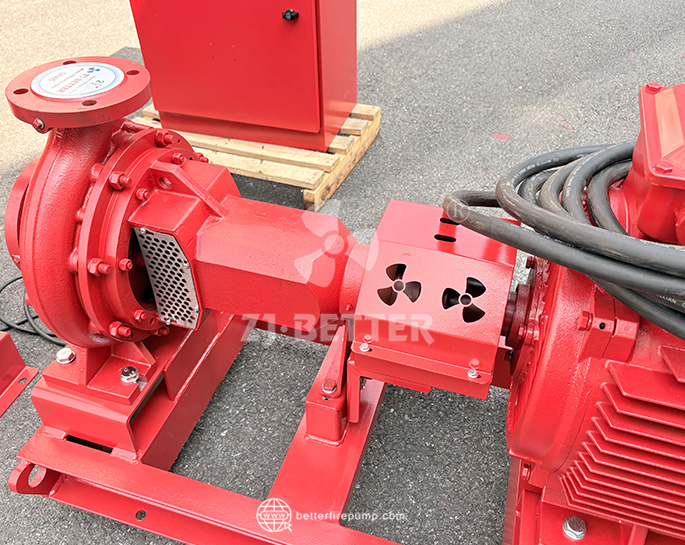
End Suction Fire Pumps
End suction fire pumps are often selected for applications where space and system configuration are important considerations.
The suction pipeline should be designed to minimize pressure losses and provide stable flow into the pump. The available NPSH should be verified against the manufacturer's data at the required operating conditions.
Vertical Turbine Fire Pumps
Vertical turbine fire pumps are suitable for applications where the water source is located below the pump discharge arrangement, including underground tanks, wells, and reservoirs.
Their design allows the pump bowl assembly to be submerged in the water source. However, water level, submergence, intake conditions, and the hydraulic characteristics of the pump still need to be evaluated to ensure reliable operation.
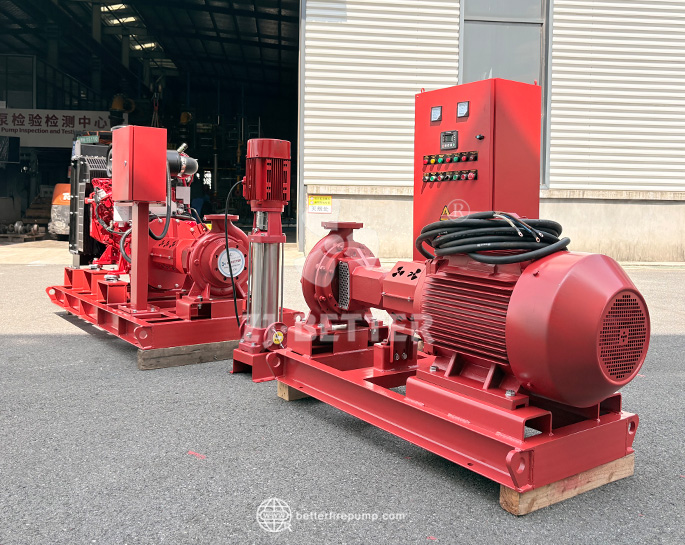
Diesel and Electric Fire Pump Sets
Whether a fire pump is driven by an electric motor or a diesel engine, NPSH is fundamentally a hydraulic consideration.
The driver provides the mechanical power required to operate the pump, but it cannot overcome inadequate suction conditions caused by poor water supply design.
Both electric and diesel-driven fire pump systems should therefore be evaluated for adequate NPSH under their intended operating conditions.
10. NPSH: An Important Part of Fire Pump Engineering
NPSH is more than a technical value listed on a pump performance curve. It is an essential factor in determining whether a fire pump can receive sufficient water without developing cavitation.
For fire protection engineers, contractors, consultants, and facility managers, understanding the difference between NPSHa and NPSHr helps improve pump selection, suction piping design, installation quality, and commissioning results.
The fundamental principle is straightforward: the available NPSH must be sufficient to meet the pump's required NPSH, with an appropriate margin for the intended operating conditions.
By considering water supply conditions, installation elevation, pipe sizing, friction losses, operating flow, and pump performance data during the design stage, engineers can reduce suction-related problems and improve fire pump reliability.
At BETTER Technology Group, fire pump performance is evaluated as part of the complete pumping system. From pump hydraulic design and manufacturing to performance testing and customized fire pump solutions, proper system matching is essential to delivering dependable fire protection equipment for different project requirements.