
.png)
.png)
.png)
-
 Mar 29, 2023Write a promotional article about Precautions for the use of diesel engine fire pumpsDiesel engine fire pumps are an invaluable tool in fighting fires, but they come with their own set of safety precautions. It is essential that operators understand these precautions and take them seriously.
First and foremost, only trained personnel should be allowed to operate diesel engine fire pumps. These pumps require a high level of skill and knowledge of the system, and untrained operators can create hazardous situations. It is important to ensure that operators understand the proper operation and maintenance of the pump, as well as any safety features that may be built into the system.
Another important precaution is to inspect the system regularly. This includes inspecting the fuel system, the engine, and the pump for any signs of wear or damage. Any defects should be addressed immediately to prevent a potential fire hazard. Additionally, operators should be aware of the pump's temperature limits and watch for any signs of overheating.
Additionally, operators should always wear the proper safety equipment when operating a diesel engine fire pump. This includes safety goggles, gloves, and protective clothing. These precautions help protect the operator from potential harm, as well as help prevent any accidental spills or fires.
Finally, operators should always adhere to the manufacturer's instructions. This includes following the recommended operating and maintenance procedures, as well as any other safety instructions. It is important to read and understand the manual before operating the pump, and to follow the instructions closely.
By taking the proper precautions and following the manufacturer's instructions, operators can ensure that their diesel engine fire pumps are operating safely and effectively.View details -
 Mar 29, 2023Fire Australia 2023 Conference & TradeshowAre you ready to join the most exciting event of 2023? Fire Australia 2023 Conference & Tradeshow is the place to be! Taking place from Wednesday 3 to Friday 5 May 2023, at the International Convention Centre in Sydney, this event is the perfect opportunity for fire professionals from all around the world to come together to share their knowledge and explore the latest products and services in the industry.
This conference and tradeshow will feature a range of keynote speakers and panel discussions on the latest topics, trends and developments in the fire industry. You’ll hear from industry experts and have the chance to network and collaborate with other fire professionals. There’s also a dedicated exhibition space where you can explore the latest products and services, as well as speak directly with suppliers and manufacturers.
The Fire Australia 2023 Conference & Tradeshow is the perfect event for anyone wanting to stay ahead of the curve in the fire industry. Attendees will gain valuable insights into the latest trends, technologies, and products. Plus, there’s plenty of opportunities to make new connections, form partnerships, and find the perfect solutions for your business.
Be sure to visit us at Booth No. 116, where we’ll be showcasing the latest products and services. We look forward to seeing you there!View details -
 Mar 28, 2023Fire pump electric valve positioning and structural characteristics and principles of common pumpsFire pump electric valve positioning and structural characteristics:
1. The fire pump electric valve positioning is mainly used to control the start and stop of the pump, the opening and closing of the valve, and the adjustment of the flow rate.
2. The fire pump electric valve positioning consists of a motor, a valve body, a valve core, a valve disc, a valve seat and other components.
3. The motor drives the valve core to rotate, so that the valve disc and the valve seat are opened or closed, and the flow rate can be adjusted by changing the distance between the valve disc and the valve seat.
4. The fire pump electric valve positioning has the advantages of simple structure, reliable performance, easy operation and maintenance, etc.
The principle of common pumps:
1. Centrifugal Pump: The centrifugal pump uses the centrifugal force generated by the rotation of the impeller to increase the water pressure and discharge the water.
2. Gear Pump: The gear pump uses two intermeshing helical gears to form a sealed chamber and move the liquid in the sealed chamber to achieve the purpose of increasing pressure and discharging water.
3. Rotary Vane Pump: The rotary vane pump uses a rotor with vanes to form a sealed chamber, and the liquid in the sealed chamber is moved to achieve the purpose of increasing the pressure and discharging the water.
4. Diaphragm Pump: The diaphragm pump uses a diaphragm to form a sealed chamber, and the liquid in the sealed chamber is moved to achieve the purpose of increasing the pressure and discharging the water.View details -
 Mar 28, 2023Overview of fire pump valves and valve classificationFire pump valves are used to control the flow of water in a fire protection system. They are typically installed in a fire pump system to ensure that water is delivered to the fire sprinkler system at the correct pressure and flow rate. Fire pump valves are available in several different types, including gate, globe, butterfly, check, and ball valves. Each type of valve has its own advantages and disadvantages, and the type chosen should be based on the specific requirements of the application. All fire pump valves must be tested and approved by a recognized testing agency to ensure compliance with fire protection standards.
Fire pump valves are used in fire protection systems to control the flow of water from the fire pump to the sprinkler system. They are designed to open or close quickly in response to a fire alarm and allow water to be quickly directed to the fire area. Fire pump valves are classified according to their function and operation. These include check valves, butterfly valves, gate valves, and ball valves.
Check valves are used to prevent backflow in the fire suppression system. They are designed to open when the pressure reaches a certain level and close when the pressure drops. They are usually used in combination with other valves to control the flow of water.
Butterfly valves are used to regulate the flow of water in the fire suppression system. They are designed to open quickly when the pressure reaches a certain level and close when the pressure drops. They are often used in combination with other valves to control the flow of water.
Gate valves are used to open or close the flow of water in the fire suppression system. They are designed to open and close quickly and can be used in combination with other valves to control the flow of water.
Ball valves are used to control the flow of water in the fire suppression system. They are designed to open and close quickly in the event of a fire to prevent water from flowing to the affected area. They are also used to isolate sections of a system for maintenance and repair.View details -
 Mar 23, 2023What should be paid attention to in the arrangement of water suction, outlet pipes and backup pumps in the fire pump room?1. Make sure that the inlet and outlet pipes of the fire pump are correctly connected with the fire water supply pipe network.
2. The water suction pipe should be connected with a reliable water source, such as a pool, pond, or reservoir.
3. Check that the backup pump is installed in the correct position and is connected to the same water supply source as the main fire pump.
4. Ensure that the arrangement of the suction and outlet pipes will not cause any obstruction or airlock.
5. Make sure that the water suction pipes and outlet pipes are properly secured and fixed.
6. Check that all the parts of the fire pump are correctly connected and functioning properly.
7. Ensure that the backup pumps are tested periodically to make sure that they are in good working order.View details -
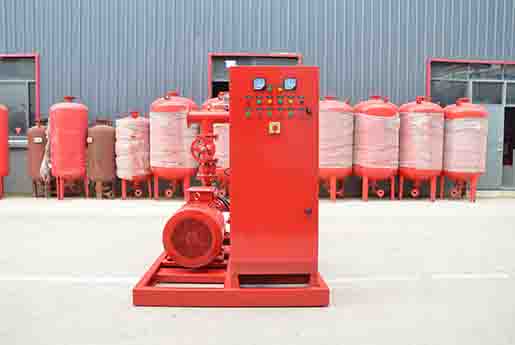 Mar 23, 2023The structure and function of the fire pump, the magnetic drive circulation pump and the function principle structure of the gate valveFire Pump
A fire pump is a device used to move water from a water source to a firefighting system, such as a sprinkler system or a standpipe. Fire pumps are typically powered by electric motors or diesel engines. They are designed to provide a steady flow of water at high pressure, usually in the range of 50 to 250 psi (345 to 1724 kPa). The fire pump is an essential component of a fire protection system and is typically connected to a network of pipes, valves, and nozzles that make up the actual firefighting system.
Magnetic Drive Circulation Pump
A magnetic drive circulation pump is a type of pump that uses a magnetic coupling to drive a rotating impeller within a sealed chamber. This type of pump uses a permanent magnet to drive the impeller, which is enclosed within the pump housing. The magnetic force of the impeller creates a centrifugal force that causes the fluid to flow through the pump. The magnetic drive circulation pump is often used in applications where the liquid is hazardous or corrosive, as it eliminates the need for a mechanical seal, which is required in traditional pumps.
Gate Valve
A gate valve is a type of valve used to control the flow of a liquid or gas. It consists of a round or rectangular valve body with a gate inside that can be opened or closed to regulate the flow. Gate valves are typically used in applications where a full shut-off of the flow is required, such as in water systems, oil and gas pipelines, and chemical processing plants. The gate valve is opened and closed by turning a wheel or lever that moves the gate up or down.View details