
.png)
.png)
.png)
How to Select a Fire Pump for a High-Rise Building
Sep 09, 2026
Share:
Learn how to select a fire pump for a high-rise building by evaluating flow, pressure, building height, system demand, pump type, and driver requirements.
Why Fire Pump Selection Matters in High-Rise Buildings
Selecting a fire pump for a high-rise building requires more than choosing a pump with a large flow rate. As building height increases, the fire protection system must overcome greater static pressure caused by elevation while still delivering the required flow at the hydraulically most demanding areas of the building.
A properly selected fire pump must provide sufficient pressure and flow to support the sprinkler system, standpipe system, hose connections, or other fire protection equipment under the required operating conditions. At the same time, the pump should not be unnecessarily oversized, because excessive pressure can create additional system design challenges and increase equipment and operating costs.
For this reason, fire pump selection should be based on hydraulic calculations, applicable fire protection standards, local regulations, building characteristics, and the actual requirements of the fire protection system.
For engineers, contractors, and building owners, understanding the major factors involved in high-rise fire pump selection can help create a more reliable and properly coordinated fire protection system.
.jpg)
1. Determine the Required Fire Pump Flow
The first step in selecting a fire pump is determining the required flow rate.
Fire protection systems are designed around a specific water demand. Depending on the building and system configuration, this demand may include sprinkler system flow, standpipe or hose connection demand, and other required water flows.
The fire pump should be capable of delivering the required flow at the pressure established by the hydraulic calculation.
For example, a high-rise building may have a relatively high flow requirement because multiple sprinkler zones or standpipe systems must be considered. However, the required flow should not simply be estimated from the number of floors.
Instead, the design engineer should determine the required water demand based on the applicable fire protection design criteria.
Common fire pump flow ratings include:
- 250 GPM
- 400 GPM
- 500 GPM
- 750 GPM
- 1,000 GPM
- 1,250 GPM
- 1,500 GPM
- 2,000 GPM
- 2,500 GPM
- 3,000 GPM and higher
The correct capacity depends on the hydraulic demand of the specific project.
2. Calculate the Required Fire Pump Pressure
For high-rise buildings, pressure is often one of the most important factors in fire pump selection.
Water loses pressure as it moves upward because of elevation. Approximately 0.433 psi is required to overcome each foot of elevation, or approximately 0.098 bar per meter.
For example, if the elevation difference between the water source and the highest required outlet is 100 meters, the static pressure loss caused by elevation alone is approximately 9.8 bar.
However, elevation is only one part of the calculation.
The required fire pump discharge pressure must also account for:
- Static elevation pressure
- Required pressure at the most demanding outlet
- Friction loss in piping
- Pressure losses through valves and fittings
- Backflow prevention equipment
- Sprinklers and other system components
- Other system-specific pressure losses
The pump therefore needs to provide sufficient pressure at the required flow, not simply a pressure value based on building height.
This is why hydraulic calculations are essential when selecting a fire pump for a high-rise building.
3. Identify the System Demand Point
Once the required flow and pressure are established, the next step is to identify the system demand point.
The fire pump must perform properly at the required operating point. This is generally expressed as a combination of flow and pressure, such as:
1,000 GPM at 150 PSI
The pump curve should be evaluated to confirm that the selected pump can meet the required duty point.
It is important to examine the complete pump performance curve rather than looking only at the rated flow and rated pressure.
A properly selected fire pump should also satisfy the applicable performance requirements across its operating range. The relationship between shutoff pressure, rated capacity, and maximum flow should be reviewed during the selection process.
4. Consider the Height of the Building
Building height has a direct effect on fire pump requirements.
In a low-rise building, the available water supply may be sufficient to provide the required pressure at the highest sprinkler or hose connection. In a high-rise building, however, the pressure available at lower elevations may not be enough to overcome the elevation and friction losses throughout the system.
As the building becomes taller, designers may need to consider different pressure zones.
For very tall buildings, a single fire pump system may not always be the most practical solution. The fire protection system can potentially be divided into multiple zones, with pressure-reducing equipment, intermediate pumping arrangements, or other engineered solutions used according to the project design and applicable codes.
The final arrangement should be determined by qualified fire protection professionals based on the building's hydraulic requirements.
5. Choose the Correct Fire Pump Type
The building application and available installation space influence the appropriate fire pump type.
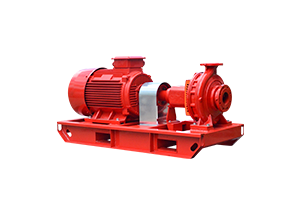
Common fire pump configurations include end-suction pumps, horizontal split-case pumps, vertical turbine pumps, and other approved fire pump designs.
Horizontal Split-Case Fire Pumps
Horizontal split-case pumps are widely used for larger fire protection applications. Their design can provide high flow capacity and convenient maintenance access.
They are often considered for large commercial buildings, industrial facilities, and high-rise projects where significant water flow is required.
End-Suction Fire Pumps
End-suction fire pumps can be suitable for applications with relatively moderate flow requirements and appropriate suction conditions.
Their compact configuration can be advantageous where equipment room space is limited.
Vertical Turbine Fire Pumps
Vertical turbine fire pumps are particularly important when the water source is located below the pump installation level or when a suction lift arrangement requires a vertical turbine configuration.
They can be used with water sources such as tanks, reservoirs, or underground water supplies when the system design requires this type of pump.
Selecting the pump type should therefore consider not only flow and pressure, but also the water source, suction conditions, installation arrangement, available space, and applicable approval requirements.
6. Select the Correct Fire Pump Driver
After determining the pump type, the appropriate driver must be selected.
The two major fire pump driver options are electric motors and diesel engines.
Electric Motor Fire Pumps
Electric motor-driven fire pumps are commonly used where a reliable electrical power supply is available.
Important considerations include:
- Available voltage
- Frequency
- Motor power
- Starting characteristics
- Electrical service capacity
- Fire pump controller requirements
- Emergency power arrangements
For high-rise buildings, the reliability of the electrical supply should be carefully evaluated because the fire pump must remain available during a fire emergency.
Diesel Engine Fire Pumps
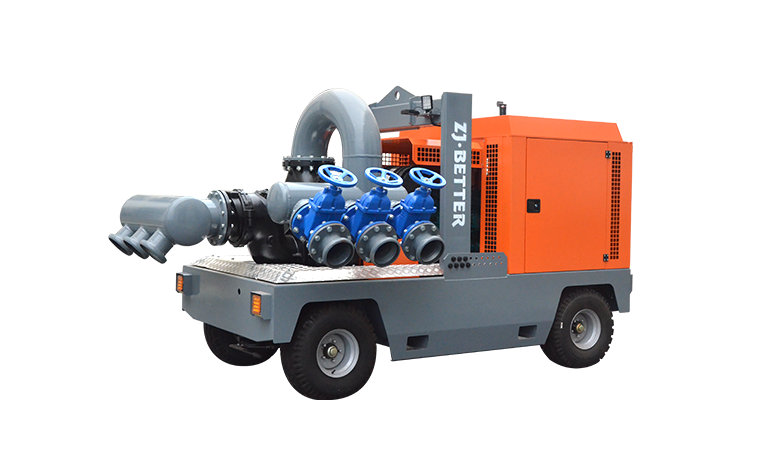
Diesel engine fire pumps can provide an independent source of mechanical power when electrical reliability is a concern or when the project design requires a diesel-driven pump.
A diesel fire pump system requires additional equipment and considerations, including:
- Diesel engine
- Fuel tank
- Engine controller
- Starting batteries
- Ventilation
- Exhaust system
- Cooling system
- Fuel supply
- Room temperature control
For high-rise projects, the complete fire pump room arrangement should be evaluated to ensure that the selected diesel engine system can operate reliably under the expected emergency conditions.
7. Do Not Forget the Jockey Pump
A jockey pump is a small pump designed to maintain system pressure during normal minor pressure losses.
It is not intended to supply the primary fire flow required during a fire.
The jockey pump should be selected according to the characteristics of the fire protection system so that it can maintain the required standby pressure without unnecessarily starting the main fire pump.
A properly coordinated system typically includes appropriate pressure settings between the jockey pump and main fire pumps.
For high-rise buildings, pressure management becomes especially important because the system may involve substantial static pressure differences between lower and upper floors.
8. Check the Water Supply
Fire pump selection should always be coordinated with the available water supply.
Before selecting the pump, determine:
- Water source type
- Available suction pressure
- Available flow
- Water tank capacity
- Suction pipe size
- Suction elevation
- Water temperature
- Possible suction restrictions
A pump cannot compensate for an unsuitable water supply arrangement.
For example, selecting a pump with a high flow rate does not solve a problem caused by inadequate suction conditions. Poor suction conditions can contribute to unstable operation, reduced pump performance, or cavitation.
The suction piping should therefore be designed and sized appropriately for the selected pump and system requirements.
9. Consider Pressure-Zone Design
High-rise buildings frequently require careful pressure management because different floors can experience significantly different pressures.
The lower floors may be exposed to much higher pressure than the upper floors. Depending on the building height and system design, pressure-reducing devices or separate pressure zones may be required.
The fire pump selection process should therefore consider the complete vertical distribution of the fire protection system.
Engineers should evaluate whether one pump system can satisfy the entire building or whether multiple zones and pumping arrangements are more appropriate.
This is particularly important for very tall buildings where the difference in elevation between the lowest and highest protected areas becomes substantial.
10. Consider Fire Pump Certification and Approval Requirements
For many international fire protection projects, the pump, driver, controller, and complete fire pump package may need to meet specific certification or approval requirements.
Project specifications may require equipment that is listed or approved by recognized certification organizations.
The exact requirement depends on the project location, applicable codes, authority having jurisdiction, insurance requirements, and project specifications.
When selecting a fire pump, buyers should confirm the required certification or approval before placing an order.
It is also important to check whether the approval applies to the individual pump, driver, controller, or complete fire pump assembly required for the project.
11. Avoid Oversizing the Fire Pump
Oversizing is another important issue in high-rise fire pump selection.
It may seem safer to select a pump with significantly higher pressure and flow than the calculated requirement. However, excessive capacity can create problems such as higher system pressures, increased equipment costs, additional pressure management requirements, and difficulties coordinating system components.
The objective is not to select the biggest available fire pump.
The objective is to select a pump that meets the required hydraulic demand while complying with applicable fire protection requirements.
A properly sized pump provides the required flow and pressure without unnecessary oversizing.
12. Verify the Complete Fire Pump Package
A fire pump should not be evaluated as an isolated piece of equipment.
The complete system may include:
- Main fire pump
- Electric motor or diesel engine
- Fire pump controller
- Jockey pump
- Jockey pump controller
- Suction and discharge components
- Valves
- Pressure sensing equipment
- Fuel system for diesel applications
- Test equipment
- Accessories required by the project
The components must be compatible and correctly coordinated.
For packaged fire pump systems, factory assembly and testing can also help verify the performance and coordination of the equipment before shipment to the project site.
13. Factory Testing Is an Important Quality Check
Factory testing provides an opportunity to verify pump performance before the equipment reaches the construction site.
Depending on the project and applicable requirements, testing can evaluate parameters such as flow, pressure, speed, motor performance, engine performance, and system operation.
For manufacturers, a properly equipped fire pump test facility is an important part of quality control.
For customers, reviewing the manufacturer's testing capability can provide useful information when evaluating potential suppliers.
A manufacturer with appropriate pump testing equipment can support performance verification across different flow and pressure requirements.
How to Select the Right Fire Pump for Your High-Rise Project
The selection process can be summarized in several steps:
- Determine the required fire protection system demand.
- Calculate the required flow rate.
- Calculate elevation and friction losses.
- Determine the required pump discharge pressure.
- Identify the hydraulic duty point.
- Select the appropriate pump type.
- Choose an electric motor or diesel engine driver.
- Evaluate the water source and suction conditions.
- Consider pressure zones for taller buildings.
- Confirm certification and approval requirements.
- Check the complete pump curve and system compatibility.
- Verify factory testing and documentation requirements.
The most important principle is that fire pump selection should be based on the actual hydraulic requirements of the building rather than building height alone.
.jpg)
Conclusion
Selecting a fire pump for a high-rise building requires careful consideration of flow, pressure, elevation, friction loss, water supply, pump type, driver, pressure zones, certification requirements, and the complete fire protection system.
As building height increases, hydraulic pressure requirements become more complex. A properly selected fire pump must provide reliable performance at the required duty point while working together with the sprinkler, standpipe, jockey pump, controller, and other fire protection equipment.
For high-rise projects, early coordination between the fire protection engineer, consultant, contractor, pump manufacturer, and building owner can help prevent equipment mismatches and installation problems.
As a fire pump manufacturer, Better Technology Group provides fire pump solutions for different fire protection applications, including electric fire pumps, diesel engine fire pumps, jockey pumps, UL fire pumps, vertical turbine fire pumps, and complete fire pump sets. Proper engineering, manufacturing, testing, and system coordination are essential to delivering reliable fire protection performance for demanding high-rise applications.