
.png)
.png)
.png)
How to Install a Fire Pump System Correctly
Sep 16, 2026
Share:
Installing a fire pump system correctly is essential for ensuring reliable water delivery when a fire protection system is activated. A fire pump may be a high-quality, certified product, but improper installation can reduce its performance, create mechanical problems, and compromise the reliability of the overall fire protection system.
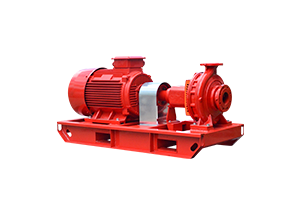
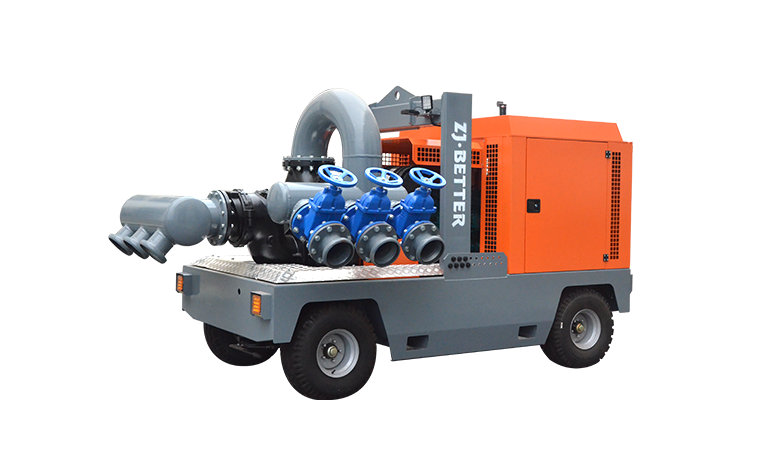
A complete fire pump system normally includes the fire pump, driver, controller, suction and discharge piping, valves, pressure-sensing equipment, test connections, and associated accessories. Depending on the project, the system may use an electric motor, diesel engine, jockey pump, or a combination of these components.
For contractors, installers, engineers, and facility owners, correct installation begins long before the pump is connected to the piping. The pump must be selected according to the required flow and pressure, the pump room must be properly prepared, and every component must be installed according to the approved design and applicable fire protection standards.
.jpg)
1. Confirm the Fire Pump System Design Before Installation
The first step is to review the complete approved fire pump system design before bringing equipment into the pump room.
The required flow rate and pressure should be confirmed against the hydraulic design of the fire protection system. The selected pump should be capable of meeting the required duty point while operating within its approved performance range.
The installer should verify the following information:
- Required fire pump flow and pressure
- Pump type and model
- Electric motor or diesel engine rating
- Jockey pump requirements
- Suction pipe size and arrangement
- Discharge pipe size and arrangement
- Required valves and fittings
- Controller specifications
- Power supply requirements
- Fuel supply requirements for diesel systems
- Test arrangement
- Pump room dimensions and access requirements
The installation should follow the approved project drawings and the applicable requirements of the authority having jurisdiction. Where UL Listed or FM Approved equipment is specified, the installation should also follow the manufacturer's certified configuration and applicable certification requirements.
2. Prepare the Fire Pump Room
A properly prepared pump room provides the foundation for a reliable installation.
Before installing the equipment, confirm that the foundation is complete, level, sufficiently strong, and suitable for the weight and vibration characteristics of the pump and driver assembly.
Adequate clearance should be provided around the equipment for installation, operation, inspection, maintenance, and future replacement of components.
The pump room should also provide suitable environmental conditions. Water accumulation, excessive humidity, freezing temperatures, inadequate ventilation, and poor drainage can affect the reliability of fire pump equipment.
For diesel engine fire pumps, ventilation is particularly important. The room must provide sufficient air for engine operation and appropriate arrangements for heat removal and exhaust discharge. Fuel tanks, exhaust piping, batteries, cooling systems, and other diesel-engine accessories must also be installed according to the approved design and applicable requirements.
Before positioning the equipment, installers should verify the foundation dimensions, anchor locations, equipment orientation, pipe connection positions, and available maintenance space.
3. Position and Secure the Fire Pump Assembly
Once the pump room is ready, position the fire pump assembly carefully.
For horizontal fire pump systems, the pump, driver, and base assembly should be positioned according to the manufacturer's installation requirements. The base should be properly supported, and anchor bolts should be securely installed.
Alignment is particularly important for pump sets using flexible or direct couplings. The pump shaft and driver shaft must be correctly aligned to prevent excessive vibration, bearing loads, coupling wear, and premature mechanical failure.
After the equipment is positioned, check the alignment again after the piping has been connected. Pipe loads should never be allowed to force the pump or driver out of alignment.
For vertical turbine fire pumps, installation requires additional attention to the vertical shaft, discharge head, column assembly, bowl assembly, and alignment of the complete pump structure. The pump must be installed according to the manufacturer's specified dimensions and procedures.
4. Install the Suction Piping Correctly
Suction piping is one of the most important parts of a fire pump installation.
A fire pump needs an adequate and stable water supply. Poor suction piping can cause turbulence, excessive pressure loss, air entrainment, or cavitation, which can significantly affect pump performance.
The suction pipe should be properly sized and arranged according to the hydraulic design and applicable fire protection requirements. The piping should be supported independently so that its weight is not transferred to the pump casing.
Avoid using the pump itself as a structural support for the piping.
Changes in pipe direction near the pump suction should be carefully considered because poor arrangements can create uneven water flow entering the pump. The suction arrangement should provide stable flow conditions and minimize turbulence.
All suction-side valves should be correctly installed, accessible, and oriented for proper operation. Where eccentric reducers are required, their orientation should follow the approved design to minimize the possibility of air pockets.
Before final connection, the suction piping should be cleaned and inspected to ensure that welding debris, scale, dirt, and foreign objects cannot enter the pump.
5. Install the Discharge Piping and Valves
The discharge piping carries water from the fire pump into the fire protection system.
Install the discharge pipe according to the approved piping layout and specified pipe sizes. The piping must be independently supported, and excessive loads should not be transferred to the pump discharge flange.
Typical discharge-side components may include a check valve, control valve, pressure gauges, test connections, and other system accessories.
The valves should be installed in accessible positions so that operators can inspect and operate them during testing or emergency conditions.
Valve identification is also important. Operators should be able to quickly understand the function and normal position of each critical valve.
The discharge piping should be installed without creating unnecessary restrictions or pressure losses. Poorly designed or incorrectly installed fittings can reduce the available pressure at downstream fire protection devices.
6. Connect the Driver Correctly
The driver provides the power required to operate the fire pump.
For electric fire pumps, the motor should be correctly connected to the fire pump controller and electrical supply. Cable sizing, voltage, phase, frequency, grounding, protection, and controller configuration should match the approved system design and equipment specifications.
The direction of motor rotation must be verified during commissioning according to the manufacturer's procedure. Incorrect rotation can cause the pump to operate incorrectly and may result in insufficient performance.
For diesel engine fire pumps, the installation is more complex. The installer must properly connect the fuel system, batteries, exhaust system, cooling system, ventilation system, engine instrumentation, and controller.
The diesel fuel supply should be designed and installed to provide reliable engine operation. Exhaust piping must be routed safely and appropriately, while ventilation must provide adequate air supply and heat removal.
7. Install the Jockey Pump Correctly
Many fire pump systems include a jockey pump to maintain system pressure and compensate for small pressure losses.
The jockey pump should be selected and installed according to the system design. Its purpose is different from that of the main fire pump.
The jockey pump should normally maintain the required system pressure without unnecessarily starting the main fire pump for small pressure fluctuations.
Correct pressure settings are therefore important. The jockey pump start and stop pressures and the main fire pump start pressure should be coordinated so that the pumps operate in the intended sequence.
Improper controller settings can result in frequent main pump starts or prevent the fire pump from starting when required.
8. Install Pressure Sensing and Control Equipment
Fire pump controllers and pressure-sensing equipment play an important role in automatic fire pump operation.
Pressure-sensing lines should be installed according to the approved system design and applicable requirements. Connections should be properly secured, protected from damage, and arranged so that pressure can be accurately transmitted to the controller.
The controller should be installed in an accessible location and protected from environmental conditions that could affect its operation.
For automatic systems, installers should verify the starting sequence carefully. The system should be able to detect a pressure drop and initiate the appropriate pump-starting sequence.
All control wiring should be checked before commissioning.
9. Check Pump and Motor Alignment
Alignment should not be treated as a one-time installation task.
After the pump assembly is installed and all connected piping is completed, the alignment should be checked again. Pipe stress, foundation movement, transportation, and installation activities can affect alignment.
For coupled pump sets, inspect the coupling and ensure that the coupling guard is correctly installed before operation.
Incorrect alignment can cause vibration, noise, bearing damage, seal problems, coupling wear, and reduced equipment life.
A properly aligned pump assembly operates more smoothly and provides a more reliable foundation for long-term fire protection service.
10. Clean and Inspect the Complete System
Before starting the fire pump, the entire installation should be inspected.
Check the suction piping, discharge piping, valves, pump casing, coupling, driver, controller, pressure-sensing connections, electrical connections, fuel system, cooling system, and other accessories.
Piping should be flushed and cleaned as required by the project specifications and applicable standards.
Foreign materials inside the piping can damage pump components or interfere with valves and other equipment. This is especially important after welding, cutting, pipe modification, and construction activities.
All temporary materials, construction debris, tools, and protective packaging should be removed before commissioning.
11. Perform Pre-Commissioning Checks
A systematic pre-commissioning inspection can identify problems before the pump is started.
The installer should verify:
- Pump and driver installation
- Foundation and anchor bolts
- Shaft and coupling alignment
- Suction and discharge connections
- Valve positions
- Pressure gauges
- Electrical connections
- Controller settings
- Motor rotation
- Diesel fuel supply
- Battery condition
- Engine oil and coolant
- Exhaust installation
- Ventilation
- Pressure-sensing lines
- Jockey pump operation
- Drainage and test arrangements
The manufacturer's installation and operation instructions should be reviewed before startup.
12. Test the Fire Pump System
Testing is a critical stage of installation because it demonstrates whether the installed system can perform as designed.
The pump should be tested under appropriate operating conditions, including the required flow and pressure points specified by the project design and applicable standards.
During testing, record important operating data such as suction pressure, discharge pressure, flow rate, motor current, voltage, engine speed, and other relevant parameters.
For diesel fire pumps, engine operating conditions, fuel supply, cooling, exhaust, batteries, alarms, and automatic starting functions should also be checked.
The test results should be compared with the approved pump performance requirements.
If the measured performance differs significantly from the expected results, the cause should be investigated before the system is placed into service.
13. Common Fire Pump Installation Mistakes to Avoid
Several installation mistakes can reduce fire pump reliability.
One common problem is undersized or poorly arranged suction piping. Another is allowing pipe weight or misalignment to place excessive stress on the pump casing.
Incorrect valve positioning can also affect system operation. Electrical connection errors, incorrect motor rotation, improperly configured controllers, inadequate diesel ventilation, and insufficient maintenance access are additional problems that should be avoided.
Another important mistake is treating commissioning as a simple startup procedure. A fire pump system should be tested systematically, and the results should be documented.
The installation should also consider future maintenance. Equipment that cannot be safely accessed or inspected can become difficult to maintain over its service life.
14. Document the Installation and Commissioning
After installation and testing, all relevant documentation should be organized and retained.
Typical records may include approved drawings, equipment specifications, pump performance data, test reports, controller settings, electrical information, installation records, maintenance instructions, and commissioning results.
For certified fire pump equipment, certification information and applicable documentation should also be retained.
Good documentation allows facility operators and maintenance teams to understand the installed system and provides valuable information for future inspections, troubleshooting, and maintenance.
.jpg)
Conclusion
Correct fire pump installation requires more than simply connecting a pump to a water supply and starting the motor. The entire system must be considered, from pump selection and pump room preparation to suction piping, discharge piping, driver installation, control equipment, alignment, testing, and commissioning.
A reliable fire pump system depends on correct engineering, quality equipment, professional installation, and systematic testing.
As a fire pump manufacturer, we recommend that every project follow the approved design, manufacturer's installation instructions, applicable fire protection standards, and requirements of the authority having jurisdiction. When these factors are properly coordinated, the fire pump system can provide dependable water delivery and support the overall performance of the building's fire protection system for years to come.