
.png)
.png)
.png)
How to Choose the Right Fire Pump Controller
Sep 15, 2026
Share:
A fire pump is one of the most important components of a fire protection system, but the pump itself cannot provide reliable protection without an appropriate control system. The fire pump controller manages the starting, stopping, monitoring, and operating functions of the pump driver. Choosing the correct controller is therefore an important part of designing a dependable fire protection system.
Different fire pump applications require different controller configurations. An electric fire pump, diesel engine fire pump, and jockey pump each have different operating characteristics and control requirements. Project conditions such as power supply, pump rating, starting method, environmental conditions, applicable standards, and system configuration must also be considered.
This guide explains the key factors to consider when selecting a fire pump controller and provides practical guidance for fire protection engineers, contractors, system integrators, and project owners.
1. Understand the Role of a Fire Pump Controller
A fire pump controller is designed to control and monitor the driver of a fire pump. Its primary function is to ensure that the fire pump starts when the fire protection system requires additional water pressure or flow.
In a typical fire pump system, pressure decreases when sprinklers, hydrants, hose stations, or other firefighting equipment operate. The controller detects the pressure condition through a sensing arrangement and initiates the required pump-starting sequence.
Depending on the system configuration, the controller may also provide functions such as:
- Automatic pump starting
- Manual pump starting
- Pressure monitoring
- Pump running indication
- Power supply monitoring
- Phase monitoring
- Motor protection
- Alarm indication
- Remote monitoring signals
- Engine status monitoring for diesel-driven pumps
- Event recording and operational information
The controller should therefore be considered as an integral part of the complete fire pump system rather than simply an electrical switch.
2. Identify the Type of Fire Pump Driver
The first major consideration when selecting a fire pump controller is the type of driver used by the fire pump.
The most common configurations are electric motor-driven fire pumps and diesel engine-driven fire pumps.
Electric Fire Pump Controller
An electric fire pump controller is designed specifically for controlling an electric motor. The controller must be compatible with the motor's voltage, frequency, horsepower or kilowatt rating, starting characteristics, and available electrical supply.
For example, a project may use a three-phase electric motor supplied by a specific voltage and frequency. The controller must be designed for these electrical conditions and provide the appropriate starting and monitoring functions.
Electric fire pump controllers may use different starting methods depending on the application and equipment configuration. Across a project, the selected controller must be compatible with the motor and the required fire protection system design.
Diesel Fire Pump Controller
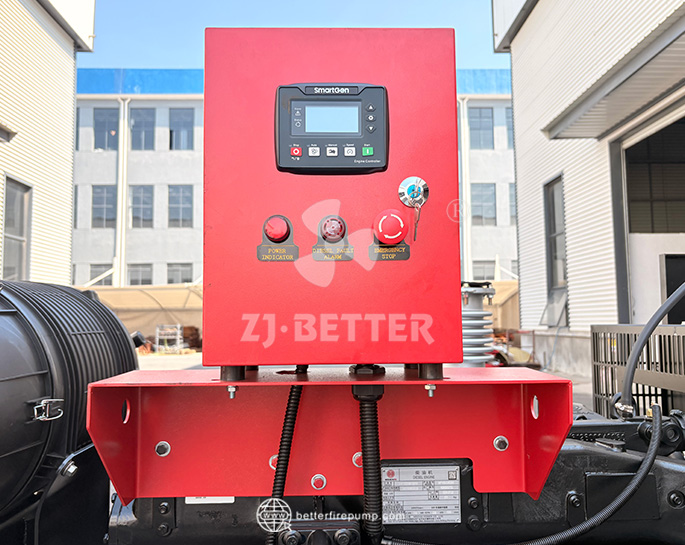
A diesel fire pump controller is designed for a diesel engine rather than an electric motor. The controller monitors engine operating conditions and manages automatic starting based on the requirements of the fire protection system.
A diesel fire pump controller may monitor conditions such as engine speed, battery voltage, oil pressure, coolant temperature, fuel-related information, and engine running status.
Because a diesel-driven fire pump relies on mechanical equipment and batteries rather than the building's normal electrical supply for its primary driving power, the controller must provide reliable engine-starting and monitoring functions.
The controller selection should therefore be based on the exact diesel engine model and the complete fire pump package.
3. Check the Required Electrical Characteristics
For an electric fire pump controller, electrical compatibility is essential.
Before selecting the controller, confirm:
- Rated voltage
- Frequency
- Number of phases
- Motor power
- Full-load current
- Available short-circuit current
- Starting method
- Electrical supply configuration
- Ambient operating conditions
The controller must be suitable for the actual motor and electrical infrastructure.
A mismatch between the controller and motor can result in starting problems, nuisance alarms, excessive electrical stress, or unreliable operation. This is particularly important for large fire pumps, where the starting current and electrical demand can be significant.
The electrical characteristics should be confirmed using the approved motor and pump data rather than estimated values.
4. Consider the Fire Pump System Configuration
The controller should also be selected according to the complete fire pump system.
A common fire pump package may include an electric main fire pump, diesel backup fire pump, and jockey pump. Each pump has a different purpose and may require a different control arrangement.
The main electric fire pump controller controls the electric motor. The diesel fire pump has its own diesel engine controller, while the jockey pump uses a controller appropriate for its smaller motor and pressure-maintenance function.
In an EDJ fire pump set, for example, the complete control arrangement must allow the individual pumps to respond appropriately to system pressure conditions.
The sequence of operation should be established before selecting the controllers. This helps ensure that the equipment works together correctly rather than treating each controller as an isolated component.
5. Verify Applicable Standards and Certification
Fire protection equipment is subject to specific standards and approval requirements depending on the project location, authority having jurisdiction, insurance requirements, and project specifications.
When selecting a fire pump controller, verify which standards and certifications are required for the project.
For projects requiring listed or approved fire protection equipment, the controller should have the appropriate listing or approval for the intended application. The listing should be checked against the actual controller model and configuration rather than relying only on a general statement from a supplier.
Project documentation may specify requirements relating to:
- Fire pump controllers
- Electric motor controllers
- Diesel engine controllers
- Electrical components
- Fire pump assemblies
- Testing procedures
- Installation requirements
- Alarm and monitoring functions
Working with a manufacturer that understands these requirements can help reduce compatibility problems during project review and inspection.
6. Select the Appropriate Starting Method
The starting method is another important factor in fire pump controller selection.
Electric fire pump controllers can use different starting arrangements depending on motor size, project specifications, electrical infrastructure, and applicable requirements.
The selected starting method should provide reliable motor starting while remaining compatible with the available electrical supply.
For larger motors, the impact of starting current can be particularly important. The project electrical engineer should evaluate the available power supply and the effect of motor starting on the electrical system.
The controller manufacturer should also confirm that the proposed controller is suitable for the selected motor and starting arrangement.
7. Consider Automatic and Manual Starting
A reliable fire pump controller should provide the required automatic starting functions while also allowing authorized personnel to start the pump manually when required.
Automatic starting is normally associated with a pressure condition in the fire protection system. When pressure drops to the specified level, the controller initiates the pump-starting sequence.
Manual controls allow operators to start the equipment during testing, inspection, maintenance, or emergency conditions.
The exact operating sequence should be established according to the project requirements and applicable fire protection standards.
It is also important to distinguish between pump starting and stopping. Fire pumps are not operated in the same way as ordinary water pumps. The controller must follow the required fire protection operating logic rather than simply starting and stopping the pump based on normal water pressure fluctuations.
8. Evaluate Monitoring and Alarm Functions
Modern fire pump controllers provide important information about the operating condition of the fire pump.
Depending on the controller type, monitoring functions may include:
- Pump running
- Controller power available
- Phase failure
- Phase reversal
- Motor overload
- Low battery voltage
- Engine failure
- Engine overspeed
- Low oil pressure
- High coolant temperature
- Low fuel level
- Start failure
- Controller fault
These functions help operators identify abnormal conditions and provide information during routine inspections and testing.
For larger or more complex facilities, remote monitoring may also be required. The controller should therefore be capable of providing the appropriate signals or communication interfaces specified by the project.
9. Consider the Installation Environment
The physical environment can have a significant effect on controller selection.
Fire pump controllers are commonly installed in pump rooms, dedicated fire pump buildings, equipment rooms, or other areas where temperature, humidity, dust, vibration, and ventilation conditions must be considered.
Before selecting a controller, evaluate:
- Indoor or outdoor installation
- Ambient temperature
- Humidity
- Dust exposure
- Water exposure
- Ventilation
- Corrosive conditions
- Altitude
- Available installation space
For containerized fire pump systems, environmental conditions require particular attention. A controller installed inside a container must operate reliably within the actual temperature and ventilation conditions of the enclosure.
The controller enclosure and environmental protection should be appropriate for the installation location.
10. Check the Controller and Pump Compatibility
One of the most common mistakes in fire pump projects is selecting components individually without verifying the complete system.
The pump, motor or diesel engine, controller, sensing equipment, valves, piping, and electrical supply must work together.
For an electric fire pump, verify compatibility between the pump's required duty point, motor rating, motor electrical characteristics, and controller rating.
For a diesel fire pump, verify compatibility between the pump, engine, batteries, engine controller, fuel system, cooling system, exhaust arrangement, and monitoring functions.
A fire pump manufacturer with experience in complete fire pump systems can help verify these interfaces before equipment is manufactured and delivered.
11. Pay Attention to Testing and Commissioning
The selection process should consider not only installation but also testing and commissioning.
A properly selected controller should allow the complete fire pump system to be tested under the conditions required by the project and applicable standards.
During commissioning, engineers and technicians may verify:
- Automatic starting
- Manual starting
- Pressure sensing
- Motor or engine operation
- Alarm functions
- Electrical supply
- Phase conditions
- Engine monitoring
- Battery operation
- Controller indications
- Communication signals
- Pump performance
Factory testing is also valuable because it allows the manufacturer to identify potential compatibility issues before the equipment reaches the project site.
For complete fire pump sets, integrated factory testing can help verify the interaction between the pump, driver, controller, and other components.
12. Consider Maintenance and Spare Parts
Fire pump controllers are expected to remain operational for many years. Therefore, selection should consider long-term maintenance rather than only the initial purchase price.
Check whether replacement components are available and whether the manufacturer can provide technical support, documentation, and troubleshooting assistance.
Important documentation may include:
- Installation instructions
- Wiring diagrams
- Operating manuals
- Factory test records
- Certification documents
- Maintenance instructions
- Spare parts information
A clear documentation package can make future inspection and maintenance much easier.
13. Work With an Experienced Fire Pump Manufacturer
Choosing a fire pump controller is not simply a matter of selecting a panel based on motor power. The controller must match the pump system, driver, electrical supply, operating sequence, project standards, installation environment, and testing requirements.
For this reason, it is beneficial to involve the fire pump manufacturer early in the project.
An experienced manufacturer can help review the pump duty point, driver selection, controller requirements, system configuration, and project specifications before production.
This approach can reduce the risk of selecting incompatible equipment and help streamline factory testing, installation, commissioning, and future maintenance.
.jpg)
Conclusion
The right fire pump controller is an essential part of a reliable fire protection system. When selecting a controller, project teams should consider the fire pump driver, electrical characteristics, system configuration, applicable standards, starting method, monitoring functions, installation environment, compatibility, testing requirements, and long-term maintenance.
For electric fire pumps, particular attention should be given to motor characteristics and electrical supply. For diesel fire pumps, engine monitoring, battery systems, starting reliability, and operating conditions are especially important.
The best approach is to evaluate the controller as part of the complete fire pump system rather than as an independent electrical component. By coordinating the pump, driver, controller, and system requirements from the beginning, engineers and contractors can build a fire pump system that is easier to test, commission, maintain, and operate when reliable fire protection is needed most.