
.png)
.png)
.png)
Everything You Need to Know About Fire Pump Maintenance
Sep 28, 2026
Share:
A fire pump is one of the most important components of an active fire protection system. When a sprinkler or fire protection system demands water, the fire pump must deliver the required flow and pressure without delay. Unlike many industrial pumps that operate continuously, a fire pump may remain idle for long periods and then be expected to perform immediately during an emergency.
This operating pattern makes preventive maintenance particularly important. A pump that appears to be in good condition may still have problems involving the driver, controller, bearings, seals, batteries, fuel system, valves, or electrical connections.
For building owners, facility managers, fire protection contractors, and system operators, a structured maintenance program provides a practical way to keep fire pump equipment in reliable operating condition.
Why Is Fire Pump Maintenance Important?
The main purpose of fire pump maintenance is to ensure that the system can provide the required water supply when a fire occurs. Regular maintenance also helps extend equipment service life and reduce the possibility of unexpected failures.
Fire pump problems can develop gradually. A small leakage, loose electrical connection, low battery charge, contaminated diesel fuel, blocked cooling passage, or abnormal vibration may not immediately stop the pump. However, if the problem is ignored, it can eventually affect pump performance.
Preventive maintenance allows potential issues to be identified while the system is still operational. It also provides valuable information about changes in equipment performance over time.
For project owners, maintenance records can be especially useful because they provide evidence that inspections and testing have been performed consistently.
What Components Need to Be Maintained?
A complete fire pump system normally includes more than the pump itself. Maintenance should consider the entire system and its major components.
Important components include:
- Fire pump
- Electric motor or diesel engine
- Jockey pump
- Fire pump controller
- Main suction and discharge valves
- Check valves
- Pressure sensing equipment
- Pressure gauges
- Batteries and battery charger
- Diesel fuel system
- Cooling system
- Exhaust system
- Couplings and drive components
- Pump room ventilation
- Test equipment and water discharge arrangements
A problem with one component can affect the operation of the complete fire pump system. Therefore, maintenance should not focus only on the pump casing and impeller.
Fire Pump Inspection
Regular visual inspection is one of the simplest and most useful maintenance activities. The pump room should be checked for conditions that could prevent the system from operating correctly.
Look for visible water leakage around the pump, valves, seals, and pipe connections. Check for unusual corrosion, damaged components, loose connections, abnormal noise, or excessive vibration.
The suction and discharge valves should be in their required operating positions. Valves that are accidentally closed or partially closed can seriously affect pump performance.
The surrounding area should also be kept clean and accessible. Fire pump rooms should not be used for general storage because stored materials can obstruct equipment access and interfere with inspection or emergency operation.
Electric Fire Pump Maintenance
Electric fire pumps require particular attention to the motor, controller, electrical supply, and associated equipment.
During maintenance, technicians should inspect electrical connections, controller indications, wiring, fuses, breakers, and other components according to the applicable system requirements and manufacturer's instructions.
The motor should be checked for abnormal noise, vibration, overheating, or other unusual operating conditions.
The controller should also be inspected to confirm that its indicators and alarms are functioning correctly. Any warning or fault indication should be investigated rather than simply reset.
Because electric fire pumps depend on a reliable power supply, the electrical infrastructure serving the pump should also be maintained according to applicable electrical and fire protection requirements.
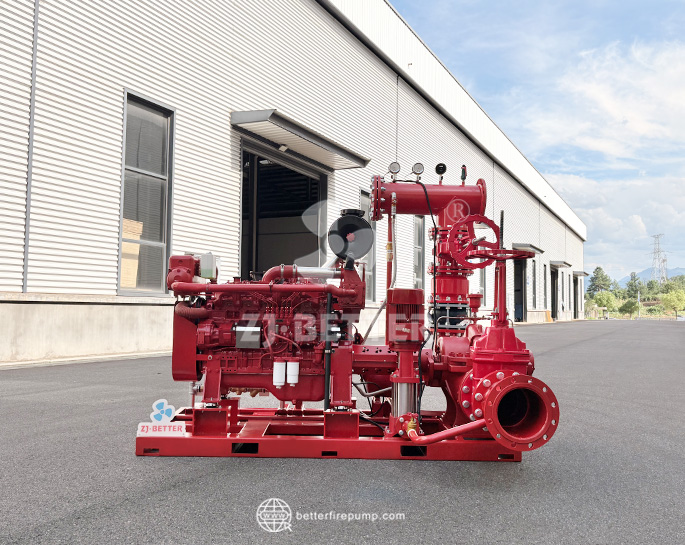
Diesel Fire Pump Maintenance
Diesel fire pumps have additional maintenance requirements because the engine contains more mechanical and fuel-system components than an electric motor.
Engine oil, coolant, batteries, fuel, filters, belts, hoses, exhaust components, and other engine systems should be inspected and maintained according to the engine manufacturer's recommendations and applicable fire protection requirements.
The fuel system deserves particular attention. Fuel quality, fuel level, tank condition, and signs of leakage should be checked regularly.
Diesel batteries should also be maintained carefully. A discharged or deteriorated battery can prevent the engine from starting when the fire pump is required.
The engine cooling and exhaust systems should be inspected to ensure that operating conditions remain within the manufacturer's specified limits.
Jockey Pump Maintenance
The jockey pump maintains pressure in the fire protection system during normal conditions and helps prevent the main fire pump from starting unnecessarily because of small pressure fluctuations.
Maintenance should include checking the jockey pump, motor, controller, pressure settings, valves, and associated piping.
Incorrect pressure settings can cause frequent starting and stopping of the jockey pump or unnecessary activation of the main fire pump.
A properly maintained jockey pump supports stable system pressure and helps reduce unnecessary cycling of the main fire pump.
Fire Pump Controller Maintenance
The controller is a critical part of the fire pump system because it controls the starting and monitoring functions of the pump driver.
During inspection, check the controller enclosure, indicators, alarms, wiring, connections, and operating status. Any fault indication should be investigated promptly.
For electric fire pumps, the controller and power supply should be inspected carefully. For diesel fire pumps, the controller must also interface correctly with the engine starting and monitoring systems.
Maintenance personnel should follow the controller manufacturer's instructions and applicable fire protection standards when performing testing or servicing.
Fire Pump Performance Testing
Visual inspection alone cannot confirm that a fire pump will deliver its required performance.
Performance testing provides information about the relationship between flow and pressure and can help identify deterioration in pump performance.
A typical performance evaluation may examine conditions such as:
- No-flow or churn pressure
- Rated flow
- Pressure at rated flow
- Higher flow conditions when required
- Motor or engine operating condition
- System pressure stability
- Abnormal vibration or noise
Test results should be compared with the appropriate baseline and manufacturer's performance data.
If a pump previously delivered the expected pressure and later shows a significant reduction, the change should be investigated. Possible causes can include wear, obstruction, valve problems, changes in the water supply, impeller issues, or other system conditions.
Common Fire Pump Maintenance Problems
Several problems appear repeatedly in fire pump systems.
Pump Will Not Start
A pump that does not start may have problems involving the controller, electrical supply, motor, pressure sensing system, engine batteries, fuel system, or starting circuit.
The exact cause should be identified rather than repeatedly attempting to restart the equipment without investigation.
Low Pump Pressure
Low pressure can result from suction-side restrictions, incorrect valve positions, changes in water supply, pump wear, impeller problems, or other hydraulic issues.
Performance testing can help determine whether the problem is associated with the pump or another part of the system.
Excessive Vibration
Unusual vibration may indicate alignment problems, bearing issues, coupling problems, mechanical wear, or hydraulic conditions.
Ignoring abnormal vibration can result in more serious equipment damage.
Diesel Engine Fails to Start
A diesel engine may fail to start because of weak batteries, fuel problems, control-system faults, poor electrical connections, or other engine-related issues.
Battery condition and fuel-system maintenance are therefore essential parts of diesel fire pump maintenance.
Frequent Jockey Pump Operation
Frequent jockey pump starting may indicate pressure loss, leakage, incorrect pressure settings, or other system conditions.
The cause should be investigated rather than simply changing the controller settings.
Preventive Maintenance vs. Reactive Maintenance
Reactive maintenance means repairing equipment after a failure occurs. Although repairs are sometimes unavoidable, relying entirely on reactive maintenance creates unnecessary risk for fire protection equipment.
Preventive maintenance takes a different approach. Equipment is inspected and tested regularly so that potential problems can be identified before they develop into major failures.
For fire pump systems, preventive maintenance is particularly important because the equipment may be needed at any time.
A structured maintenance program should include inspection records, testing results, maintenance actions, replacement parts, and identified issues.
How Often Should a Fire Pump Be Maintained?
The exact maintenance frequency depends on the type of fire pump, system design, local requirements, applicable standards, manufacturer's recommendations, and site conditions.
Different activities may be performed at different intervals. Routine inspections may be more frequent, while certain detailed maintenance procedures may occur less often.
The most appropriate approach is to establish a documented maintenance schedule based on the specific fire pump system and applicable requirements rather than applying the same schedule to every installation.
Maintenance personnel should always follow the latest applicable requirements and the manufacturer's instructions.
Fire Pump Maintenance Checklist
A practical maintenance checklist can include the following items:
- Check the general condition of the pump room.
- Inspect the pump and piping for visible leakage.
- Verify valve positions.
- Check pressure gauges and system indications.
- Inspect the electric motor or diesel engine.
- Check the fire pump controller for alarms or faults.
- Inspect batteries and charging equipment where applicable.
- Check diesel fuel level and fuel-system condition.
- Inspect cooling and exhaust systems on diesel engines.
- Check coupling and drive components.
- Monitor unusual vibration and noise.
- Operate and test the fire pump according to applicable requirements.
- Record pressure and flow test results.
- Compare current performance with previous results.
- Correct identified problems promptly.
- Keep complete maintenance documentation.
The checklist should be customized to the actual equipment and project requirements.
When Should Fire Pump Components Be Replaced?
Not every component should be replaced simply because it has been operating for a certain number of years. Replacement decisions should consider equipment condition, inspection results, operating history, manufacturer recommendations, applicable requirements, and observed performance.
Components showing excessive wear, corrosion, leakage, deterioration, or unreliable operation may require repair or replacement.
Using appropriate replacement components is also important. Components should be compatible with the original equipment and suitable for the intended fire protection application.
The Role of the Fire Pump Manufacturer
A reliable fire pump maintenance program begins with properly designed and manufactured equipment.
Fire pump manufacturers can provide important information about pump performance, driver requirements, operating conditions, maintenance procedures, recommended spare parts, and testing requirements.
For complex systems, manufacturers can also help identify possible causes of abnormal pump performance and provide technical guidance for troubleshooting.
Choosing a manufacturer with experience in fire protection applications can therefore provide value throughout the equipment's service life, not only during the initial purchase.
How to Improve Fire Pump Reliability
Several practical measures can improve long-term fire pump reliability.
First, establish a clear inspection and testing schedule. Second, maintain accurate records so that changes in performance can be identified over time. Third, address small problems before they become major failures.
The installation environment also matters. Fire pump rooms should provide suitable access, ventilation, drainage, temperature control, and protection from conditions that could damage equipment.
Finally, maintenance personnel should be familiar with the specific pump, driver, controller, and fire protection system installed at the site.
Conclusion
Fire pump maintenance is an essential part of fire protection system management. Regular inspection, testing, preventive maintenance, and accurate documentation help ensure that electric fire pumps, diesel fire pumps, jockey pumps, controllers, and associated equipment remain ready for operation.
A good maintenance program is not simply about repairing equipment after a problem occurs. It is about identifying potential problems early, monitoring equipment performance, and maintaining the complete system according to applicable requirements and manufacturer recommendations.
For building owners, contractors, engineers, and fire protection professionals, understanding fire pump maintenance can help protect equipment investment while supporting the reliability of the overall fire protection system.
As a fire pump manufacturer, we recommend considering maintenance requirements from the earliest stages of project design and equipment selection. A properly selected, correctly installed, regularly tested, and well-maintained fire pump system provides a stronger foundation for dependable fire protection.