
.png)
.png)
.png)
In today’s global construction market, fire protection systems must meet strict safety, reliability, and compliance requirements. Whether the project is a commercial high-rise, industrial plant, airport, oil and gas facility, or logistics warehouse, international investors and consultants increasingly specify UL listed fire pumps as a mandatory requirement.
But why are UL listed fire pumps so important for international projects? And why do developers, consultants, and insurance companies insist on them even outside the United States?
This article explains the technical, regulatory, and commercial reasons behind the global demand for UL listed fire pumps—and why they have become the standard for serious fire protection projects worldwide.
.jpg)
What Is a UL Listed Fire Pump?
A UL listed fire pump is a pump system that has been tested and certified by Underwriters Laboratories (UL), a globally recognized safety certification organization based in the United States.
UL listing means the fire pump has been independently evaluated for:
-
Performance reliability
-
Mechanical integrity
-
Electrical safety (for electric pumps)
-
Diesel engine compliance (for diesel fire pumps)
-
Material quality and durability
-
Long-term operational stability
Most UL listed fire pumps are designed to comply with National Fire Protection Association standards, particularly NFPA 20, which governs the installation of stationary fire pumps for fire protection.
When a fire pump is UL listed, it assures engineers, authorities, and building owners that the equipment meets internationally accepted fire safety benchmarks.
1. Compliance with NFPA 20 for International Standards
One of the main reasons UL listed fire pumps are required in international projects is compliance with NFPA 20.
Although NFPA standards originate in the United States, they are widely adopted or referenced in:
-
Middle East countries (UAE, Saudi Arabia, Qatar)
-
Southeast Asia
-
Africa
-
Latin America
-
International airports and free trade zones
-
Oil and gas facilities worldwide
Many government authorities and civil defense departments require fire pumps to be UL listed and designed according to NFPA 20, even outside the U.S.
Without UL listing, it becomes difficult—or impossible—to obtain project approval in these regions.
2. Mandatory Requirement in Large-Scale International Projects
UL listed fire pumps are often mandatory in:
-
Airports
-
Hospitals
-
Data centers
-
Oil and gas refineries
-
High-rise commercial towers
-
Industrial manufacturing facilities
-
Logistics and distribution centers
International EPC contractors and consultants typically specify UL listed fire pumps in tender documents.
Why?
Because these projects involve:
-
High capital investment
-
International insurance coverage
-
Multinational stakeholders
-
Strict third-party inspection
A non-UL fire pump may reduce initial cost, but it increases risk, delays approvals, and may void insurance coverage.
3. Insurance Company Requirements
Global insurance companies often require fire protection systems to use UL listed or FM approved equipment.
Insurance underwriters assess risk based on:
-
Compliance with international standards
-
Equipment certification
-
Manufacturer quality control systems
-
Fire protection system reliability
If a fire pump fails during an emergency and is not UL listed, the insurance claim may face serious challenges.
From a risk management perspective, UL listed fire pumps reduce:
-
Operational risk
-
Liability exposure
-
Long-term financial loss
This is especially critical for industrial and petrochemical projects.
4. Third-Party Verified Performance and Safety
UL listing is not just a document. It involves rigorous testing, including:
-
Hydraulic performance verification
-
Endurance testing
-
Overspeed testing (diesel engines)
-
Electrical safety testing (controllers)
-
Material inspection
-
Factory audit and production monitoring
UL also conducts regular follow-up inspections to ensure continuous compliance.
This level of independent verification gives project owners confidence that the fire pump will perform under real fire conditions.
For international projects where stakeholders are located in different countries, third-party certification eliminates uncertainty.
5. Easier Project Approval and Faster Authority Clearance
Civil defense authorities in many countries are more likely to approve fire systems that include UL listed fire pumps.
When documentation clearly shows:
-
UL listing certificate
-
NFPA 20 compliance
-
Manufacturer authorization
-
Performance curve verification
The review process becomes faster and smoother.
In contrast, non-listed pumps often require:
-
Additional performance tests
-
Third-party verification
-
Special engineering justifications
-
Lengthy approval procedures
Time delays in international projects are costly. UL listed fire pumps help avoid these delays.
6. Higher Reliability for Critical Infrastructure
International projects often involve critical infrastructure such as:
-
Power plants
-
Oil terminals
-
Seaports
-
Pharmaceutical factories
-
Semiconductor manufacturing plants
These facilities cannot afford fire protection failure.
UL listed fire pumps are manufactured under strict quality systems and performance validation, ensuring:
-
Stable pressure output
-
Reliable starting performance
-
Long-term durability
-
Compliance with rated flow and head
In emergency situations, there is no second chance. Reliability is non-negotiable.
7. Global Recognition and Market Acceptance
UL is globally recognized as a trusted certification authority. When consultants see a UL listing mark, they immediately understand the product meets high safety standards.
For international developers working across different countries, specifying UL listed fire pumps creates consistency across projects.
It avoids:
-
Country-by-country redesign
-
Local standard conflicts
-
Technical disputes
UL listing acts as a universal language in fire protection engineering.
8. Integration with Complete Fire Pump Packages
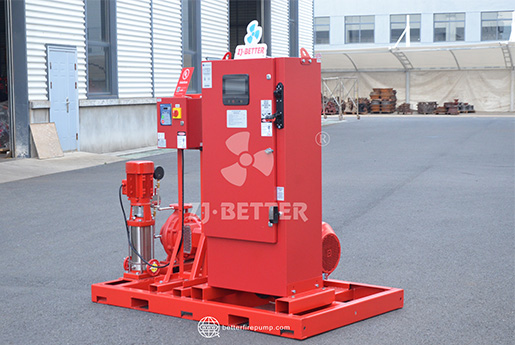
International projects often require complete UL listed fire pump package systems, including:
-
Electric motor driven fire pump
-
Diesel engine fire pump
-
Jockey pump
-
UL listed fire pump controller
-
Baseplate and accessories
When all major components are UL listed, the system ensures full compliance and performance consistency.
Partial compliance (for example, only pump UL listed but controller not listed) can create approval issues.
Therefore, many international consultants require full UL listed system packages from qualified manufacturers.
9. Competitive Advantage in International Tenders
For contractors and distributors, offering UL listed fire pumps provides a strong competitive advantage.
In many tenders, UL listing is marked as:
-
“Mandatory requirement”
-
“Prequalification condition”
-
“Technical compliance prerequisite”
Without UL listing, the bid may be rejected immediately.
For fire pump manufacturers, investing in UL certification is not just about compliance—it is about market access.
10. Long-Term Brand Reputation and Trust
International projects are high-visibility developments. Failures in fire protection systems can cause severe financial and reputational damage.
UL listed fire pumps signal:
-
Commitment to quality
-
International standard compliance
-
Long-term reliability
-
Engineering professionalism
Developers prefer manufacturers who meet global certification standards because it protects their own brand reputation.
Difference Between UL Listed and Non-Listed Fire Pumps
A non-listed fire pump may:
-
Follow similar hydraulic design
-
Provide comparable performance curves
-
Be cheaper in price
However, it lacks:
-
Independent third-party verification
-
Ongoing factory audit
-
Certified compliance documentation
-
International authority recognition
In domestic or low-risk projects, non-listed pumps may be accepted.
But for international, high-value, or insured projects, UL listing is often mandatory.
UL Listed Fire Pumps and FM Approval
In some projects, both UL listing and FM approval are required. While UL focuses on safety and product compliance, FM approval emphasizes property loss prevention and insurance risk management.
Many international consultants specify:
-
UL listed fire pump
-
FM approved fire pump
-
UL/FM listed controllers
The dual certification further strengthens system acceptance.
Why International Consultants Specify UL Listed Fire Pumps
International consultants typically work on projects funded by:
-
Multinational corporations
-
Global investors
-
International banks
-
Government infrastructure funds
These stakeholders require equipment that meets internationally recognized standards.
Specifying UL listed fire pumps ensures:
-
Reduced design risk
-
Simplified technical review
-
Clear compliance documentation
-
Alignment with global best practices
For consultants, it is the safest and most defensible specification choice.
Final Thoughts
UL listed fire pumps have become the global benchmark for fire protection systems in international projects. Their importance goes beyond certification marks—it represents verified safety, regulatory compliance, insurance acceptance, and long-term reliability.
For developers, contractors, and consultants working on international projects, selecting a UL listed fire pump is not just a technical decision. It is a strategic investment in safety, approval efficiency, and project credibility.
As global construction standards continue to align around internationally recognized fire safety requirements, UL listed fire pumps will remain essential for projects that demand the highest level of protection and compliance.