
.png)
.png)
.png)
5 Factors That Influence Fire Pump Performance
Nov 23, 2026
Share:
Fire pumps are essential components of fire protection systems, providing the water flow and pressure required to control and suppress fires in buildings, industrial facilities, warehouses, commercial properties, and other high-risk environments. However, installing a fire pump with the correct rated capacity does not automatically guarantee reliable system performance. The actual performance of a fire pump depends on several interconnected factors, including pump selection, water supply conditions, system resistance, driver capability, and maintenance.
For fire protection engineers, contractors, facility managers, and system designers, understanding these factors is critical to ensuring that fire pumps deliver the required flow and pressure when an emergency occurs.
A properly designed fire pump system must perform consistently under different operating conditions while maintaining reliability over its service life. This article explores five major factors that influence fire pump performance and explains how each can affect the overall effectiveness of a fire protection system.
1. Fire Pump Selection and Hydraulic Design
Fire pump selection is one of the most important factors influencing system performance. A pump must be selected according to the hydraulic requirements of the fire protection system, including the required flow rate, discharge pressure, elevation, and piping resistance.
Every fire pump operates according to a performance curve that illustrates the relationship between flow rate and pressure. As the flow rate increases, the pump's discharge pressure generally decreases. Understanding this relationship helps engineers determine whether a pump can meet the system's demand under different operating conditions.
Flow Rate Requirements
Flow rate refers to the volume of water a fire pump delivers within a specific period, commonly measured in gallons per minute (GPM) or cubic meters per hour (m³/h).
Different applications require different flow rates. A residential building may require a relatively modest water supply, while a petrochemical facility, industrial warehouse, airport, or large commercial complex may require substantially greater capacity.
Selecting a pump with insufficient flow capacity can result in inadequate water delivery to sprinklers, hydrants, standpipes, or other firefighting equipment. On the other hand, selecting an oversized pump without considering the system design may lead to excessive pressure, unnecessary energy consumption during testing or other permitted operating conditions, and difficulties in controlling system pressure.
The required flow rate should be determined through hydraulic calculations based on the applicable fire protection design requirements and the specific application.
Pressure Requirements
Pressure is equally important because water must reach the designated firefighting equipment at the required pressure.
The pressure requirements of a fire pump system are influenced by:
-
Building height and elevation differences
-
Pipe diameter and length
-
Friction losses throughout the piping network
-
Pressure requirements of sprinklers, hydrants, and standpipes
-
Valves, fittings, and other system components
-
The required operating flow rate
A pump with a high rated pressure may not necessarily be suitable for every project. Engineers must evaluate the pump's performance curve alongside the system demand curve to ensure that the selected pump operates within an appropriate range.
Matching the Pump to the System
Fire pump types differ in their hydraulic characteristics and installation requirements. End suction pumps, split case pumps, vertical turbine pumps, and other configurations may be suitable for different applications.
For example, split case fire pumps are commonly used in applications requiring high flow rates, while vertical turbine fire pumps are often selected for water sources where the water level is below the pump installation elevation.
Choosing the correct pump type, rated capacity, and operating range helps establish a reliable foundation for the entire fire protection system.
2. Water Supply Conditions and Suction Performance
A fire pump cannot deliver reliable performance without a sufficient and stable water supply. Water supply conditions directly influence the pump's ability to achieve its rated flow and pressure.
The water source may be a municipal water network, underground storage tank, elevated tank, reservoir, lake, river, or another approved source, depending on the project requirements.
Available Water Volume
The water source must provide sufficient volume to meet the required firefighting demand for the specified duration.
If the available water volume is insufficient, the pump may operate normally from a mechanical perspective but fail to provide the required continuous water supply.
Water storage tanks should be designed with adequate capacity, and their usable water volume should account for the project's fire protection demand and applicable design requirements.
Suction Pressure and Water Level
The suction conditions of a fire pump have a significant impact on performance. Changes in water level, suction pressure, or the configuration of the suction piping can affect the amount of water available at the pump inlet.
For pumps operating with a positive suction pressure, the water supply should maintain sufficient pressure under the expected operating conditions.
For pumps drawing water from below the pump installation elevation, suction lift and atmospheric pressure limitations must be considered. Vertical turbine pumps are often used in these applications because their bowl assembly can be positioned below the water level.
Insufficient suction conditions may result in reduced flow, unstable operation, excessive vibration, or cavitation.
Preventing Cavitation
Cavitation occurs when the pressure of the water at certain locations inside the pump drops below its vapor pressure, causing vapor bubbles to form. When these bubbles move into higher-pressure regions, they collapse and can damage pump surfaces.
Cavitation may produce unusual noise, vibration, reduced hydraulic performance, and damage to the impeller or other internal components.
To reduce the risk of cavitation, engineers should evaluate the available net positive suction head (NPSHa) against the pump's required net positive suction head (NPSHr), maintain suitable suction piping conditions, and avoid unnecessary restrictions on the suction side.
The water supply, suction piping, tank configuration, and pump installation should be considered together rather than evaluated as separate components.
3. Piping System Design and Hydraulic Resistance
Even when a fire pump is properly selected and the water supply is adequate, poor piping design can reduce the performance of the entire system.
The piping network determines how efficiently water moves from the pump discharge to the firefighting equipment. Every pipe, fitting, valve, and connection introduces some degree of hydraulic resistance.
Pipe Diameter and Friction Loss
Water flowing through pipes experiences friction losses. These losses depend on several factors, including flow rate, pipe diameter, pipe length, internal surface roughness, and the characteristics of the piping layout.
Smaller pipe diameters generally result in greater flow velocity and higher friction losses for a given flow rate. Excessive friction losses can reduce the pressure available at the system's most hydraulically demanding outlets.
For this reason, fire protection piping should be sized through hydraulic calculations rather than selected solely according to installation convenience or cost.
Proper pipe sizing helps maintain the required pressure at critical points in the system while allowing the fire pump to operate within its intended performance range.
Valves, Fittings, and Layout
Elbows, tees, reducers, check valves, control valves, strainers, and other components can contribute to hydraulic resistance.
An unnecessarily complicated piping layout with numerous bends and fittings may increase pressure losses. Poorly installed valves, partially closed isolation valves, blocked strainers, or incorrect connections can further restrict water flow.
The suction piping deserves particular attention because excessive resistance on the suction side can affect the pump's inlet conditions and increase the risk of cavitation.
A well-designed piping system should provide a suitable flow path, minimize unnecessary restrictions, and maintain the hydraulic conditions required for reliable pump operation.
System Pressure Distribution
Pressure distribution throughout a fire protection system is another important consideration.
In tall buildings, the pressure at lower floors may be significantly higher than the pressure at upper floors because of elevation differences. In large industrial facilities, long piping networks may create substantial pressure losses between the pump and remote firefighting outlets.
Engineers should evaluate the pressure available at the most demanding points in the system and consider appropriate pressure management measures where required.
The goal is not simply to generate high pressure at the pump discharge, but to deliver the required pressure and flow where firefighting equipment is installed.
4. Driver Capability and Electrical or Mechanical Reliability
A fire pump is only as reliable as the driver that provides the power required to operate it. Electric motors and diesel engines are commonly used to drive fire pumps, and each has specific performance requirements.
The driver must be capable of delivering sufficient power throughout the pump's operating range.
Motor Power and Electrical Supply
For electric fire pumps, motor power must be matched to the pump's hydraulic requirements. The motor should be capable of operating the pump under the conditions specified by the pump manufacturer and the applicable fire protection design requirements.
Electrical supply conditions can affect motor performance. Voltage fluctuations, phase imbalance, incorrect wiring, inadequate cable sizing, electrical connection problems, or unsuitable protection and control arrangements may prevent the motor from operating reliably.
The electrical system should be designed to provide the required power under the anticipated conditions. Fire pump controllers, electrical connections, and power supply arrangements should be properly installed and inspected.
A correctly matched electric motor helps ensure that the pump can deliver the required performance without overloading the driver.
Diesel Engine Performance
Diesel-driven fire pumps are often selected for projects where independent power supply is important or where electric power reliability presents specific challenges.
The performance of a diesel-driven fire pump depends on the engine's ability to provide the required power under operating conditions. Factors such as fuel quality, battery condition, cooling system performance, lubrication, engine temperature, ventilation, and exhaust arrangements can influence reliability.
A diesel engine that cannot start promptly or maintain stable operation may compromise the fire pump system even if the hydraulic pump itself is functioning correctly.
Diesel fire pump installations should provide appropriate fuel storage, ventilation, exhaust discharge, cooling arrangements, and maintenance access.
Pump and Driver Matching
Pump and driver matching involves more than comparing rated power values. The pump's operating range, shaft power requirements, starting conditions, and driver characteristics should be evaluated together.
For electric fire pumps, the motor and controller should be suitable for the intended application. For diesel fire pumps, the engine should be capable of driving the pump at the required speed and load.
A properly matched pump and driver combination helps reduce the risk of overload, unstable operation, and performance limitations during demanding operating conditions.
5. Installation, Testing, and Preventive Maintenance
Fire pump performance can deteriorate over time if the equipment is incorrectly installed, inadequately tested, or poorly maintained.
Even a high-quality fire pump may experience problems caused by misalignment, foundation issues, corrosion, wear, leakage, blocked piping, or deteriorating driver components.
Correct Installation
Proper installation is essential for reliable operation.
The pump foundation should provide adequate support and stability. Alignment between the pump and driver should be checked according to the manufacturer's requirements. Incorrect alignment can increase vibration, place additional loads on bearings and couplings, and contribute to premature mechanical failure.
Suction and discharge piping should be properly supported to prevent excessive forces from being transmitted to the pump casing.
Installation should also provide sufficient space for inspection, maintenance, testing, and component replacement.
Regular Performance Testing
Testing helps identify whether a fire pump continues to operate according to its intended performance characteristics.
A typical performance evaluation may examine:
-
Pump starting and operating conditions
-
Suction and discharge pressure
-
Flow rate at different operating points
-
Driver speed and stability
-
Vibration and unusual noise
-
Leakage and mechanical condition
-
Controller operation and alarms
Comparing measured performance with the pump's original performance curve can help identify changes in hydraulic performance.
If the pump cannot achieve expected flow or pressure, the cause may be related to the water supply, piping resistance, mechanical condition, driver capability, or measurement accuracy.
Testing should be conducted using appropriate equipment and procedures, with frequency and requirements determined by applicable standards, local regulations, and manufacturer recommendations.
Preventive Maintenance
Preventive maintenance helps reduce the likelihood of unexpected failures and supports long-term fire pump reliability.
Maintenance activities may include inspecting bearings, seals, couplings, lubrication systems, electrical connections, diesel fuel systems, cooling arrangements, batteries, controllers, valves, and piping.
For diesel fire pumps, fuel quality and battery condition are particularly important because starting reliability is critical during an emergency.
For electric fire pumps, electrical connections, controller condition, motor temperature, and supply conditions should be checked as part of the maintenance program.
Routine maintenance should also include reviewing test records, identifying performance changes, and addressing abnormal conditions before they develop into serious failures.
A consistent maintenance program helps preserve the pump's operating capability and supports dependable fire protection throughout its service life.
Conclusion
Fire pump performance is influenced by multiple factors that work together to determine the reliability of a fire protection system. Proper pump selection, adequate water supply, efficient piping design, reliable driver capability, and regular testing and maintenance are all essential to achieving the required flow and pressure.
A fire pump should never be evaluated as an isolated piece of equipment. Its performance depends on the entire system, from the water source and suction conditions to the piping network, driver, controller, and firefighting outlets.
For project engineers, contractors, and facility managers, understanding these five factors can help improve system design, prevent common performance problems, and support long-term operational reliability.
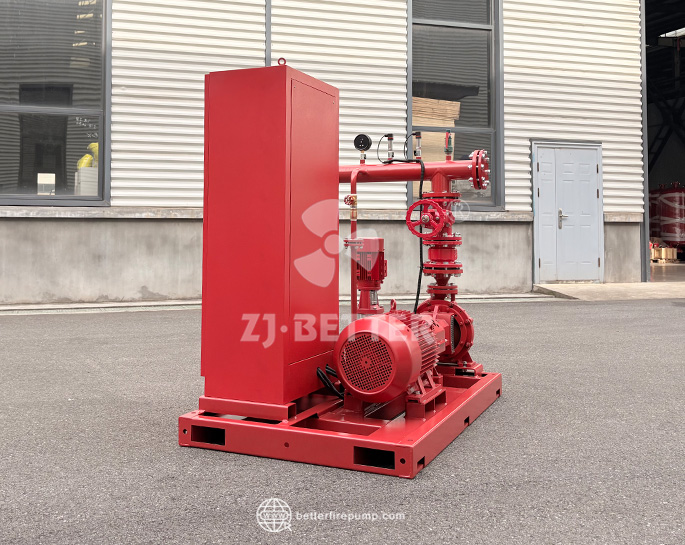
As a fire pump manufacturer, BETTER Technology Group focuses on pump design, manufacturing quality, system integration, and performance testing to provide dependable fire pump solutions for different applications. From electric and diesel-driven fire pumps to jockey pumps and customized packaged systems, selecting the right equipment and ensuring proper system matching are essential steps toward protecting lives, property, and critical infrastructure.